Acids make people nervous for a reason.
One good exfoliant can make skin look smoother, brighter, and less congested. One bad routine decision can leave the face tight, shiny, stinging, and somehow more textured than before.
That is why EADEM Cashmere Peel Milky Exfoliant & Hydrating Essence caught my attention. It is not framed like an old-school peel that dares your skin to survive. It is framed like a soft, milky exfoliating essence for pores, dullness, texture, blackheads, sebaceous filaments, and uneven tone.
That sounds beautiful.
It also sounds like a product people could easily overuse.
As of May 2026, EADEM lists Cashmere Peel at $42 for 150 mL / 5.07 fl oz, with a 4.9-star rating from 221 reviews on its own site. Sephora also carries it in the EADEM lineup and shows the same $42 price lane with a much larger review signal on the brand page.
My short read: I would consider Cashmere Peel if my skin looked dull, bumpy, congested, or uneven, and I wanted an exfoliating step that still respected hydration. I would not use it like a daily toner just because the texture feels soft. I would skip it if my skin is peeling, itchy, compromised, freshly irritated, or already stressed from retinoids, strong acids, or acne medication.

The quick answer
EADEM Cashmere Peel is best understood as a gentle-feeling exfoliating essence, not a harmless hydrating toner.
That distinction is the whole product.
It has a milky, comfort-first story, but the active side is real: EADEM describes the formula as a 9% AHA and PHA blend with lactic acid, gluconolactone, azelaic acid, and tranexamic acid, supported by rice water, colloidal oatmeal, panthenol, and other hydrators.
I would use it when the skin needs smoother texture, less dullness, clearer-looking pores, and a more even-looking tone. I would not use it on top of every other active in the bathroom.
| If your skin is dealing with... | My read on Cashmere Peel |
|---|---|
| Dullness and rough texture | Worth considering, especially if harsh peels scare you |
| Congested pores or sebaceous filaments | A logical test, but give it time |
| Dark spots or uneven tone | Interesting support step, not a standalone dark spot plan |
| Retinoid dryness or peeling | Pause until the barrier is calm |
| Sensitive, itchy, burning, or rashy skin | Skip for now |
| A routine already full of acids | Do not add it casually |
Why the texture matters
Most exfoliating products announce themselves.
They smell sharp. They feel watery. They sting. They make the routine feel like a treatment night.
Cashmere Peel is trying to do something different. EADEM calls it a milky exfoliant, and that matters because the category is usually split between two uncomfortable extremes: hydrating toners that feel nice but do not do much for texture, and acid toners that work but make people afraid of their own reflection the next morning.
The appeal here is the middle. A soft-feeling exfoliant that still has enough active structure to matter.
That is also the risk. When a product feels gentle, people tend to use it more often than their skin can handle. The bottle can feel like an essence, but the skin still reads it as exfoliation.
If I were testing it, I would not let the soft texture trick me into using it every night.
The ingredient story in plain English
The formula starts with water and propanediol, then moves quickly into the exfoliating and tone-support side: gluconolactone, lactic acid, tranexamic acid, and azelaic acid.
Here is how I would translate that:
| Ingredient lane | What it suggests |
|---|---|
| Lactic acid | Surface smoothing, glow, and texture refinement |
| Gluconolactone | A PHA-style exfoliant that is often positioned as gentler than stronger AHAs |
| Azelaic acid | Tone, visible redness, and congestion support in the broader skincare world |
| Tranexamic acid | Uneven tone and discoloration support |
| Colloidal oatmeal and panthenol | Comfort and barrier-supportive feel |
| Rice bran water and betaine | Hydration and softness around the active step |
That is a thoughtful mix for someone who wants exfoliation without the old burn-and-tighten experience.
But thoughtful does not mean risk-free. Lactic acid is still an AHA. EADEM itself says to introduce it once weekly, gradually increase, avoid sensitive or compromised skin, and use SPF 30+ in the morning because AHAs can increase sun sensitivity.
That is the instruction I would actually follow.
The thing I like most about it
I like that Cashmere Peel does not pretend harshness is proof.
That matters for anyone with melanin-rich skin, post-breakout marks, or a history of over-exfoliating. When the skin gets inflamed, dark marks can look worse and last longer. A peel that leaves the face angry is not automatically doing better work just because you can feel it.
EADEM's whole brand point is built around treating skin of color with more care. The product page says the formula was made to remove dull surface cells while keeping skin calm, smooth, and luminous. The brand also calls out hyperpigmentation, pores, texture, dullness, blackheads, and sebaceous filaments.
That is the right set of concerns for this kind of product.
The better promise is not "erase everything." The better promise is "help the skin look clearer and smoother without turning exfoliation into punishment."
The thing I would be most careful about
The word "daily" can get people in trouble.
Some product names and store listings use daily language because the product sits in the toner or essence lane. I would still start once a week.
If your skin is calm after a few uses, maybe you move to twice a week. Maybe three times a week is your upper limit. Maybe once a week is enough. The best frequency is not the most frequent one you can survive. It is the lowest frequency that gives you smoother skin without making your barrier complain.
I would watch for:
- tightness that was not there before
- stinging when applying moisturizer
- sudden shine that looks more waxy than glowy
- flaking around the mouth or nose
- redness that lasts
- more sensitivity to sunscreen
- tiny irritation bumps after increasing frequency
If any of that appears, I would stop, simplify, and let the skin calm down before trying again.
How I would use it
I would use Cashmere Peel at night after cleansing.
EADEM says to sweep a saturated cotton pad over the face and neck, do not rinse, and gradually increase frequency. I would keep the rest of the routine quiet on those nights.
My first-month plan would look like this:
| Week | Frequency | Routine |
|---|---|---|
| Week 1 | Once | Cleanser, Cashmere Peel, moisturizer |
| Week 2 | Once | Same routine, no new actives |
| Week 3 | Once or twice | Increase only if skin stayed calm |
| Week 4 | Once or twice | Keep the frequency that feels boring and stable |
I would not introduce it in the same week as a new retinoid, vitamin C, benzoyl peroxide, peel pad, exfoliating cleanser, or brightening serum. If your skin reacts, you will have no idea which product caused it.
That is the simplest rule for an active product: let it be the only new thing.
Where it goes in a routine
Cashmere Peel should go after cleansing and before moisturizer.
If you use a hydrating serum, I would decide based on how your skin feels. On the first few nights, I would keep it simple and use only moisturizer after Cashmere Peel. Once you know your skin tolerates it, you can add a plain hydrating serum if needed.
I would avoid stacking it with other exfoliating or high-irritation steps on the same night.
| Step | Cashmere Peel night |
|---|---|
| Cleanser | Gentle, non-scrubby |
| Treatment | Cashmere Peel only |
| Serum | Optional, keep it bland |
| Moisturizer | Yes |
| Face oil | Optional if you already tolerate it |
| Sunscreen next morning | Non-negotiable |
If routine order is already confusing, I would fix that first. A product like this works better when the rest of the routine is predictable.
The tretinoin question
This is where I would slow down.
If you use tretinoin, adapalene, tazarotene, strong retinoids, prescription acne medication, or any routine that already makes your skin dry, Cashmere Peel becomes a timing decision.
I would not use it on the same night as tretinoin. I would not add it during a purge, flare, peeling phase, or barrier-repair phase. I would not use it on a "rest night" just because the calendar has an empty spot.
A rest night is supposed to be rest.
If the skin is fully adjusted to tretinoin and your dermatologist is comfortable with occasional exfoliation, I would start with one night a week and keep the next night bland. Cleanser, moisturizer, sunscreen. No heroics.
The question is not "can I technically combine these categories?" The better question is "will my skin be calmer and more consistent if I do?"
For many people, the answer may be no.
Dark spots and uneven tone
Cashmere Peel is interesting for uneven tone because it combines exfoliation with tranexamic acid and azelaic acid.
That does not mean it replaces sunscreen. It does not replace a full discoloration plan. It does not change the fact that new inflammation can create new marks.
If dark spots are the concern, I would think in three layers:
- Prevent new marks by reducing irritation and picking at breakouts.
- Protect the skin every morning with sunscreen.
- Use supportive actives slowly enough that the skin can tolerate them.
Cashmere Peel can live in that third layer. It helps the routine only if the first two are handled.
If sunscreen is inconsistent, fix sunscreen first. Otherwise you are using an exfoliant to polish a problem that daylight keeps re-triggering.
Pores, blackheads, and sebaceous filaments
This is one of the more realistic reasons to test Cashmere Peel.
Pores do not disappear. Sebaceous filaments are normal. Blackheads can improve, but they often need consistency rather than one dramatic peel night. A milky exfoliating essence makes sense when the goal is gradual clarity instead of a harsh once-a-month reset.
I would judge progress by how makeup sits, how the nose and chin look in normal light, and whether texture feels smoother under the fingers. I would not judge by a magnified mirror at midnight.
If congestion is stubborn, the product may need help from a better cleanser, a more suitable moisturizer, or a dedicated salicylic acid product. But I would not add all of that at once. Cashmere Peel already has enough going on.
Who I think will like it
I would put Cashmere Peel in front of someone who says:
- my skin looks dull but strong peels scare me
- my texture is uneven and makeup catches in small bumps
- my pores look more obvious when my skin is dehydrated
- I want glow without a stripped feeling
- I get post-breakout marks and do not want to trigger more irritation
- I like essence textures but need more than hydration
- I can follow a slow schedule instead of using everything nightly
That last point matters. This is a product for someone willing to pace the routine.
If you know you tend to overdo actives, put it somewhere inconvenient. Make it a planned treatment, not something you swipe on because the bottle is pretty.
Who should skip it
I would skip Cashmere Peel if the face is already angry.
Burning, peeling, itching, rawness, eczema flares, fresh sunburn, recent waxing, fresh professional treatments, or a damaged barrier are not good conditions for a new acid product.
I would also skip it if you are pregnant, nursing, on prescription treatment, or managing a skin condition and your clinician has told you to avoid exfoliating acids. When skin care crosses into medical context, do not crowdsource the answer from product copy.
And I would skip it if your current routine already works. Not every effective product belongs in every effective routine.
Cashmere Peel versus a normal milky toner
A normal milky toner is usually about comfort.
It sits after cleansing, adds a cushiony layer, and helps moisturizer feel better. It may make the skin look plumper or less tight, but it is not usually the main texture-correction step.
Cashmere Peel is different. It may feel milky, but the point is exfoliation and tone support.
| Product lane | Better if... | Watch out for... |
|---|---|---|
| Cashmere Peel | You want gentle-feeling exfoliation for texture, dullness, pores, or uneven tone | Overuse, retinoid overlap, barrier irritation |
| Plain milky toner | You want hydration, softness, and comfort after cleansing | It may not do enough for stubborn texture |
| Strong peel pad | You want a more obvious acid treatment and already tolerate exfoliation | Higher irritation risk |
| Salicylic acid toner | Oil and blackhead control are the main concerns | Can be drying if layered poorly |
That is why I would not buy Cashmere Peel just because milky toners are having a moment. Buy it only if exfoliation is actually the job.
How it compares to nearby products
I would compare Cashmere Peel to products that sit around the same decision, not every toner in the world.
| Option | Image | Best fit | Skip if |
|---|---|---|---|
| EADEM Cashmere Peel | | Soft-feeling exfoliation for texture, dullness, pores, and uneven tone | You want a purely hydrating toner |
| Sephora Collection Hydrating Milky Toner | 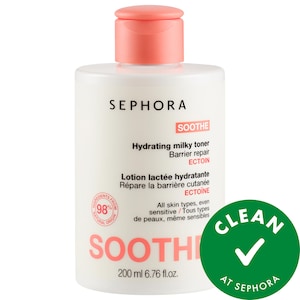 | A light comfort layer after cleansing | You need a true exfoliating step |
| The INKEY List Fulvic Acid Brightening Cleanser | 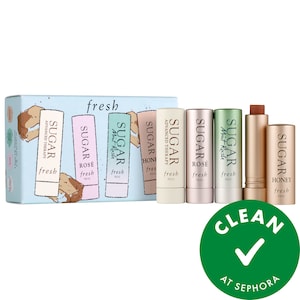 | A rinse-off brightening cleanser lane | You want leave-on exfoliation |
| Caudalie Vinoperfect Brightening Dark Spot Serum | 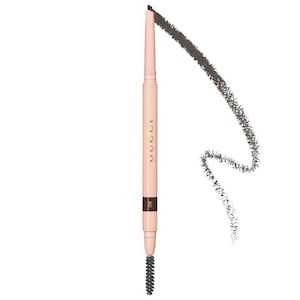 | A more serum-like dark spot routine step | Texture and congestion are the main issue |
The point is not that one wins forever. The point is role clarity. If you need comfort, buy comfort. If you need exfoliation, buy exfoliation. If you need a dark spot serum, do not pretend a peel alone is the whole plan.
The one-week claim
EADEM shows one-week clinical-result imagery on its product page, including claims around radiance, pores, exfoliation, hydration, texture, irritation, and even tone from a 30-person independent clinical study.
I like seeing specifics. I still would not build my expectations around one week.
One week can tell you whether the product feels compatible. It can show early glow. It can reveal irritation. It can make texture feel smoother. But dark spots, post-acne marks, and uneven tone usually need more patience than that.
The more useful first-week question is:
Does my skin look a little clearer without feeling more fragile?
That is the balance I would care about.
The three-week test I would actually trust
If I bought Cashmere Peel, I would give it three weeks before forming a strong opinion.
Week one is about tolerance. Use it once. Watch the skin for stinging, tightness, redness, and unusual sensitivity.
Week two is about repeatability. Use it once again, maybe twice only if week one was boringly calm.
Week three is about visible fit. Look for smoother texture, less dullness, better makeup laydown, and whether the nose and chin look less congested in normal light.
I would take photos in the same lighting once a week. Not daily. Daily photos make normal skin changes feel dramatic.
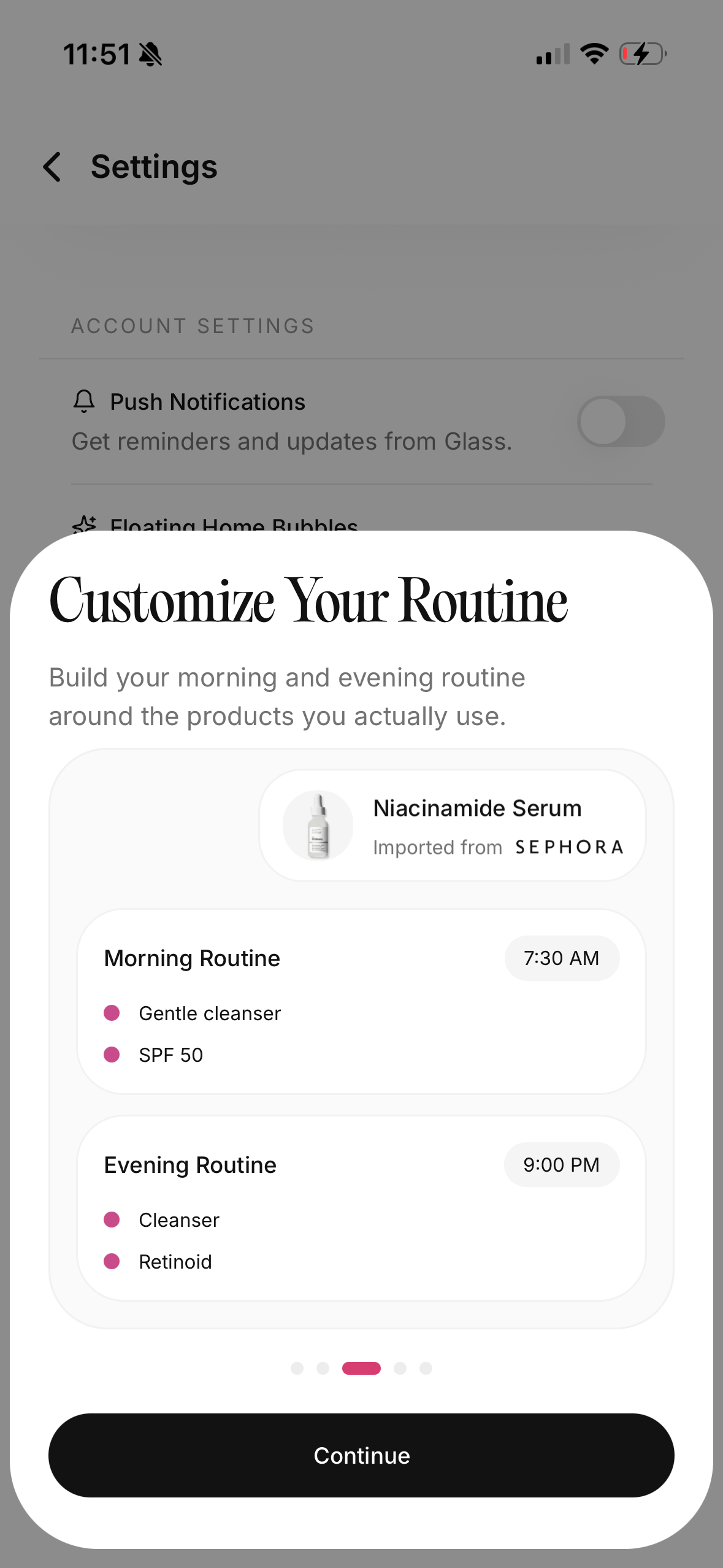
Glass is useful for this kind of product because the question is not just "did I use it?" It is "what happened when I used it alongside sleep, sunscreen, breakouts, stress, and the rest of my routine?" Tracking keeps you from blaming the wrong thing.
The mistakes I would avoid
The first mistake is using it nightly too soon.
The second mistake is pairing it with tretinoin, exfoliating cleanser, vitamin C, peel pads, and a brightening serum because all of them sound useful.
The third mistake is using it when the skin is already compromised.
The fourth mistake is expecting exfoliation to replace sunscreen.
The fifth mistake is judging pores from too close. If you need a magnifying mirror to decide whether the product worked, you may be measuring the wrong thing.
I would keep the standard more practical: smoother feel, less dullness, easier makeup, calmer-looking texture, and no new irritation cycle.
My final read
EADEM Cashmere Peel is one of the more interesting exfoliating toner launches because it understands the fear around acids. It does not sell the old idea that a product has to sting, dry down tight, or make the face red to be effective.
That softer framing is exactly why I would respect it more, not less.
Use it like an active. Start slowly. Protect with sunscreen. Keep retinoid nights separate. Do not apply it to angry skin. Let the product prove itself through consistency, not intensity.
I would buy it if texture, dullness, pores, sebaceous filaments, or uneven tone were bothering me and I wanted a gentler-feeling path than a harsh peel pad. I would skip it if my barrier was already unstable or if my routine did not have room for another active.
The product makes the most sense when it helps you exfoliate with restraint.
That is usually where better skin starts anyway.
FAQ
Can EADEM Cashmere Peel be used every day?
I would not start that way. EADEM says to introduce it once weekly and gradually increase, with no more than three times weekly. For most routines, one to three nights a week is a more sensible range than daily use.
Can I use Cashmere Peel with tretinoin?
I would not use it on the same night as tretinoin. If your skin is fully adjusted and your clinician is comfortable with occasional exfoliation, start once weekly on a separate night and keep the surrounding routine bland.
Is Cashmere Peel better for dark spots or texture?
It can support both, but I would judge it first as a texture, dullness, and congestion product. For dark spots, sunscreen consistency and irritation control matter just as much as the exfoliating step.
Does Cashmere Peel replace a hydrating toner?
No. It may feel milky and hydrating, but it is still an exfoliating essence. If your skin only needs comfort after cleansing, a plain hydrating toner is the safer fit.
Useful references: EADEM Cashmere Peel, Sephora EADEM brand page, AAD on safely exfoliating at home, and AAD on sunscreen basics.