
Berkley has options.
That is useful.
It can also make the decision messier.
When I see Botox, Dysport, Xeomin, Daxxify, lip filler, cheek filler, wrinkle treatment, facial balancing, IV therapy, laser, microneedling, Hydrafacial, and skin tightening all sitting close together on local med spa menus, I do not treat it like one big beauty appointment. I break it apart.
If I were comparing Botox and fillers in Berkley, MI in May 2026, I would start with one question: am I trying to soften movement, replace volume, improve skin quality, or change facial balance?
Those are different jobs.
The short version: I would consider Berkley-area injectables if the consultation felt medically grounded, the provider could explain product source and injector credentials clearly, and the plan separated wrinkle relaxers from filler decisions. I would not book from a menu, a discount, or a photo alone.
My quick read on the Berkley decision
Berkley is small, but the local aesthetics map is not empty. Glass lists Berkley-area options across injectables, skin care, laser, microneedling, IV therapy, and wellness services, including providers such as Ageless Image Aesthetic Services, Med-IVee & Live Well Aesthetics, Mosaic Luxury Medical Spa, SKN Medical Spa, Forever Young Aesthetics, and nearby Royal Oak, Birmingham, Ferndale, and Lathrup Village options.
That makes Berkley a comparison market, not a one-name market.
I would start here:
- Berkley skin care and med spa directory
- Berkley provider comparison
- Botox providers near Berkley
- Filler providers near Berkley
- Microneedling near Berkley
- Laser treatments near Berkley
Provider guide
Ageless Image Aesthetic Services
Open the provider guide to compare services, site details, and fit before booking.
Provider guide
Forever Young Aesthetics
Open the provider guide to compare services, site details, and fit before booking.
Provider guide
Med-IVee & Live Well Aesthetics
Open the provider guide to compare services, site details, and fit before booking.
Provider guide
SKN Medical Spa
Open the provider guide to compare services, site details, and fit before booking.
Provider guide
Well Labs+ Medspa Royal Oak
Open the provider guide to compare services, site details, and fit before booking.
Provider guide
Precision Laser (now Reflection Theory Med Spa)
Open the provider guide to compare services, site details, and fit before booking.
I would use those pages to make a shortlist. I would not use them to make the final medical-aesthetic decision. A page can show which services are available. It cannot tell me whether an injector understands my face, whether I am a good candidate today, or whether a cheaper appointment is cutting a corner I cannot see yet.
That part belongs in the consult.
Botox is a movement decision
Botox is the word people use most, but the actual category is wrinkle relaxers or neuromodulators. Depending on the practice, the product might be Botox, Dysport, Xeomin, Jeuveau, Daxxify, or another FDA-approved botulinum toxin product.
The job is movement.
Forehead lines, frown lines, crow's feet, bunny lines, chin dimpling, neck bands, and lip flip requests are usually movement-pattern conversations. A good injector should watch how your face moves before recommending units. They should not only point at a static line and sell a number.
If I were booking Botox in Berkley, I would ask:
- Which product are you using today?
- Was it purchased from an authorized source?
- Who is injecting me, and what license and training do they have?
- How many units would you start with and why?
- Which areas would you avoid on my face?
- What result would look too heavy?
- When does it start working?
- When should I judge the final result?
- Do you offer a follow-up check?
- What symptoms should make me call?
The CDC advises people to ask whether botulinum toxin is from an authorized source and whether the provider is licensed and trained. That is not fear-mongering. It is a basic safety filter.
If a place cannot answer those questions plainly, I would keep looking.
Fillers are a shape decision
Filler is not Botox with a different name.
Filler changes shape. It can add volume, support structure, soften folds, define lips, improve chin balance, lift shadows, or smooth certain hollow areas. It can also look puffy, uneven, overdone, or misplaced if the plan is too aggressive.
That is why I would not walk in asking for "one syringe" before the injector has assessed anything.
I would ask for a face plan.
For lips, that means asking whether the goal is hydration, border definition, vertical height, projection, symmetry, or a softer overall shape. For cheeks, it means asking whether the face needs support or whether cheek filler would make the midface look heavy. For folds, it means asking whether the fold is really a filler problem or whether volume loss somewhere else is pulling the face downward.
The FDA describes dermal fillers as injectable implants and says having filler injected should be treated as a medical procedure. I keep that framing in my head because it changes the standard. I am not buying a gloss. I am choosing something placed under the skin.
I would separate wrinkle treatment from facial balancing
"Wrinkle treatment" can mean several things.
Sometimes it means Botox for movement lines. Sometimes it means filler for folds. Sometimes it means resurfacing, microneedling, peels, laser, or skin tightening because the problem is skin texture instead of muscle movement or volume.
Facial balancing is broader. It can involve filler, sometimes wrinkle relaxers, sometimes skin quality work, and sometimes restraint. A good balancing consult should not make every feature bigger. It should explain proportion.
Here is how I would sort the first decision:
| What I notice | The lane I would ask about first |
|---|---|
| Lines that show when I move | Botox, Dysport, Xeomin, or similar |
| Lips losing shape or hydration | Conservative lip filler consult |
| Cheeks looking flatter with age | Midface filler consult, with restraint |
| Smile lines or folds | Facial assessment before filler |
| Rough texture or acne scars | Microneedling, laser, peel, or dermatology plan |
| Brown spots or sun damage | Laser, IPL, peel, topical plan, and sunscreen discussion |
| Loose skin | Skin tightening consult, with realistic expectations |
That table saves money because it stops the wrong treatment from becoming the default.
The first question I would ask in the room
I would ask, "What would you not do on me today?"
That question tells me more than a polished menu.
A careful injector might say they would not overfill the lips, chase perfect symmetry, treat under-eyes without a full risk conversation, place filler near an area that has old unknown filler, inject when the skin has an active infection, or combine too many first-time treatments in one appointment.
That is the answer I want.
If every concern becomes a same-day treatment, I get cautious. Good aesthetic work is not just technical skill. It is judgment under pressure, especially when the patient is willing to spend money.
Provider credentials matter more than the room
Med spa design can make people feel safe.
Clean counters, nice lighting, friendly staff, and a pretty waiting area are good. They are not enough.
For injectables, I care more about who is evaluating, who is injecting, what supervision exists, how complications are handled, and whether the practice has a real escalation plan. A beautiful room does not fix poor anatomy knowledge.
I would ask:
- What is the injector's license?
- How long have they been injecting?
- What advanced training do they have for this specific treatment?
- Is there a medical director?
- Is the medical director on-site, available, or only listed on paper?
- What happens if I have a complication after hours?
- Do you stock hyaluronidase if hyaluronic acid filler needs urgent reversal?
- How do you document product lot numbers?
That may sound intense for a cosmetic appointment.
It is not.
Injectables are still medical procedures.
I would be careful with under-eye filler
Under-eye filler gets marketed like a simple fix for tired eyes.
Sometimes it helps. Sometimes it creates swelling, shadows, puffiness, or a bluish cast that bothers people more than the original hollow. The area is delicate, and not every dark circle is a volume problem.
Before I let anyone treat my under-eyes, I would want to know whether the darkness is pigment, vascular shadowing, tear trough hollowing, skin thinness, allergies, sleep, or facial structure. I would ask what filler they would use, how much, how deep, what swelling pattern is normal, and what makes me a bad candidate.
I would also ask what they would do instead.
Sometimes the better plan is skincare, allergy control, laser, a very conservative midface approach, or doing nothing.
Lip filler should not erase the face
Lip filler is where restraint shows quickly.
I would not judge a Berkley lip filler provider by the biggest before-and-after. I would look for lips that still fit the person's face. The border should not look inflated. The upper lip should not dominate every expression. The side profile should not look pushed forward in a way that does not match the chin and nose.
The consult should define the goal:
- hydration
- border crispness
- asymmetry correction
- vertical height
- subtle volume
- cupid's bow definition
- balancing the upper and lower lip
Those are not the same.
I would rather start smaller and build than spend months waiting for overfilled lips to settle.
Filler warning signs I would take seriously
Most swelling and tenderness after filler is not an emergency. But some symptoms are not wait-and-see symptoms.
The FDA advises people to seek immediate medical attention for unusual pain, vision changes, a white, gray, or blue appearance near the injection site, or signs of stroke shortly after filler. That is the kind of information I want before the appointment, not after I am anxious at home.
I would ask the provider to explain:
- What is normal swelling?
- What is not normal?
- Who do I call after hours?
- How quickly can you see me if something looks wrong?
- What should I do if I have vision symptoms?
A practice that handles the risk conversation calmly earns more trust than one that acts like complications are impossible.
Skin treatments may be the better first appointment
Not every Berkley wrinkle or aging concern needs a needle first.
If the main issue is texture, dullness, enlarged-looking pores, acne marks, roughness, or sun damage, I would ask about skin quality treatments before jumping straight to filler. Microneedling, laser, IPL, peels, Hydrafacial-style treatments, and consistent skincare can sometimes match the actual problem better.
That does not mean they replace injectables. It means they solve a different layer.
If I looked tired because my skin was dehydrated and irritated, filler would not be my first move. I would fix the routine and barrier first. If I had etched movement lines, Botox might fit. If I had volume loss, filler might fit. If I had texture and pigment, skin treatments might fit.
The best plan often uses fewer treatments, in the right order.

Reviews should be read by treatment
I do not read med spa reviews as one pile.
A great IV therapy review does not prove filler skill. A friendly facial review does not prove Botox placement. A positive laser hair removal review does not prove someone is good at lips.
I would search reviews by service and provider name.
Useful review details include:
- the exact treatment
- the injector's name
- whether the consult felt rushed
- whether pricing was clear
- whether the result looked natural
- whether follow-up was offered
- whether a concern was handled professionally
- whether the reviewer mentions a repeat visit
I pay less attention to vague praise and more attention to specifics. "Everyone was so nice" is pleasant. "She talked me out of adding more filler and explained why" is more useful.
Pricing should be clear before the needle
I do not need the cheapest unit price.
I need clear pricing.
For Botox or similar wrinkle relaxers, I would ask whether pricing is per unit or per area, what the starting dose is, and whether a follow-up adjustment costs extra. For filler, I would ask product, syringe size, expected amount, whether unused product is handled in a specific way, and whether dissolving is available if something goes wrong.
I would be careful with deals that pressure me to decide fast. A sale is not a consult. A package is not a plan. A low price can be fine, but only if the provider, product, and safety standards are still solid.
What I would do before booking
I would make the appointment only after answering these:
| Decision point | My standard |
|---|---|
| Main concern | I can name one primary issue, not ten |
| Treatment lane | I know whether this is movement, volume, texture, pigment, or skin quality |
| Provider | I know who is injecting and their training |
| Product | I know what product is being used |
| Safety | I know what symptoms require urgent help |
| Timing | I am not doing it right before a major event |
| Budget | I understand the likely full cost, not only the promo |
| Follow-up | I know when and how the result will be checked |
If I could not fill that table out, I would wait.
Waiting is not indecision. Sometimes it is the thing that keeps a cosmetic appointment from becoming a repair project.
My event timing rule
I would not book new injectables right before a wedding, reunion, vacation, headshots, graduation, or anything where I need my face to feel predictable.
For a first-time wrinkle relaxer, I would want several weeks of buffer. It can take days to start showing and around two weeks to settle. If the brow feels heavy or the result needs adjustment, I do not want that happening right before photos.
For filler, I would want even more buffer. Swelling, bruising, asymmetry while settling, and emotional overchecking are real. Lips especially can look different day to day at first.
My conservative rule:
| Treatment | First-time timing before an event |
|---|---|
| Botox or similar | At least 4 weeks |
| Lip filler | At least 6 weeks |
| Cheek or chin filler | At least 6 weeks |
| Under-eye filler | Longer, and only with a very experienced injector |
| Microneedling or stronger skin treatment | 6+ weeks depending on depth |
| Gentle facial | 1 to 3 weeks |
First-time treatments should not be treated like same-week grooming.
How Glass helps me stay objective
I would use photos carefully.
Not obsessive close-ups. Not ten angles every morning. Just consistent lighting, the same distance, and a few neutral expressions before and after the appointment. That makes it easier to see what actually changed instead of judging the result by anxiety.
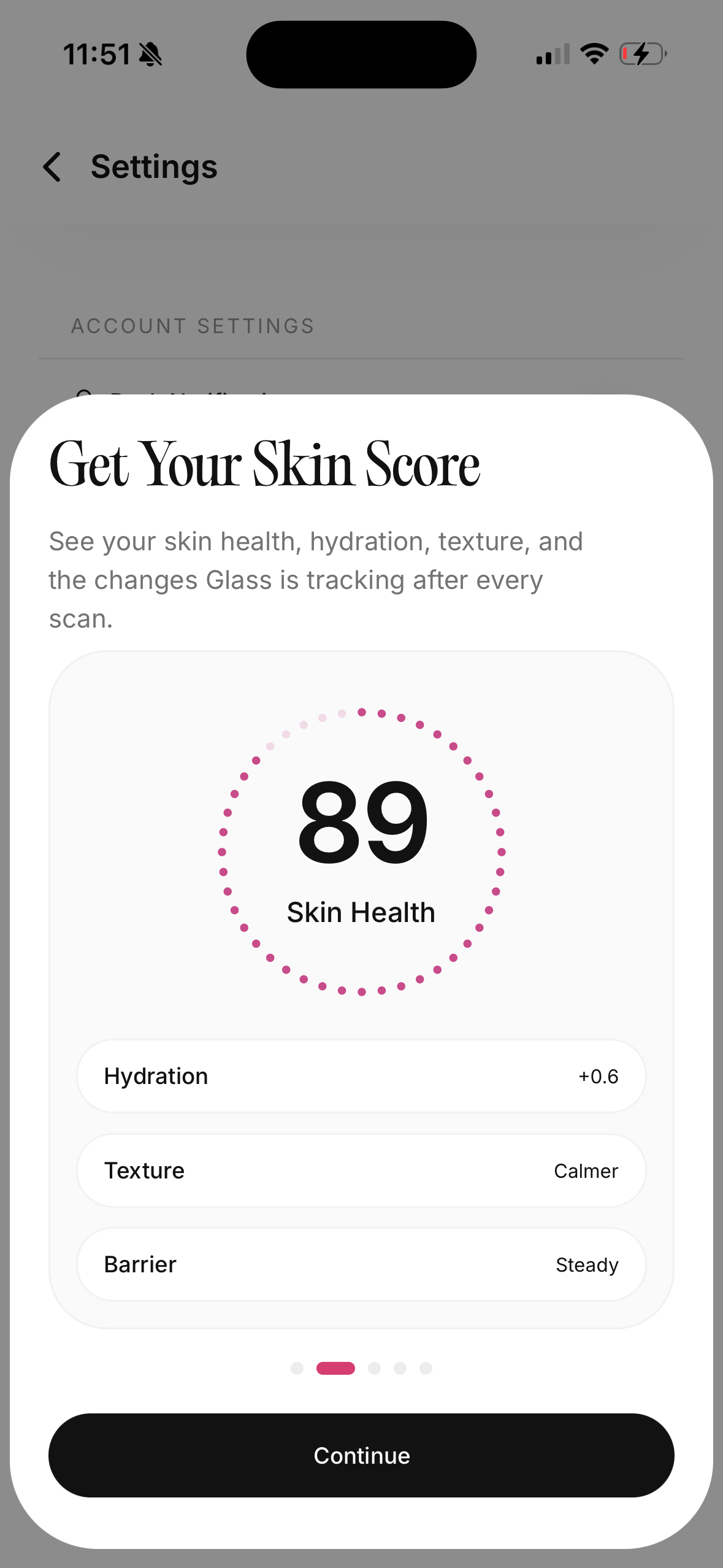
Glass is useful for that kind of tracking because it keeps routine notes, skin changes, and progress photos in one place. If I changed skincare, got Botox, added filler, or started a skin treatment, I would want those dates written down.
That matters later.
If I love the result, I know what worked. If I do not, I know what changed and when.
The bottom line
Berkley has enough med spa and aesthetics options that I would not book the first appointment that looks convenient. I would compare by treatment lane, injector judgment, product transparency, safety planning, and whether the provider can explain what they would avoid.
Botox is mainly a movement decision. Filler is mainly a shape decision. Skin treatments are usually texture, pigment, and quality decisions. A good consult keeps those lanes separate before building a plan.
If I were booking in Berkley in May 2026, I would choose the place that slows the decision down, explains the risk without drama, and gives me a plan that still looks like my face when it is done.
Useful medical references: CDC on botulinum toxin injection safety, FDA on dermal fillers, and AAD on counterfeit injectables.