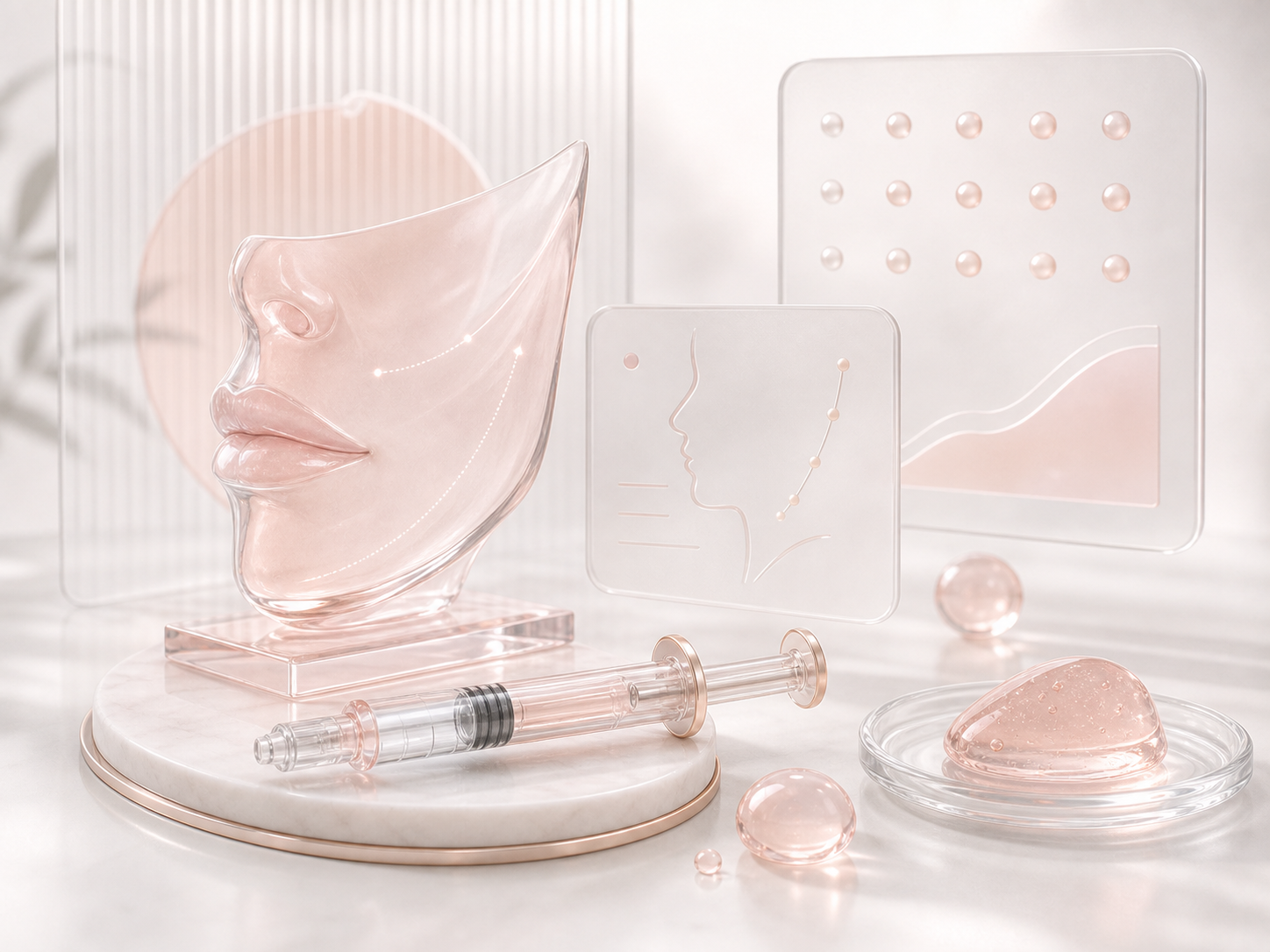
Fine lines are confusing.
Not because the lines are hard to see. Usually they are very easy to see. They show up around the eyes, across the forehead, beside the mouth, under makeup, in car mirrors, and in photos that make you wonder when your face started holding onto every expression.
The confusing part is what to book.
Around Washington, Pennsylvania, "fine-line treatment" can point you toward wrinkle relaxers, dermal filler, skin tightening, laser resurfacing, microneedling, chemical peels, medical-grade skin care, or a facial that promises glow with almost no downtime. Those are not the same appointment. They do not solve the same kind of line. They do not carry the same risk.
If I were comparing fine-line treatments in June 2026, I would not start with the strongest option.
I would start with the type of line.
The short version: expression lines usually belong in a Botox or wrinkle-relaxer conversation. Volume loss can become a filler conversation. Crepey texture, sun damage, and dullness usually need a skin-quality plan. If the skin barrier is irritated, I would pause before booking anything aggressive and rebuild the routine first.
That one distinction saves a lot of money.
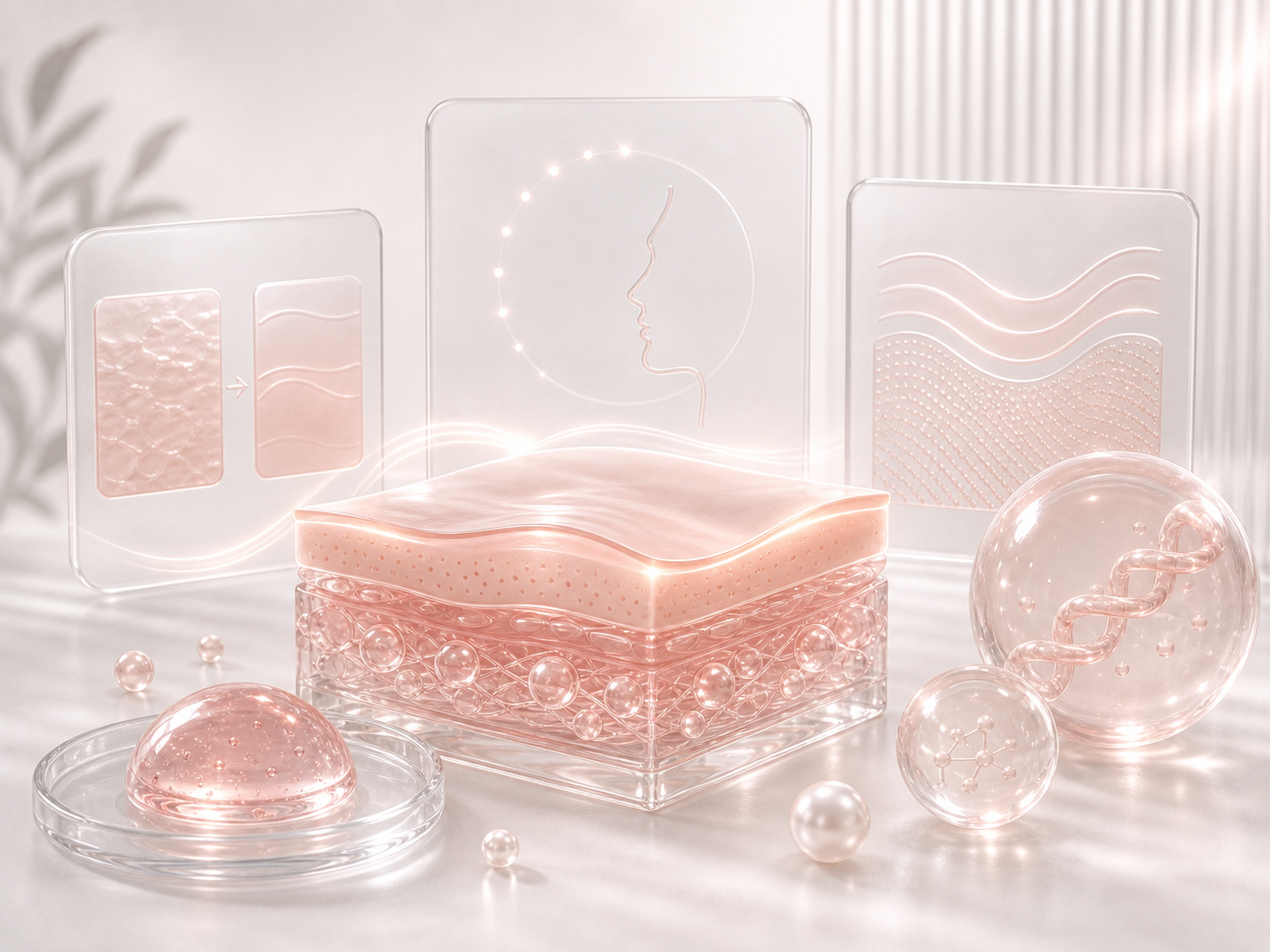
My Washington, PA fine-line map
I would use the Washington, PA skin care directory as the starting map, then compare nearby Canonsburg, McMurray, and South Hills options when the treatment gets more medical or device-heavy.
The local pages I would keep open are fillers in Washington, PA, Botox in Washington, PA, laser treatments in Washington, PA, facials in Washington, PA, and chemical peels in Washington, PA.
Provider guide
BARE Skin and Laser
Official Washington site lists aesthetic skin care concerns including anti-aging treatments, injectables, elasticity, pigmentation, skin texture, acne, body contouring, and laser hair removal.
Provider guide
Ethereal Skin Medical Spa
Official services page lists injectables, skin health, lasers, chemical peels, microneedling, IV therapy, functional wellness, and private parties.
Provider guide
fillir South Hills
Official South Hills page lists Botox, Dysport, lip filler, facial fillers, laser hair removal, microneedling, signature skin treatments, HydraFacial, and physician oversight.
Provider guide
Lamb Medical
Official site describes concierge family medicine, wellness, and aesthetics with advanced facial services, dermatologic treatments, energy devices, injectables, body treatments, and wellness/weight-loss services.
Provider guide
New Beauty Medical Aesthetics
Official site lists medical spa services including chemical peel, dermal fillers, neurotoxin, Morpheus8, and non-surgical facial rejuvenation.
Provider guide
Happel Medical Spa
Official site describes physician-supervised skincare treatments, laser hair removal, advanced skincare treatments, and medical aesthetic services for South Hills and nearby communities.
I would not treat that list like a final recommendation. I would treat it like a shortlist builder.
Washington has providers such as BARE Skin and Laser and Vujevich Dermatology Associates, with nearby Canonsburg and McMurray options like Ethereal Skin Medical Spa, fillir South Hills, Lamb Medical, and New Beauty Medical Aesthetics in the same local orbit. The right move depends less on who has the prettiest service menu and more on whether the provider can explain what kind of line you actually have.
That local orbit matters because a Washington search can point to three different appointment types. One person may need a conservative neurotoxin consult for forehead movement. Another may need filler judgment around volume loss. Another may need laser, microneedling, peels, or a gentler routine because the issue is texture, redness, or skin fatigue. I would not let one menu word decide that for me.
The first question I would ask
I would ask this before price, before before-and-after photos, and before any treatment name:
Is this line caused by movement, volume loss, skin texture, or dehydration?
Those four causes can look similar in a mirror, but they lead to different appointments.
| What you notice | What it may mean | Treatment lane I would ask about |
|---|---|---|
| Lines that deepen when you smile, squint, raise brows, or frown | Muscle movement | Botox or another wrinkle relaxer consult |
| Folds that look heavier even when the face is relaxed | Support or volume change | Dermal filler, Sculptra, or facial-balancing consult |
| Crepey surface texture, sun spots, roughness, or dullness | Skin quality | Laser, microneedling, peel, facial, or skin-care plan |
| Fine lines that look worse when skin is dry or tight | Dehydration or barrier stress | Routine reset before a procedure |
The worst consult is the one where every concern gets pushed into the same treatment. A forehead line, a smile line, a dry under-eye crease, and sun-damaged cheek texture do not need the same plan.
Botox is for movement, not every wrinkle
Botox and other botulinum toxin treatments soften lines by relaxing targeted muscles. The American Academy of Dermatology describes dermatologists using botulinum toxin therapy to diminish signs of aging and also to treat excess sweating. For cosmetic fine lines, the useful idea is simple: if a line is driven by repeated expression, relaxing the movement can soften how deeply the line folds.
That is why Botox conversations usually make sense for forehead lines, frown lines, crow's feet, and other movement-heavy areas.
I would ask:
- Which muscles are creating the line?
- How many units would you start with for a natural result?
- What would happen if we under-treated slightly and reassessed?
- How long before I see the full effect?
- What areas would you avoid on my face?
- How do you prevent heaviness in the brow or a frozen look?
The answer I like is not "we can fix that."
The answer I like is more specific: "This part is movement, this part is texture, and this part may not improve much with toxin alone."
That tells me the provider is looking at the face, not just the menu.
Filler is for support, not panic
Dermal filler is where I slow down even more.
Filler can be useful when fine lines are part of a volume or structure problem. A fold around the mouth may look sharper because the midface has changed. A chin shadow can pull attention downward. Lips can lose shape. Cheeks can look flatter. In those cases, filler might be discussed as a support tool.
But filler is not casual.
The FDA notes that dermal fillers have different uses and expected durations, and that some materials are difficult or impossible to remove, especially permanent fillers or fillers not made from materials such as hyaluronic acid. FDA-approved fillers should be injected by licensed health care professionals. That is the standard I would hold the appointment to.
I would ask:
- What product would you use, and why?
- Is this hyaluronic acid filler or another type?
- How much would you start with?
- What would make you choose no filler today?
- Do you keep reversal options available for hyaluronic acid filler concerns?
- What are the rare complication signs I should know before I leave?
- When do you want to see me again?
I would also ask what they would leave alone.
That question matters. The injector who can say "I would not fill that" is usually thinking more clearly than the injector who sees every line as a syringe opportunity.
Skin quality is its own lane
Some fine lines are not really injectable problems.
They are skin-quality problems.
If the skin looks crepey, rough, sun-damaged, dull, or uneven, I would ask about treatments that improve the surface and the deeper skin response over time: microneedling, radiofrequency microneedling, laser or light treatments, chemical peels, medical facials, or a stronger home routine. This is where skin rejuvenation language can be helpful, but only if the provider translates it into a real plan.
I would not book a laser just because the phrase sounds serious.
I would ask:
- What concern is this device best at treating?
- Is my skin tone a good fit for this treatment?
- How much downtime should I expect?
- What does normal redness look like versus a problem?
- How many sessions are realistic?
- What should I stop using before and after?
- What result would be unrealistic from this treatment?
For peels, I would ask whether the plan is light, medium, or more aggressive. For microneedling, I would ask about depth, provider training, aftercare, and whether active acne or irritation changes the plan. For facials, I would ask whether the goal is hydration, extractions, barrier support, exfoliation, or maintenance.
Skin quality improves best when the plan is specific.
The dryness trap
I would not treat every tiny line as aging.
Sometimes the skin is just dry, over-exfoliated, or irritated.
That matters because a dry line can look dramatic under makeup and still be a routine problem before it is a procedure problem. If cleanser leaves the face tight, sunscreen burns, moisturizer stings, or retinoids are making the corners of the mouth peel, I would fix that first.
Before booking an aggressive treatment, I would run a boring two-week reset:
| Step | What I would do |
|---|---|
| Cleanser | Use the gentlest cleanser that still removes sunscreen |
| Treatment | Pause new acids, scrubs, and retinoid increases |
| Moisturizer | Use a barrier-supporting moisturizer that does not sting |
| Sunscreen | Wear SPF daily, especially if considering peels or lasers |
| Tracking | Log tightness, stinging, flaking, and photos in the same light |
If the lines soften when the skin is hydrated and calm, I would be glad I waited.
If they stay, I would walk into the consult with better information.
What I would ask before booking in Washington
I would bring questions that force the provider to reveal their thinking.
Not in a combative way. In a "please show me the plan" way.
These are the ones I would use:
- What type of line are we treating?
- What would you recommend first if I want the most conservative result?
- What would you not recommend for me right now?
- Is this a one-time treatment or a series?
- What is the expected maintenance schedule?
- What side effects are common?
- What rare risks should I understand?
- Who performs the treatment?
- What training or license do they have?
- What is the follow-up plan if I bruise, swell, react, or dislike the result?
- What should I stop using before the appointment?
- How should I protect the result afterward?
That list works for Washington, Canonsburg, McMurray, Pittsburgh, or anywhere else. The local market changes. The decision quality does not.
Price should not be the first filter
I understand why people start with price.
Fine-line treatment can get expensive quickly. A few toxin units are one kind of budget. A filler syringe is another. A device series is another. A peel plan, skin-care package, or maintenance routine can also add up.
But I would not make the lowest price the deciding factor.
With injectables and devices, the expensive mistake is usually not overpaying by a little. It is choosing the wrong treatment, needing correction, losing recovery time, or feeling stuck with a result that does not look like you.
I would ask for a clear estimate:
| Cost question | Why I would ask |
|---|---|
| Is pricing by unit, syringe, area, or session? | So the quote is not vague |
| How many sessions do you expect? | A series changes the real budget |
| Is follow-up included? | Fine-line work often needs reassessment |
| What would maintenance cost? | The first appointment is not always the full story |
| What happens if I need a correction or adjustment? | Policies matter before money changes hands |
Clear pricing is part of clear consent.
When I would drive farther
I like convenience for facials.
I care less about convenience for injectables, lasers, or anything with a higher recovery or safety profile.
If the right provider is in Washington, great. If the better match is in Canonsburg, McMurray, South Hills, or Pittsburgh, I would consider the drive. For Botox, filler, laser, and skin resurfacing, I care about judgment more than distance.
I would drive farther for:
- a provider who explains risks plainly
- a conservative injector with natural-looking work
- a clinic that treats my skin tone often
- clear before-and-after photos in the exact concern area
- medical oversight when appropriate
- a real follow-up plan
- someone who is willing to delay treatment when skin is irritated
I would not drive farther just because a place looks more expensive online.
The standard is not luxury. The standard is careful.
What I would track afterward
I would document the appointment like a normal part of skin care.
That sounds excessive until you try to remember what happened three months later.
For Botox, I would track the date, units if shared, areas treated, when movement started softening, when the full result settled, and when movement returned. For filler, I would track product, amount, area, swelling, bruising, tenderness, follow-up notes, and how the result looked after two weeks. For lasers, peels, and microneedling, I would track redness, peeling, pigment changes, breakouts, dryness, and whether the routine stayed comfortable.
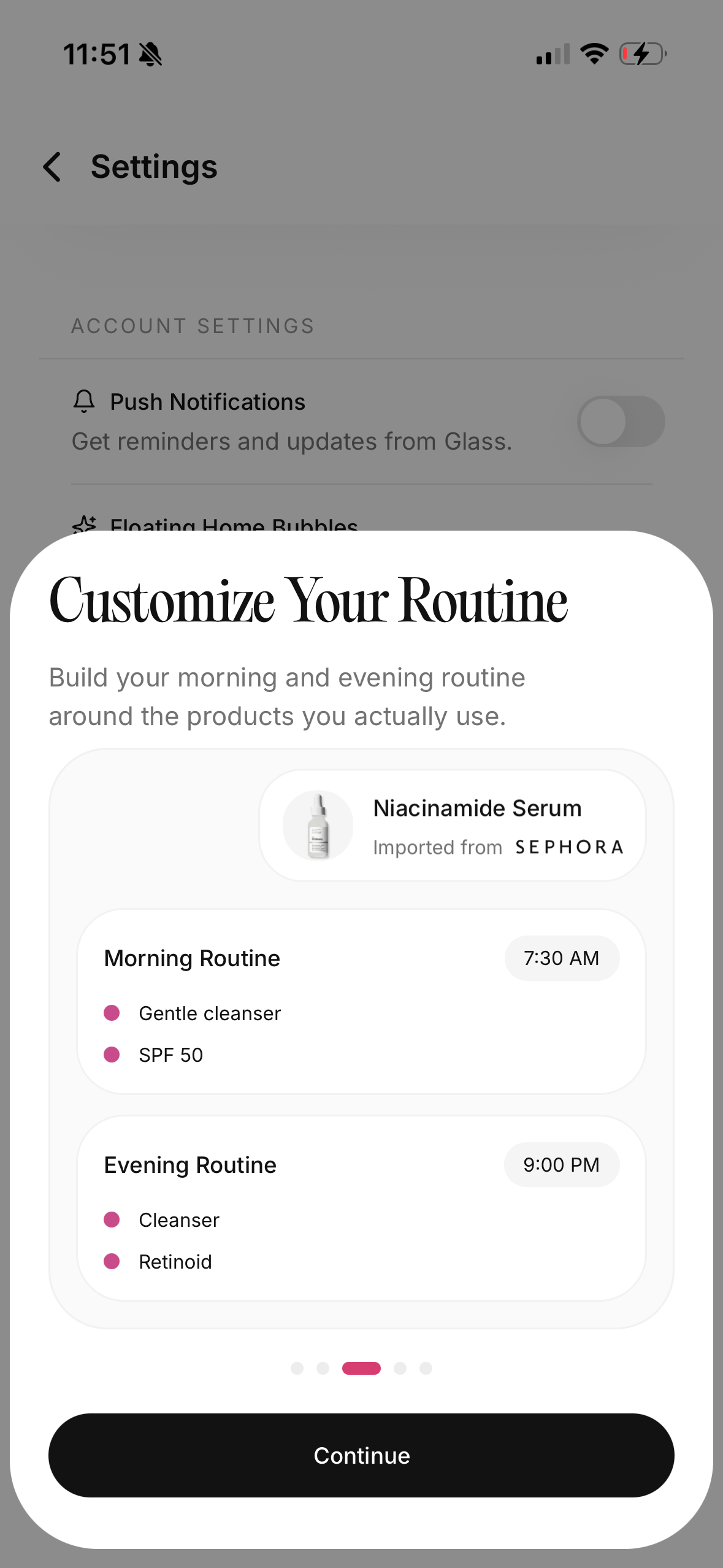
This is where Glass is useful. Not because an app replaces a clinician. It does not. It helps you keep the timeline straight so every future consult is less dependent on memory.
If something reacts badly, a clean record is helpful.
If something works beautifully, a clean record is also helpful.
My actual order of operations
If I were starting from scratch around Washington, PA, I would do it in this order.
First, I would calm the routine. Cleanser, moisturizer, sunscreen, no chaos.
Second, I would decide whether the line is movement, volume, texture, or dryness.
Third, I would compare the local provider pages and open the treatment pages that match the concern: Botox, fillers, laser, facials, or chemical peels.
Fourth, I would book a consult before committing to a treatment I do not understand.
Fifth, I would choose the provider who gives the clearest plan, not the one who promises the biggest change.
That is the part I keep coming back to.
Fine-line treatment should make you look more rested, more balanced, or more like yourself on a good day. It should not make you feel rushed into a face you did not ask for.