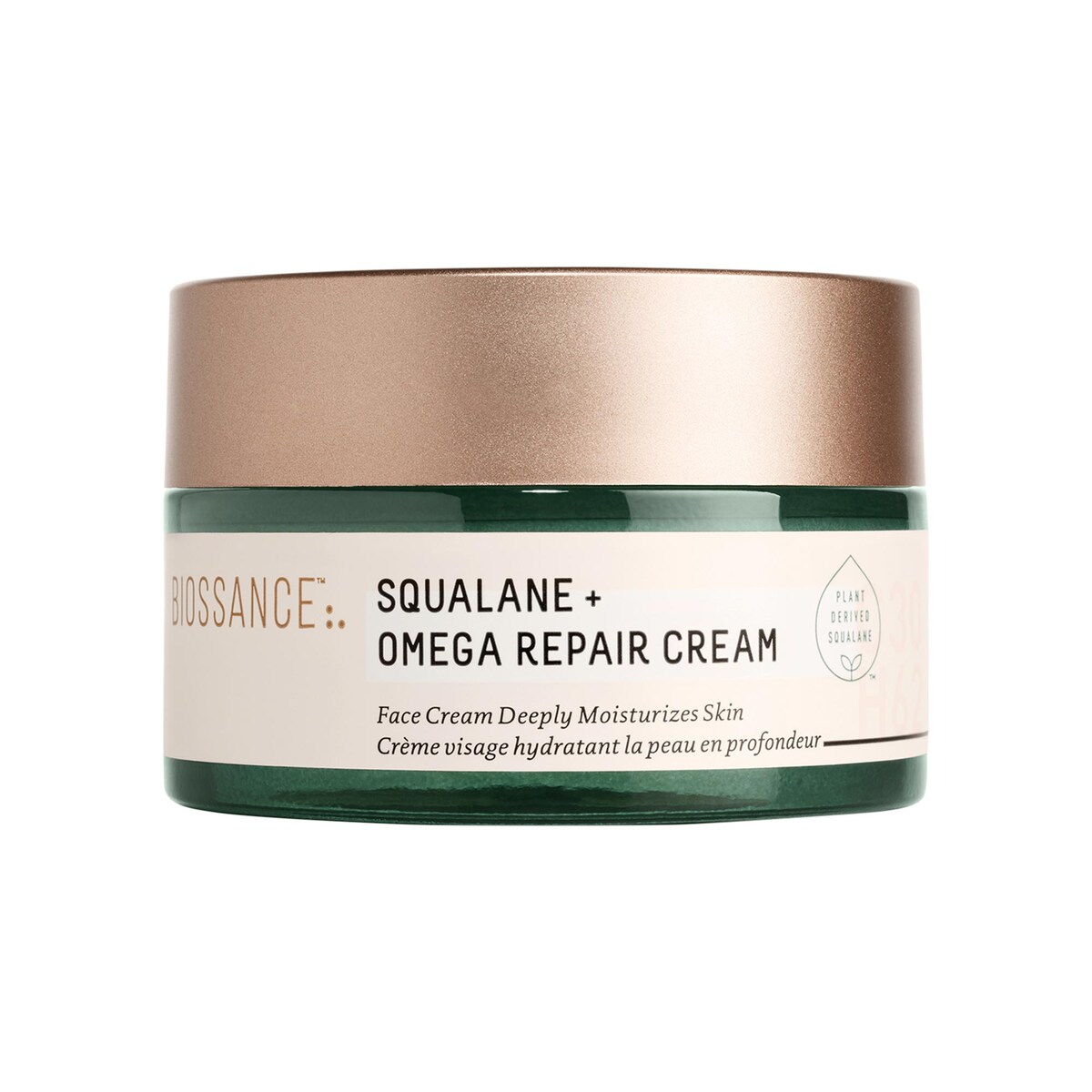
The base for most skincare formulations.
Usually helps with
Hydration
Mimics skin's natural oils to moisturize and soften skin. It's non-comedogenic and suitable for all skin types.
Usually helps with
Dryness, barrier support, suppleness
A common and effective humectant that draws water into the skin, keeping it hydrated and soft.
Usually helps with
Hydration
Emollient
Caprylic/Capric Triglyceride
Derived from coconut oil and glycerin, it's an excellent emollient that helps replenish skin.
Usually helps with
Moisture retention, softening
A plant-derived emollient that provides a smooth feel and helps with product spreadability.
Usually helps with
Texture, softening
Emollient
Butyrospermum Parkii (Shea) Butter
A rich emollient known for its moisturizing and skin-conditioning properties. Can be comedogenic for some.
Usually helps with
Dryness, barrier repair
Watch for
Potential for pore-clogging in acne-prone individuals
Emulsifier
Sorbitan Olivate
An emulsifier derived from olive oil, helping to blend oil and water ingredients. Also has skin-conditioning properties.
Usually helps with
Emulsification, skin conditioning
Emulsifier
Cetearyl Olivate
Another emulsifier derived from olive oil, contributing to a stable and pleasant texture.
Usually helps with
Emulsification, texture
Skin-Conditioning Agent
Ceramide NP
A type of ceramide that is crucial for maintaining a healthy skin barrier and preventing moisture loss.
Usually helps with
Barrier support, hydration, dryness
Provide a smooth, non-greasy feel and help to condition the skin.
Usually helps with
Softening, conditioning
Humectant
Sodium Hyaluronate
The salt form of hyaluronic acid, it effectively attracts and retains moisture in the skin.
Usually helps with
Hydration, plumping
Emollient
Euterpe Oleracea Sterols
Derived from acai fruit, these sterols help to support the skin's natural lipid barrier.
Usually helps with
Barrier support, nourishment
Skin-Conditioning Agent
Linoleic Acid
An essential fatty acid that helps strengthen the skin barrier and improve hydration.
Usually helps with
Barrier support, hydration
A fatty acid that helps to replenish and soften the skin.
Usually helps with
Softening, moisturizing
Skin-Conditioning Agent
Linolenic Acid
Another essential fatty acid that contributes to skin health and barrier function.
Usually helps with
Barrier support, skin health
A derivative of linoleic acid, it acts as an emollient to soften and smooth the skin.
Usually helps with
Softening, smoothing
A form of Vitamin E, it acts as an antioxidant to protect the skin from free radical damage.
Usually helps with
Antioxidant protection
A light emollient that provides a smooth skin feel.
Usually helps with
Texture, softening
A fatty ester that acts as an emollient and emulsifier, helping to soften and smooth the skin.
Usually helps with
Softening, smoothing
Emulsifier
Sorbitan Palmitate
An emulsifier that helps to stabilize the formulation and provides emollient properties.
Usually helps with
Emulsification, softening
Emollient
Cetearyl Alcohol
A fatty alcohol that acts as an emollient and thickener, helping to soften and smooth the skin.
Usually helps with
Softening, texture
Preservative
Ethylhexylglycerin
A preservative booster that also has skin-conditioning properties.
Usually helps with
Preservation, skin conditioning
A common thickening agent used to create gel-like textures.
Usually helps with
Texture
pH Adjuster
Sodium Hydroxide
Used to adjust the pH of the formulation to be skin-friendly.
Usually helps with
Formulation stability
Preservative
Phenoxyethanol
A common preservative used to prevent microbial growth. Can be irritating for some.
Usually helps with
Preservation
Watch for
Potential for skin irritation or allergic reactions in sensitive individuals
Chelating Agent
Sodium Gluconate
Helps to improve the stability of the formulation by binding to metal ions.
Usually helps with
Formulation stability