Dr. IdrissserumTreat step

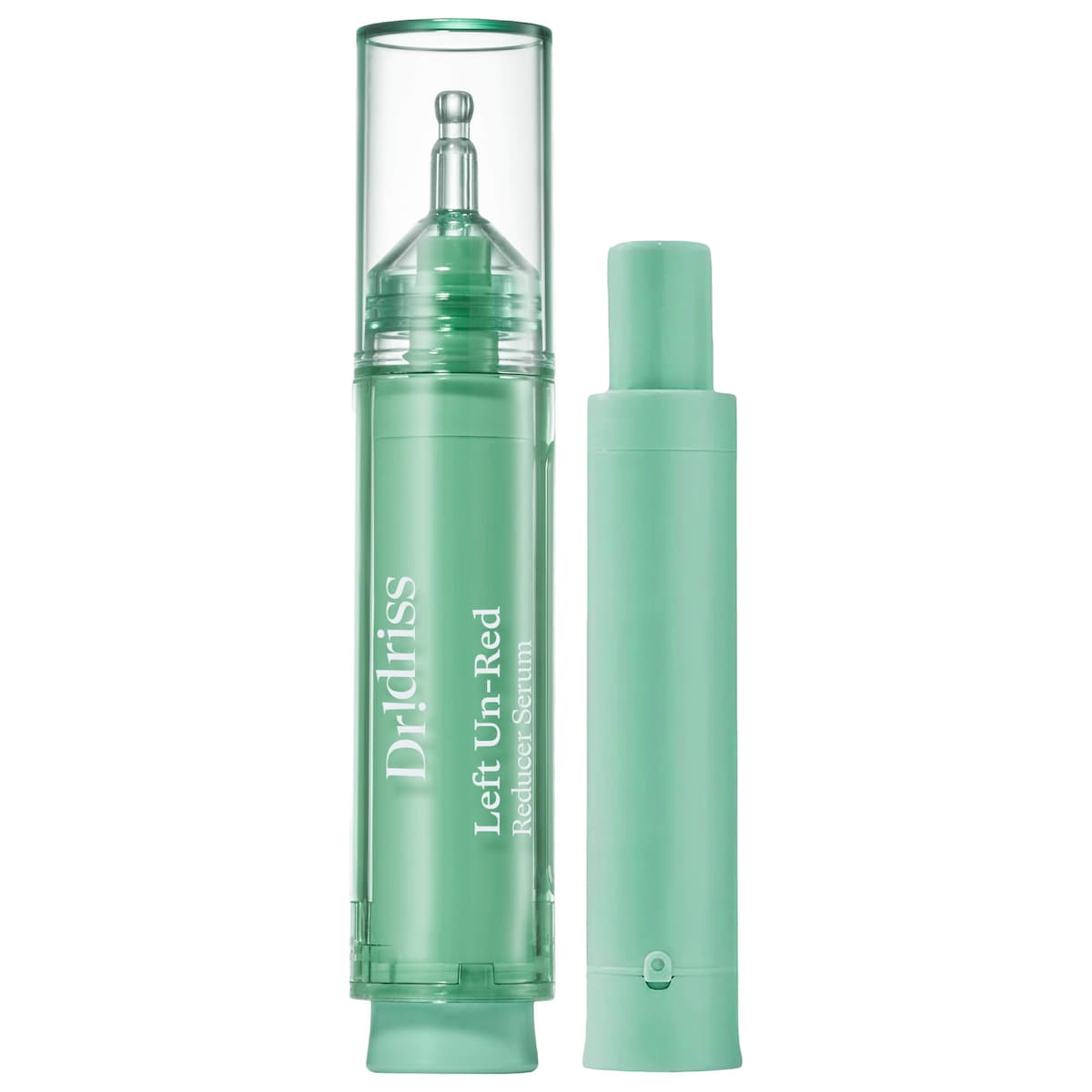
Dr. Idriss Left Un-Red Reducer Face Serum for Redness and Blemish Prone Skin

This serum is designed to calm visible redness and address breakouts. Its formula aims to reduce flushing and blemishes, making it a good option for those with sensitive or acne-prone skin experiencing redness.

Sephora price

$68.00

Price matters most when you are trying to learn whether this lane belongs in your routine without turning the test into a luxury gamble.

Sephora reviews

4.4 / 5

About 115 reviews on the current Sephora source, so there is real volume behind the reputation.

Shoppers keep mentioning

RednessAcnePores

These are the shopper themes that keep showing up around this listing and shape why people open it in the first place.

Glass take

4.4 / 5 overall fit

A targeted treatment for redness and breakouts that plays well with most skin types.

Dr. Idriss Left Un-Red Reducer Face Serum for Redness and Blemish Prone Skin

Sephora snapshot refreshed April 23, 2026

Price, rating, review count, and source status come from Sephora. Glass adds the routine fit, overlap risk, and what to compare next.

View Sephora

What Sephora says

What this product is supposed to do

A redness-reducing azelaic acid treatment serum that targets flushing and breakouts, with the National Rosacea Society Seal of Acceptance.

NormalDryCombinationOilyPoresRednessAcne and Blemishes

Apply morning and night on clean, dry skin.

Twist bottom of the pen to the left to dispense.

Dispense two to four pumps per application.

Massage serum all over face.

For best results, follow at night with Left Un-Red CalmBack Cream (sold separately).

What Glass adds

What actually matters before you buy it

A focused treatment for redness and blemishes. It’s a good choice if these are your primary concerns and you want a product with a clear purpose.

Calms redness effectively

Users report a noticeable reduction in redness and flushing after consistent use.

Helps with breakouts

The serum is credited with helping to clear up blemishes and prevent new ones from forming.

Best for

When this is a smart buy

  • Redness-prone skin
  • Blemish-prone skin
  • Combination to oily skin types

Skip if

When this is the wrong lane

  • You are looking for a general hydrator
  • Your primary concern is anti-aging

Routine fit

How to incorporate it

Apply after cleansing and before heavier creams. It can be used both morning and night. For nighttime use, consider layering with the Dr. Idriss Left Un-Red CalmBack Cream for enhanced results.

Why it works

Where it earns the slot and where it does not

The useful question is not whether this product is good in a vacuum. It is whether it makes your routine easier to run or just adds one more bottle with a familiar ingredient on it.

What it actually does well

  • Effectively targets redness and breakouts
  • Suitable for multiple skin types
  • National Rosacea Society Seal of Acceptance

Where it starts to feel redundant

  • May not be sufficient as a standalone treatment for severe acne
  • Price point is high

Routine fit

Where it belongs in the stack

Morning and Night

This serum is formulated for twice-daily use. Apply it to clean, dry skin as a treatment step before your moisturizer.

Glass rating

How this formula scores in real life

4.4/ 5 overall

A targeted treatment for redness and breakouts that plays well with most skin types.

Routine fit

4.5 / 5

This serum fits easily into AM and PM routines, targeting specific concerns without overwhelming the skin.

Full ingredient breakdown

Every ingredient, what it does, and whether I care

Solvent

Water/Aqua/Eau

Badness

0.0 / 10

The base of the formulation, dissolving other ingredients.

Usually helps with

All skin types

Watch for

None

Humectant

Glycerin

Badness

0.0 / 10

Attracts water to the skin, keeping it hydrated and supple.

Usually helps with

All skin types

Watch for

None

Humectant

Propanediol

Badness

0.0 / 10

A solvent and humectant that helps improve product texture and skin hydration.

Usually helps with

All skin types

Watch for

None

Active

Potassium Azeloyl Diglycinate

Badness

1.0 / 10

A derivative of azelaic acid, it helps to control oil production and reduce the appearance of redness.

Usually helps with

Oily skin, redness

Watch for

None

Active

Azelaic Acid

Badness

2.0 / 10

Targets redness, inflammation, and breakouts. It also helps to improve skin texture and tone.

Usually helps with

Redness, acne, hyperpigmentation

Watch for

Can cause mild stinging or irritation in some individuals, especially at higher concentrations.

Humectant

Pentylene Glycol

Badness

0.0 / 10

A multi-functional ingredient that acts as a humectant and preservative booster.

Usually helps with

All skin types

Watch for

None

Emollient

Caprylic/Capric Triglyceride

Badness

0.0 / 10

A skin-conditioning agent derived from coconut oil and glycerin that helps to replenish the skin's surface.

Usually helps with

Dry skin, normal skin

Watch for

None

Emollient

Butyrospermum Parkii (Shea) Butter

Badness

0.0 / 10

A rich emollient that moisturizes and soothes the skin.

Usually helps with

Dry skin, sensitive skin

Watch for

Can be comedogenic for some acne-prone individuals.

Solvent

Dipropylene Glycol

Badness

1.0 / 10

A solvent that can also act as a fragrance ingredient. Can be irritating for sensitive skin.

Usually helps with

Normal skin

Watch for

Potential for irritation in sensitive skin.

Emulsifier

Cetearyl Olivate

Badness

0.0 / 10

An emulsifier derived from olive oil that helps to blend oil and water in formulations.

Usually helps with

All skin types

Watch for

None

Emollient

Cetyl Alcohol

Badness

0.0 / 10

A fatty alcohol that softens and smooths the skin.

Usually helps with

Dry skin, normal skin

Watch for

None

Emulsifier

Sorbitan Olivate

Badness

0.0 / 10

An emulsifier derived from olive oil that helps to stabilize formulations.

Usually helps with

All skin types

Watch for

None

Thickener

Sodium Acrylate/Sodium Acryloyldimethyl Taurate Copolymer

Badness

0.0 / 10

A polymer used to thicken cosmetic formulations.

Usually helps with

All skin types

Watch for

None

Emollient

Dimethicone

Badness

0.0 / 10

A silicone that creates a smooth feel and forms a protective barrier on the skin.

Usually helps with

All skin types

Watch for

Can be pore-clogging for some acne-prone individuals.

pH Adjuster

Sodium Hydroxide

Badness

0.0 / 10

Used to adjust the pH of the product to ensure stability and efficacy.

Usually helps with

All skin types

Watch for

None

Soothing Agent

Glycyrrhetinic Acid

Badness

1.0 / 10

Derived from licorice root, it has anti-inflammatory and soothing properties that help calm redness.

Usually helps with

Sensitive skin, redness

Watch for

None

Soothing Agent

Hydroxyphenyl Propamidobenzoic Acid

Badness

1.0 / 10

A synthetic derivative of avenanthramide (found in oats) that helps to soothe and calm irritated skin.

Usually helps with

Sensitive skin, redness

Watch for

None

Exfoliant

Salix Alba (Willow) Bark Extract

Badness

2.0 / 10

Contains natural salicylic acid, which can help exfoliate and decongest the pores. Also has anti-inflammatory properties.

Usually helps with

Acne-prone skin, oily skin

Watch for

Can cause irritation for some, especially when combined with other exfoliants.

Emulsifier

Apricot Kernel Oil Polyglyceryl-6 Esters

Badness

0.0 / 10

A gentle emulsifier derived from apricot kernel oil.

Usually helps with

All skin types

Watch for

None

Amino Acid

Proline

Badness

0.0 / 10

An amino acid that plays a role in collagen production and skin repair.

Usually helps with

All skin types

Watch for

None

Antioxidant

Magnolol

Badness

1.0 / 10

A compound found in magnolia bark, known for its antioxidant and anti-inflammatory properties.

Usually helps with

All skin types

Watch for

None

Antioxidant

Honokiol

Badness

1.0 / 10

Another compound from magnolia bark, working with Magnolol to provide antioxidant and anti-inflammatory benefits.

Usually helps with

All skin types

Watch for

None

Chelating Agent

Sodium Phytate

Badness

0.0 / 10

A natural chelating agent that helps to improve the stability of formulations.

Usually helps with

All skin types

Watch for

None

Antioxidant

Ascorbyl Palmitate

Badness

1.0 / 10

A fat-soluble form of Vitamin C that acts as an antioxidant, protecting skin from free radical damage.

Usually helps with

All skin types

Watch for

Can be less potent than L-Ascorbic Acid.

Soothing Agent

Bisabolol

Badness

1.0 / 10

A component of chamomile, it helps to calm and soothe the skin, reducing redness and irritation.

Usually helps with

Sensitive skin, redness

Watch for

None

Skin Conditioning Agent

Capryloyl Glycine

Badness

1.0 / 10

Helps to regulate sebum production and has antimicrobial properties.

Usually helps with

Oily skin, acne-prone skin

Watch for

None

Preservative Booster

Ethylhexylglycerin

Badness

1.0 / 10

A preservative enhancer that also has skin-conditioning properties.

Usually helps with

All skin types

Watch for

Can be a skin irritant for some.

Humectant

Butylene Glycol

Badness

1.0 / 10

A humectant that helps to draw moisture into the skin and improve product texture.

Usually helps with

All skin types

Watch for

Can be a skin irritant for some.

Emulsifier

Sorbitan Oleate

Badness

0.0 / 10

An emulsifier that helps to blend oil and water components in a formula.

Usually helps with

All skin types

Watch for

None

Emulsifier

Polyglyceryl-6 Caprylate

Badness

0.0 / 10

A gentle, water-in-oil emulsifier.

Usually helps with

All skin types

Watch for

None

Thickener

Xanthan Gum

Badness

0.0 / 10

A natural thickening agent that improves product texture.

Usually helps with

All skin types

Watch for

None

Emulsifier

Polysorbate 80

Badness

1.0 / 10

An emulsifier that helps to disperse oils in water. Can be a skin irritant for some.

Usually helps with

Normal skin

Watch for

Potential for irritation in sensitive skin.

Emulsifier

Polyglycery-10 Oleate

Badness

0.0 / 10

A gentle emulsifier used to create stable emulsions.

Usually helps with

All skin types

Watch for

None

Emollient

Isohexadecane

Badness

0.0 / 10

An emollient that provides a smooth, non-greasy feel on the skin.

Usually helps with

All skin types

Watch for

None

Emulsifier

Sorbitan Palmitate

Badness

0.0 / 10

An emulsifier that helps to stabilize oil-in-water formulations.

Usually helps with

All skin types

Watch for

None

pH Adjuster

Sodium Bicarbonate

Badness

0.0 / 10

Used to adjust the pH of the product.

Usually helps with

All skin types

Watch for

None

Preservative

Phenoxyethanol

Badness

2.0 / 10

A common preservative that can be irritating for some individuals, especially at higher concentrations.

Usually helps with

Normal skin

Watch for

Potential for irritation and allergic reactions.

Colorant

Yellow 5 (CI 19140)

Badness

2.0 / 10

A synthetic colorant that can cause allergic reactions in sensitive individuals.

Usually helps with

None

Watch for

Potential for allergic reactions and skin sensitivity.

Colorant

Blue 1 (CI 42090)

Badness

2.0 / 10

A synthetic colorant that can cause allergic reactions in sensitive individuals.

Usually helps with

None

Watch for

Potential for allergic reactions and skin sensitivity.
Compare before you buy

The next pages that make this product more useful

A good product page should push you into the next decision, not trap you inside one product page forever. These are the cleaner next clicks.

FAQ

The fast answers people actually need

Is this serum good for rosacea?

Yes, this serum is formulated to target redness and flushing, and it has received the National Rosacea Society Seal of Acceptance, indicating it's suitable for rosacea-prone skin.

Can I use this with other acne treatments?

It can be used with other acne treatments, but always introduce new products one at a time to monitor your skin's reaction. Azelaic acid can complement other acne-fighting ingredients.

How quickly can I expect to see results?

Results can vary, but many users report seeing a reduction in redness within a few weeks of consistent use. Blemish reduction may also be observed over time.