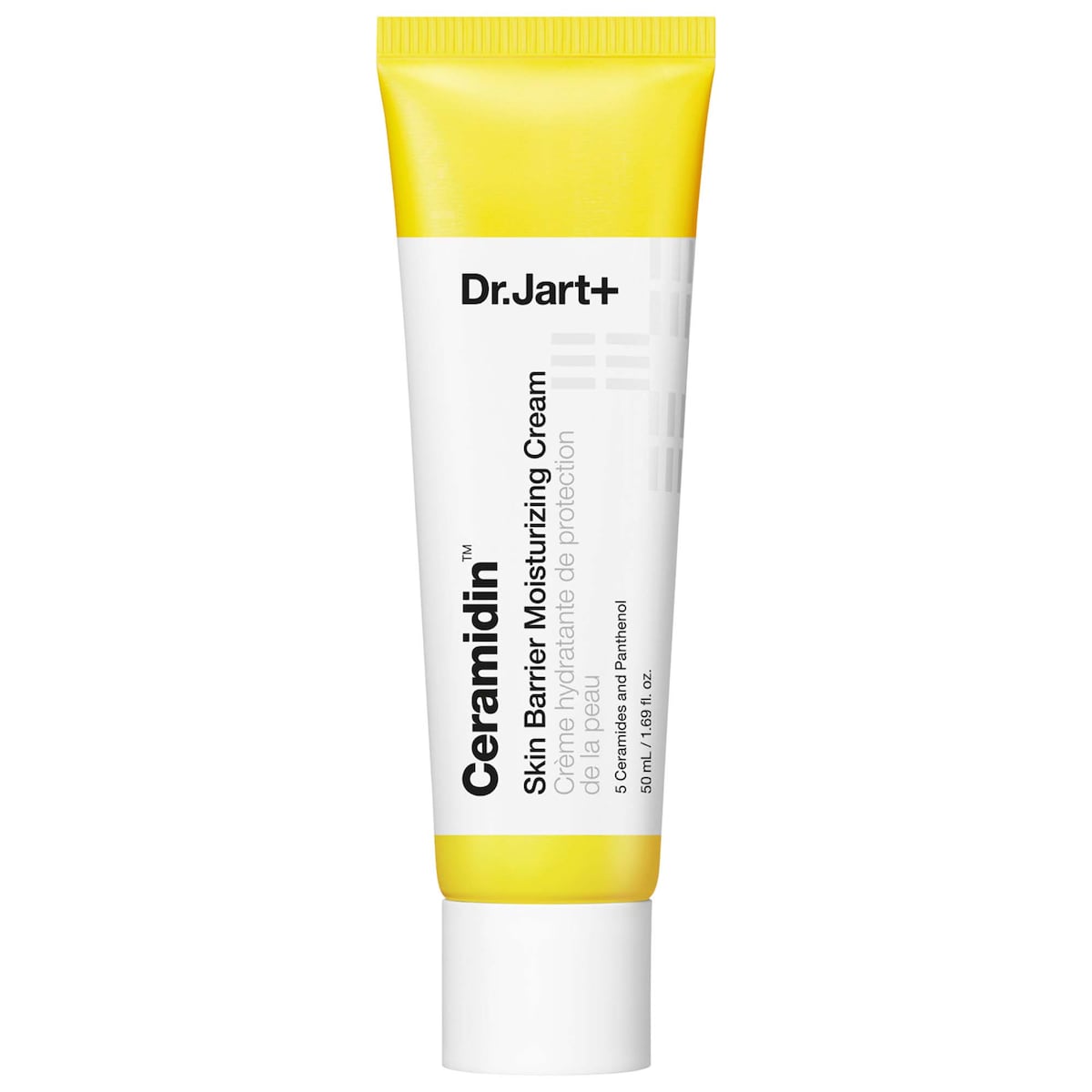
The base of the formulation, dissolving other ingredients.
Usually helps with
Hydration
Attracts water to the skin, helping to keep it hydrated and soft.
Usually helps with
Dryness, hydration
Emollient
Caprylic/Capric Triglyceride
A skin-conditioning agent derived from coconut oil and glycerin that helps to replenish skin.
Usually helps with
Dryness, softening skin
Humectant
Dipropylene Glycol
A humectant that helps to draw moisture into the skin. It can also act as a solvent.
Usually helps with
Hydration
Watch for
Can be a mild irritant for some.
Emollient
Cetearyl Alcohol
A fatty alcohol that helps to soften and smooth skin, and also acts as a thickener.
Usually helps with
Softening skin
Emollient
Hydrogenated Polydecene
A synthetic emollient that helps to smooth and soften the skin.
Usually helps with
Softening skin
Emollient
Methyl Trimethicone
A silicone derivative that provides a smooth feel and helps to reduce water loss.
Usually helps with
Smoothness, hydration
Emollient
Hydrogenated Poly(C6-14 Olefin)
A synthetic emollient that helps to soften and smooth the skin.
Usually helps with
Softening skin
Emollient
Butyrospermum Parkii (Shea) Butter
A rich plant-based butter known for its moisturizing and skin-conditioning properties.
Usually helps with
Dryness, nourishment
A humectant that also has preservative qualities, helping to keep the product stable.
Usually helps with
Hydration, preservation
Emollient
Phenyl Trimethicone
A silicone derivative that provides a smooth feel and can help to reduce water loss.
Usually helps with
Smoothness, hydration
Watch for
Some individuals prefer to avoid silicones.
Emollient
Dicaprylyl Ether
A light emollient that helps to soften and smooth the skin.
Usually helps with
Softening skin
Emulsifier
Cetearyl Olivate
An emulsifier derived from olive oil and cetearyl alcohol that helps to blend oil and water, and has skin-conditioning properties.
Usually helps with
Emulsifying, skin conditioning
A form of Vitamin B5 that attracts and holds moisture, soothes skin, and supports barrier function.
Usually helps with
Hydration, soothing, barrier support
Emulsifier
Glyceryl Stearate
An emulsifier and emollient that helps to create a smooth texture and condition the skin.
Usually helps with
Emulsifying, softening skin
A fatty alcohol that acts as an emollient and thickener, helping to create a rich texture.
Usually helps with
Thickening, softening skin
Emulsifier
Sorbitan Olivate
An emulsifier derived from olive oil and sorbitol that helps to blend oil and water.
Usually helps with
Emulsifying
Antioxidant
Theobroma Cacao (Cocoa) Seed Extract
Contains antioxidants that can help protect the skin from environmental damage.
Usually helps with
Antioxidant protection
A humectant that helps to attract and retain moisture in the skin.
Usually helps with
Hydration
Watch for
Can be a mild irritant for some.
Emulsifier
Cetearyl Glucoside
A gentle emulsifier derived from glucose and fatty alcohols, used to blend oil and water.
Usually helps with
Emulsifying
A type of ceramide that is a key component of the skin's natural barrier, helping to retain moisture and protect the skin.
Usually helps with
Barrier support, hydration
A type of ceramide that helps to strengthen the skin barrier and improve skin texture.
Usually helps with
Barrier support, texture improvement
A type of ceramide that is crucial for maintaining skin barrier integrity and preventing water loss.
Usually helps with
Barrier support, hydration
A type of ceramide that contributes to the skin's barrier function and helps to keep skin hydrated.
Usually helps with
Barrier support, hydration
A type of ceramide that helps to reinforce the skin barrier and improve skin's resilience.
Usually helps with
Barrier support, resilience
A lipid that is a natural component of the skin barrier, helping to maintain its structure and function.
Usually helps with
Barrier support, hydration
Emollient
Pentaerythrityl Distearate
A synthetic emollient that helps to soften and smooth the skin.
Usually helps with
Softening skin
Emulsifier
Hydrogenated Lecithin
A modified form of lecithin that acts as an emulsifier and skin-conditioning agent.
Usually helps with
Emulsifying, skin conditioning
A fatty acid that helps to soften and smooth the skin.
Usually helps with
Softening skin
A fatty acid that helps to soften and smooth the skin, and also acts as an emulsifier.
Usually helps with
Softening skin, emulsifying
Thickener
Microcrystalline Cellulose
A plant-derived ingredient used to thicken formulations and improve texture.
Usually helps with
Texture enhancement
Emulsifier
Glyceryl Stearate Se
A self-emulsifying form of glyceryl stearate, used to blend oil and water.
Usually helps with
Emulsifying
Thickener
Ammonium Acryloyldimethyltaurate/VP Copolymer
A synthetic polymer used to thicken formulations and improve texture.
Usually helps with
Texture enhancement
A plant-derived ingredient used to thicken formulations.
Usually helps with
Texture enhancement
A carbohydrate used to thicken formulations.
Usually helps with
Texture enhancement
Emollient
Glyceryl Polymethacrylate
A polymer that helps to condition and soften the skin.
Usually helps with
Skin conditioning
Fragrance
Pelargonium Graveolens Flower Oil
A natural essential oil that provides fragrance. It can be a potential irritant for sensitive skin.
Usually helps with
Fragrance
Watch for
Potential for skin sensitivity or allergic reactions.
Emollient
Olea Europaea (Olive) Fruit Oil
A natural oil rich in fatty acids and antioxidants, known for its moisturizing properties.
Usually helps with
Dryness, nourishment
Fragrance
Citrus Aurantium Bergamia (Bergamot) Fruit Oil
A citrus essential oil used for fragrance. It can be phototoxic and a potential irritant.
Usually helps with
Fragrance
Watch for
Can increase sun sensitivity; potential for irritation.
Fragrance
Salvia Officinalis (Sage) Oil
An essential oil used for fragrance. It has some antioxidant properties but can be a potential irritant.
Usually helps with
Fragrance
Watch for
Potential for skin sensitivity or allergic reactions.
A naturally occurring fragrance compound found in essential oils. It can be a potential irritant.
Usually helps with
Fragrance
Watch for
Potential for skin sensitivity or allergic reactions.
A form of Vitamin E, an antioxidant that helps protect the skin from free radical damage.
Usually helps with
Antioxidant protection
Colorant
Yellow 5 (CI 19140)
A synthetic colorant used to give the product its yellow hue. Some individuals may be sensitive to artificial colorants.
Watch for
Potential for skin sensitivity or allergic reactions.