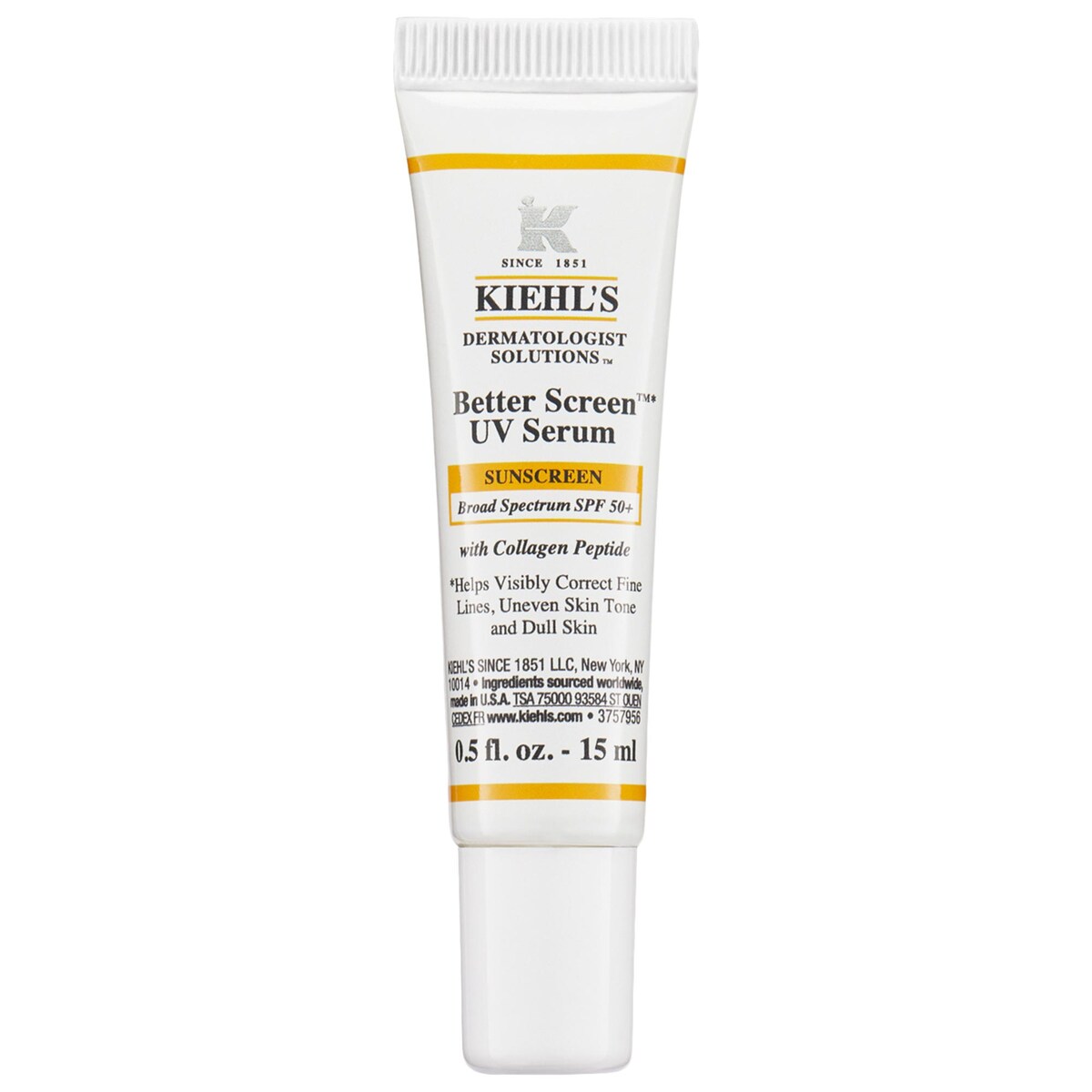
Kiehl's Since 1851sunscreenTreat step

Kiehl's Since 1851 Mini Better Screen UV Serum SPF 50+ Facial Sunscreen with Collagen Peptide

This sunscreen serum aims to provide daily UV defense while also addressing visible signs of sun damage like dark spots and uneven texture. Its lightweight texture makes it a comfortable option for daily wear.

Sephora price

$22.00

Price matters most when you are trying to learn whether this lane belongs in your routine without turning the test into a luxury gamble.

Sephora reviews

3.7 / 5

About 54 reviews on the current Sephora source, so there is real volume behind the reputation.

Shoppers keep mentioning

Good for: Anti-AgingSPFGood for: Uneven TextureUV ProtectionCollagenWithout ParabensSPF 50+ UVA/UVB: Protects against UV damage.Collagen Peptide: Visibly corrects signs of UV damage affecting skin tone and texture.Dark SpotsDullnessand Uneven Texture

These are the shopper themes that keep showing up around this listing and shape why people open it in the first place.

Glass take

3.7 / 5 overall fit

A solid SPF 50+ that offers UVA/UVB protection and targets early signs of aging. It's lightweight and suitable for most skin types, but the anti-aging benefits are subtle.

Kiehl's Since 1851 Mini Better Screen UV Serum SPF 50+ Facial Sunscreen with Collagen Peptide

Sephora snapshot refreshed April 23, 2026

Price, rating, review count, and source status come from Sephora. Glass adds the routine fit, overlap risk, and what to compare next.

View Sephora

What Sephora says

What this product is supposed to do

A lightweight sunscreen serum with collagen peptide that protects against sun damage and visibly corrects early signs of aging skin.

NormalDryCombinationand OilyDark SpotsDullnessand Uneven Texture

Apply generously as the last step in your skincare routine.

Wait 15 minutes before UV exposure.

Reapply every two hours.

What Glass adds

What actually matters before you buy it

This is a good option if you're looking for a daily SPF that also offers some corrective benefits for sun-induced aging. It fits well as the final step in any routine, but don't expect it to replace your dedicated serums for significant anti-aging results.

Daily SPF essential

Users appreciate the high SPF and lightweight feel, making it easy to incorporate into their daily routine for reliable sun protection.

Best for

When this is a smart buy

  • Daily sun protection
  • Addressing early signs of sun damage
  • Normal to oily skin types

Skip if

When this is the wrong lane

  • You need a high-potency anti-aging treatment
  • You prefer a mineral-based sunscreen

Routine fit

Your final layer of defense

Apply this serum generously as the very last step of your morning skincare routine, after all serums and moisturizers. Remember to reapply every two hours when exposed to the sun.

Why it works

Where it earns the slot and where it does not

The useful question is not whether this product is good in a vacuum. It is whether it makes your routine easier to run or just adds one more bottle with a familiar ingredient on it.

What it actually does well

  • Broad-spectrum SPF 50+
  • Lightweight serum texture
  • Addresses dark spots and uneven texture
  • Contains collagen peptide

Where it starts to feel redundant

  • Anti-aging results may be subtle
  • Not a primary anti-aging treatment
  • Contains chemical UV filters

Routine fit

Where it belongs in the stack

Morning routine

This product is designed for daytime use and should be applied as the final step before sun exposure.

Glass rating

How this formula scores in real life

3.7/ 5 overall

A solid SPF 50+ that offers UVA/UVB protection and targets early signs of aging. It's lightweight and suitable for most skin types, but the anti-aging benefits are subtle.

SPF Protection

4.5 / 5

Delivers broad-spectrum SPF 50+ protection, a crucial step for preventing sun damage and premature aging.

Anti-Aging Claims

3.5 / 5

The collagen peptide aims to correct signs of UV damage, but results may vary and are not as dramatic as dedicated anti-aging treatments.

Full ingredient breakdown

Every ingredient, what it does, and whether I care

UV Filter

Avobenzone

Badness

2.0 / 10

A chemical sunscreen ingredient that absorbs UVA rays. It can be photounstable on its own, but is often stabilized with other ingredients.

Usually helps with

UVA protection

Watch for

Potential for photounstable degradation if not formulated correctly

UV Filter

Homosalate

Badness

3.0 / 10

A chemical sunscreen ingredient that absorbs UVB rays. Concerns have been raised about its potential endocrine-disrupting properties.

Usually helps with

UVB protection

Watch for

Potential endocrine disruption

UV Filter

Octisalate

Badness

2.0 / 10

A chemical sunscreen ingredient that absorbs UVB rays. It is generally considered safe and effective.

Usually helps with

UVB protection

Watch for

None significant

UV Filter

Octocrylene

Badness

3.0 / 10

A chemical sunscreen ingredient that absorbs UVB and some UVA rays. It can also help stabilize other UV filters like Avobenzone. Concerns exist regarding its potential for skin sensitization and environmental impact.

Usually helps with

UVB and some UVA protection, stabilizer

Watch for

Potential skin sensitization, environmental concerns

Solvent

Water

Badness

0.0 / 10

The base for many skincare formulations, providing hydration.

Usually helps with

Hydration

Watch for

None

Humectant

Glycerin

Badness

0.0 / 10

A popular humectant that draws water into the skin, helping to maintain hydration and improve skin barrier function.

Usually helps with

Hydration, skin barrier support

Watch for

None

Emollient

C15-19 Alkane

Badness

1.0 / 10

A synthetic emollient that provides a smooth, non-greasy feel on the skin. It helps to improve spreadability.

Usually helps with

Skin conditioning, texture enhancement

Watch for

None

Solvent

Propanediol

Badness

1.0 / 10

A solvent and humectant that can help improve the penetration of other ingredients and provide hydration.

Usually helps with

Hydration, solvent

Watch for

None

Film Former

C12-22 Alkyl Acrylate/Hydroxyethylacrylate Copolymer

Badness

2.0 / 10

A polymer used to form a film on the skin, which can help with water resistance and texture.

Usually helps with

Film formation, texture

Watch for

Can sometimes feel tight on the skin

Antioxidant

Tocopherol

Badness

1.0 / 10

A form of Vitamin E, it's an antioxidant that helps protect the skin from free radical damage caused by environmental stressors.

Usually helps with

Antioxidant protection

Watch for

Can be less stable than other antioxidants

Emulsifier

Sodium Stearoyl Glutamate

Badness

1.0 / 10

A mild emulsifier that helps to blend oil and water phases in a formulation.

Usually helps with

Emulsification

Watch for

None

Humectant

Butylene Glycol

Badness

1.0 / 10

A humectant and solvent that helps to improve the texture of formulations and can aid in ingredient penetration.

Usually helps with

Hydration, solvent

Watch for

None

Emollient

Cetearyl Alcohol

Badness

1.0 / 10

A fatty alcohol that acts as an emollient and thickener, helping to soften and smooth the skin.

Usually helps with

Emollient, thickening

Watch for

Generally well-tolerated, but can cause irritation in very sensitive individuals

Thickener

Sclerotium Gum

Badness

1.0 / 10

A natural gum used as a thickener and stabilizer in cosmetic formulations.

Usually helps with

Thickening, stabilization

Watch for

None

Antioxidant

Hydroxyacetophenone

Badness

1.0 / 10

A synthetic antioxidant that helps protect the skin from oxidative stress.

Usually helps with

Antioxidant protection

Watch for

None

Humectant

Caprylyl Glycol

Badness

1.0 / 10

A humectant that also has antimicrobial properties, helping to preserve the formulation.

Usually helps with

Hydration, preservation

Watch for

None

Absorbent

Sodium Starch Octenylsuccinate

Badness

1.0 / 10

A modified starch that can help absorb excess oil and improve the texture of the product.

Usually helps with

Oil absorption, texture enhancement

Watch for

None

Emulsifier

Glyceryl Stearate

Badness

1.0 / 10

An emulsifier and emollient derived from glycerin and stearic acid, helping to create stable emulsions and condition the skin.

Usually helps with

Emulsification, skin conditioning

Watch for

None

Emollient

Jojoba Esters

Badness

1.0 / 10

Esters derived from jojoba oil, providing emollient properties and improving skin feel.

Usually helps with

Skin conditioning, emollient

Watch for

None

Emollient

Helianthus Annuus (Sunflower) Seed Wax

Badness

1.0 / 10

A plant-derived wax that acts as an emollient and texturizer, contributing to the product's feel.

Usually helps with

Emollient, texture

Watch for

None

Thickener

Hydroxypropyl Starch Phosphate

Badness

1.0 / 10

A modified starch used as a thickener and stabilizer in formulations.

Usually helps with

Thickening, stabilization

Watch for

None

Chelating Agent

Trisodium Ethylenediamine Disuccinate

Badness

1.0 / 10

A chelating agent that helps to improve the stability and performance of the formulation by binding to metal ions.

Usually helps with

Stabilization

Watch for

None

Thickener

Carbomer

Badness

2.0 / 10

A thickening agent used to create gels and improve the texture of formulations. Can sometimes cause a slight tightening sensation.

Usually helps with

Thickening, texture

Watch for

Can cause a tightening sensation

Humectant

Sodium Lactate

Badness

1.0 / 10

A salt of lactic acid, it's a humectant that helps to hydrate the skin.

Usually helps with

Hydration

Watch for

None

pH Adjuster

Sodium Hydroxide

Badness

2.0 / 10

Used to adjust the pH of the formulation. In small amounts, it's safe, but high concentrations can be irritating.

Usually helps with

pH adjustment

Watch for

Can be irritating in high concentrations

Emulsifier

Polysorbate 20

Badness

2.0 / 10

A synthetic emulsifier and surfactant. Can be a skin irritant for some individuals.

Usually helps with

Emulsification

Watch for

Potential for skin irritation

Emollient

Polyglycerin-3

Badness

1.0 / 10

A type of polyglycerin that acts as an emollient and skin-conditioning agent.

Usually helps with

Skin conditioning, emollient

Watch for

None

Peptide

Palmitoyl Tripeptide-1

Badness

1.0 / 10

A peptide that signals the skin to repair itself and stimulates collagen production, helping to improve skin firmness and reduce wrinkles.

Usually helps with

Anti-aging, collagen support

Watch for

None

Peptide

Palmitoyl Tetrapeptide-7

Badness

1.0 / 10

A peptide that helps to reduce inflammation and the production of certain interleukins, which can contribute to skin aging.

Usually helps with

Anti-aging, inflammation reduction

Watch for

None

Compare before you buy

The next pages that make this product more useful

A good product page should push you into the next decision, not trap you inside one product page forever. These are the cleaner next clicks.

FAQ

The fast answers people actually need

Is this sunscreen good for anti-aging?

Yes, it contains collagen peptides that aim to visibly correct signs of UV damage affecting skin tone and texture, and provides SPF 50+ protection to prevent further aging.

What skin types is this sunscreen suitable for?

This lightweight serum sunscreen is suitable for normal, dry, combination, and oily skin types.

How should I use this sunscreen serum?

Apply generously as the last step in your skincare routine. Reapply every two hours when exposed to the sun.