
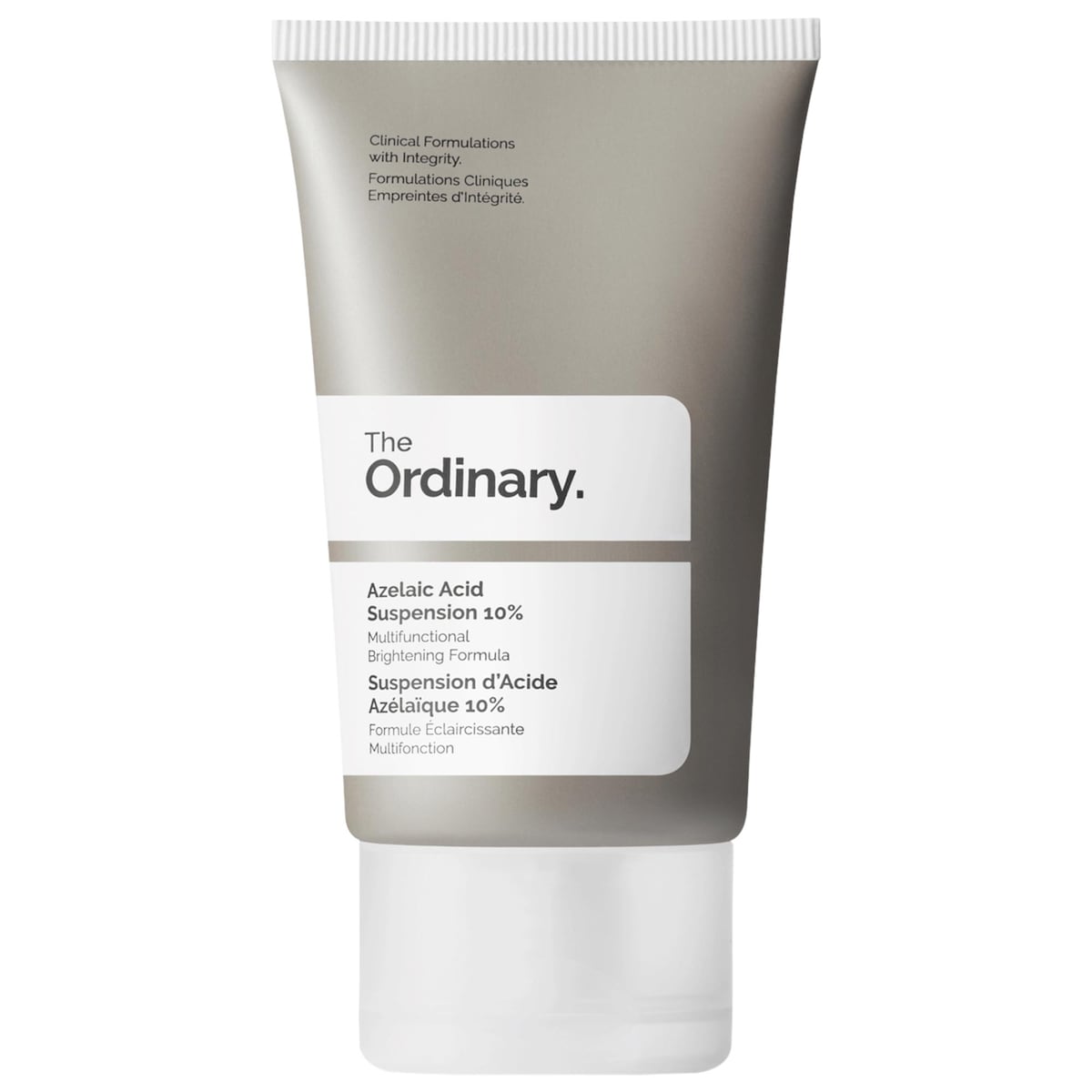
The OrdinarymoisturizerTreat stepSephora bestseller

The Ordinary Azelaic Acid Suspension 10% Cream for Redness and Blemish-Prone Skin

This cream offers a targeted approach to common skin concerns like redness and blemishes. Its 10% azelaic acid concentration works to visibly brighten and improve skin texture, making it a versatile addition to many routines.

Sephora price

$12.20 - $28.80

Price matters most when you are trying to learn whether this lane belongs in your routine without turning the test into a luxury gamble.

Sephora reviews

4.1 / 5

About 1,544 reviews on the current Sephora source, so there is real volume behind the reputation.

Shoppers keep mentioning

Community FavoriteGluten FreeVeganOil FreeAlcohol FreeDullnessUneven Textureand Acne and Blemishes

These are the shopper themes that keep showing up around this listing and shape why people open it in the first place.

Glass take

4.1 / 5 overall fit

A solid choice for targeting redness and blemishes, this cream offers a good balance of efficacy and gentle formulation, though it may not be potent enough for severe acne.

The Ordinary Azelaic Acid Suspension 10% Cream for Redness and Blemish-Prone Skin

Sephora snapshot refreshed April 23, 2026

Price, rating, review count, and source status come from Sephora. Glass adds the routine fit, overlap risk, and what to compare next.

View Sephora

What Sephora says

What this product is supposed to do

A multifunctional cream that visibly brightens skin.

NormalDryCombinationand OilyDullnessUneven Textureand Acne and Blemishes

Apply to your face in the AM and/or PM.

Avoid contact with eyes and mouth.

Use sun protection during the day.

What Glass adds

What actually matters before you buy it

This is a good option for those looking to address redness and uneven tone without harshness. It fits well into a routine focused on calming and clarifying the skin, especially when used consistently.

Visible reduction in redness

Many users praise the cream's ability to calm down redness and make their skin appear more even-toned.

Gentle yet effective

Despite its effectiveness, the formula is often described as gentle, making it suitable for those who typically react to active ingredients.

Best for

When this is a smart buy

  • Redness and irritation
  • Blemish-prone skin
  • Uneven skin tone and texture

Skip if

When this is the wrong lane

  • You have extremely sensitive skin that reacts to azelaic acid
  • You are looking for a heavy-duty acne treatment for severe cystic acne

Routine fit

How to incorporate this cream

Apply a small amount to cleansed skin in the morning and/or evening. It can be used after serums and before heavier moisturizers. Always follow with sunscreen during the day.

Why it works

Where it earns the slot and where it does not

The useful question is not whether this product is good in a vacuum. It is whether it makes your routine easier to run or just adds one more bottle with a familiar ingredient on it.

What it actually does well

  • Addresses redness and blemishes effectively
  • Improves skin texture
  • Suitable for multiple skin types
  • Good value for the active ingredient concentration

Where it starts to feel redundant

  • May not be sufficient for severe acne
  • Requires consistent use for best results
  • Sun protection is essential

Routine fit

Where it belongs in the stack

Morning and Night

This cream can be used twice daily. In the morning, it helps to calm redness and prepare skin for the day, while at night, it works to address blemishes and improve texture.

Glass rating

How this formula scores in real life

4.1/ 5 overall

A solid choice for targeting redness and blemishes, this cream offers a good balance of efficacy and gentle formulation, though it may not be potent enough for severe acne.

Redness reduction

4.2 / 5

Users report visible improvements in redness and irritation after consistent use.

Texture improvement

4.0 / 5

The cream helps to smooth uneven skin texture and reduce the appearance of blemishes.

Full ingredient breakdown

Every ingredient, what it does, and whether I care

Solvent

Water

Badness

0.0 / 10

The base of the formulation.

Usually helps with

Hydration

Watch for

None

Emollient

Isodecyl Neopentanoate

Badness

1.0 / 10

Provides a smooth feel and helps to spread the product.

Usually helps with

Skin conditioning

Watch for

None

Emollient

Dimethicone

Badness

1.0 / 10

A silicone that creates a smooth, protective barrier on the skin.

Usually helps with

Smoothing, barrier support

Watch for

Can feel heavy for some

Active

Azelaic Acid

Badness

2.0 / 10

The star ingredient, known for its anti-inflammatory and antibacterial properties, effective for redness and blemishes.

Usually helps with

Redness, blemishes, uneven tone

Watch for

Can cause mild stinging or irritation initially

Emollient

Dimethicone/Bis-Isobutyl PPG-20 Crosspolymer

Badness

1.0 / 10

A silicone elastomer that provides a silky texture and improves spreadability.

Usually helps with

Texture enhancement

Watch for

None

Solvent

Dimethyl Isosorbide

Badness

0.0 / 10

Helps to dissolve other ingredients and can enhance their penetration.

Usually helps with

Formulation stability

Watch for

None

Emulsifier

Hydroxyethyl Acrylate/Sodium Acryloyldimethyl Taurate Copolymer

Badness

0.0 / 10

Helps to bind oil and water in the formulation.

Usually helps with

Stable emulsions

Watch for

None

Emollient

Polysilicone-11

Badness

1.0 / 10

A silicone that gives a smooth, non-greasy feel.

Usually helps with

Texture

Watch for

None

Emollient

Isohexadecane

Badness

1.0 / 10

A lightweight emollient that conditions the skin.

Usually helps with

Skin conditioning

Watch for

None

Antioxidant

Tocopherol

Badness

1.0 / 10

Vitamin E, an antioxidant that helps protect the skin from environmental damage.

Usually helps with

Antioxidant protection

Watch for

None

Chelating Agent

Trisodium Ethylenediamine Disuccinate

Badness

0.0 / 10

Helps to stabilize the formulation by binding metal ions.

Usually helps with

Product stability

Watch for

None

Surfactant

Isoceteth-20

Badness

0.0 / 10

Used to help mix oil and water.

Usually helps with

Emulsification

Watch for

None

Emulsifier

Polysorbate 60

Badness

0.0 / 10

Helps to blend oil and water-based ingredients.

Usually helps with

Emulsification

Watch for

None

pH Adjuster

Triethanolamine

Badness

3.0 / 10

Used to adjust the pH of the product. Can be irritating in high concentrations.

Usually helps with

pH balance

Watch for

Potential for irritation

Solvent

Ethoxydiglycol

Badness

0.0 / 10

Helps to dissolve ingredients and improve texture.

Usually helps with

Formulation

Watch for

None

Preservative

Phenoxyethanol

Badness

2.0 / 10

A common preservative to prevent microbial growth.

Usually helps with

Product preservation

Watch for

Potential allergen for some

Preservative

Chlorphenesin

Badness

2.0 / 10

Another preservative to ensure product safety and longevity.

Usually helps with

Product preservation

Watch for

None

Compare before you buy

The next pages that make this product more useful

A good product page should push you into the next decision, not trap you inside one product page forever. These are the cleaner next clicks.

FAQ

The fast answers people actually need

Is this cream suitable for sensitive skin?

While azelaic acid is generally well-tolerated, sensitive skin types should patch test first. The formula is free of alcohol and oil, which can help.

Can I use this with other active ingredients?

Yes, it can often be layered with other actives. However, introduce new products gradually to monitor your skin's reaction.

How long does it take to see results?

Results can vary, but many users report seeing improvements in redness and texture within a few weeks of consistent use.

The Ordinary Azelaic Acid Suspension 10% Cream for Redness and Blemish-Prone Skin Review and Routine Fit | Glass