
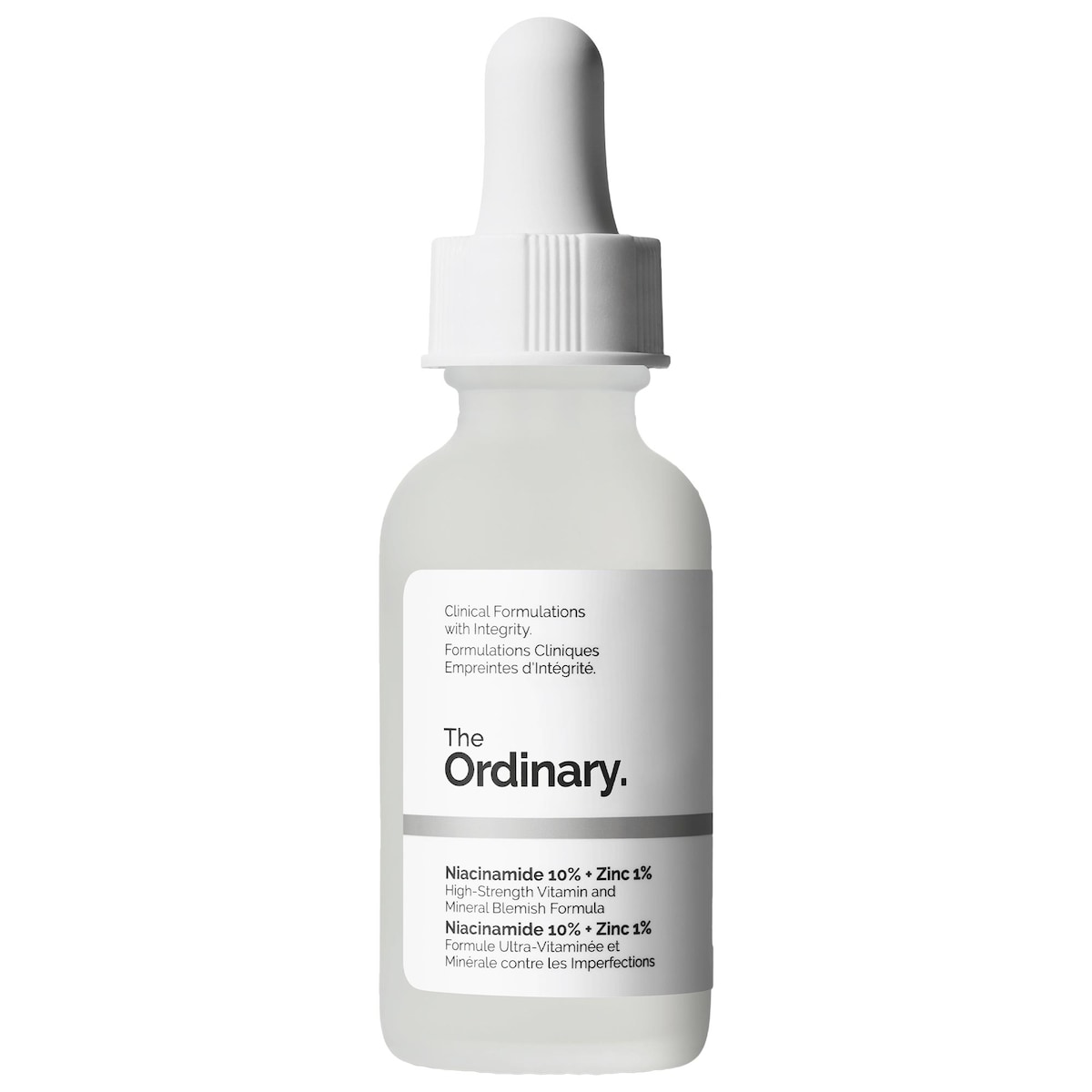
The OrdinaryNiacinamide serumTreat stepSephora bestseller

The Ordinary Niacinamide 10% + Zinc 1% Serum for Oily Skin

This is the Sephora niacinamide serum people reach for when the skin gets greasy fast, pores start looking louder, and they want one cheap step that feels easy to understand. The reason it keeps surviving every new serum launch is not that it is luxurious. It is that the job is obvious, the price is low, and the routine slot is clean.

If your skin is oily, combination, or breakout-prone and not especially irritated right now, this is one of the easiest serums to test without making the rest of your lineup feel unstable. If your real problem is tightness, stinging, or a barrier that already feels cooked, it is much easier to overestimate what this bottle can do.

Sephora price

$6.00 - $10.80

Price matters most when you are trying to learn whether this lane belongs in your routine without turning the test into a luxury gamble.

Sephora reviews

4.2 / 5

About 9,029 reviews on the current Sephora source, so there is real volume behind the reputation.

Shoppers keep mentioning

SatisfactionAcnePrice

These are the shopper themes that keep showing up around this listing and shape why people open it in the first place.

Glass take

4.1 / 5 overall fit

As a cheap, easy-to-place oily-skin serum, this scores well on clarity and value. The score drops hard for dry, barrier-damaged, or easily irritated skin because the whole formula is pointed toward the oil-control lane instead of the comfort lane.

The Ordinary Niacinamide 10% + Zinc 1% Serum for Oily Skin

Sephora snapshot refreshed April 23, 2026

Price, rating, review count, and source status come from Sephora. Glass adds the routine fit, overlap risk, and what to compare next.

View Sephora

What Sephora says

What this product is supposed to do

A high-strength vitamin and mineral blemish formula with 10 percent niacinamide and one percent zinc PCA.

OilinessVisible poresCongestion

Use a few drops before heavier creams in the morning or at night.

If you already use direct vitamin C, split them between different routines instead of forcing them into the same step.

This works best when the rest of the routine stays simple enough that you can tell whether it is actually helping.

What Glass adds

What actually matters before you buy it

Glass reads this as a straightforward oil-balance serum, not a miracle bottle. If the question is, "What is the cheapest way to test whether niacinamide actually helps my skin look calmer and less greasy?" this is a very reasonable answer.

If the question is, "What should I buy to fix dehydration, texture, acne, redness, post-breakout marks, and barrier damage all at once?" this is where people start expecting too much from it. The win with this product is clarity, not range.

Why people repurchase it

The satisfaction angle is mostly about repeatability. It is cheap, easy to understand, and does not feel like a luxury gamble.

What oily-skin shoppers notice

Recent Sephora reviewers keep talking about calmer oil, fewer spots, and skin looking less angry rather than some dramatic overnight transformation.

Why price keeps coming up

This is often a test bottle. People like that they can try niacinamide without spending premium-serum money just to learn whether the ingredient even fits them.

Recent Sephora reviews

What recent reviewers actually say

The review count tells you the listing has volume. The excerpts matter more because they show where the product actually earns repeat buys and where people start pushing it too far.

Apr 15

Actually working

It’s actually working so well. I recommend it.

T

Tasneem

Sephora review

Apr 12

Affordable and fast

Clears skin up so quickly and feels overall good and affordable.

E

Evie

Sephora review

Apr 15

Actually working

It’s actually working so well. I recommend it.

T

Tasneem

Sephora review

Apr 12

Affordable and fast

Clears skin up so quickly and feels overall good and affordable.

E

Evie

Sephora review

Best for

When this is a smart buy

  • Oily or combination skin that looks greasy by midday and wants a lighter balancing step.
  • People who want to test niacinamide cheaply before spending on a more premium serum.
  • Routines that already have cleanser, moisturizer, and SPF handled but still feel too shiny or congestion-prone.

Skip if

When this is the wrong lane

  • Your bigger problem is tightness, stinging, flaking, or a barrier that already feels irritated.
  • You already have niacinamide in toner, moisturizer, and sunscreen, and the routine is starting to overlap.
  • You want one bottle to replace exfoliation, acne treatment, moisturizer, and sunscreen.

Why it keeps selling

Why this serum keeps surviving every new niacinamide launch

Most niacinamide pages get too abstract too fast. This one is simpler. Shoppers open it because their skin is oily, pores look obvious, or breakouts keep hanging around, and they want a treatment step that does not feel expensive or confusing.

That is the real reason this product keeps moving. It is not glamorous, but it is easy to slot after cleansing and before moisturizer. When a routine already has the basics covered, that kind of clarity matters more than a fancier bottle or a longer ingredient list.

Where people get burned

Where people start expecting too much from it

This is the part most product pages soften too much. A 10 percent niacinamide serum is still a targeted step, not a full skin reset. If the real issue is dehydration, a stripped barrier, or irritation from too many actives, this can easily become the extra thing that the routine did not need.

It also becomes redundant fast. A lot of oily-skin routines already sneak niacinamide into toner, moisturizer, sunscreen, or spot-care products. Once that starts happening, another niacinamide serum can feel less like a smart addition and more like noise.

How I would use it

If this was already sitting in my drawer, this is how I would place it

I would use it in the treat step, after cleansing and before moisturizer, and I would keep the rest of the stack boring for a couple of weeks. That means no adding a new acid, no starting a retinoid at the same time, and no pretending a reaction came out of nowhere.

If the skin gets less greasy, calmer, and easier to manage, great, it earned the slot. If it pills, stings, or just starts to feel like one more step I am tolerating instead of wanting, I would stop forcing it and move back to the actual bottleneck in the routine.

Why it works

Where it earns the slot and where it does not

The useful question is not whether this product is good in a vacuum. It is whether it makes your routine easier to run or just adds one more bottle with a familiar ingredient on it.

What it actually does well

  • The price stays low enough that testing it does not feel like a high-stakes mistake.
  • The texture and job are both easy to understand, which is a big reason people actually finish the bottle.
  • Best when you want less oil drama without moving into a richer, heavier, or more expensive serum lane.

Where it starts to feel redundant

  • Not a hydration-first serum and still not a replacement for moisturizer.
  • Will not do the job of BHA, retinoid, acne medication, or daily SPF when those are the actual missing steps.
  • The 10 percent niacinamide lane can be too much for some people, especially if they pile it into an already busy routine.

Routine fit

Where it belongs in the stack

Morning fit

Use after cleansing and before moisturizer and SPF when the main goal is keeping the skin less shiny and less congested through the day.

Night fit

Night use is fine too, especially in a simpler stack. If the rest of the routine already includes stronger actives, add this conservatively instead of forcing it into every night.

Pairing rule

Pairs best with a plain moisturizer and daily sunscreen. If you are already using acids or retinoids aggressively, keep everything else calmer while you test it.

Glass rating

How this formula scores in real life

4.1/ 5 overall

As a cheap, easy-to-place oily-skin serum, this scores well on clarity and value. The score drops hard for dry, barrier-damaged, or easily irritated skin because the whole formula is pointed toward the oil-control lane instead of the comfort lane.

Oil-control fit

4.8 / 5

This is the strongest part of the formula. If excess oil and visible pores are the problem, the product is doing the job it was built for.

Breakout-prone fit

4.4 / 5

Useful for congestion-prone skin when the routine is otherwise calm, but still not a replacement for acne medication or exfoliation when those are the real missing pieces.

Sensitive-skin friendliness

2.7 / 5

Some people tolerate it well, but a 10 percent niacinamide serum is not where I would start if the skin already gets reactive easily.

Dry-skin fit

2.4 / 5

There is some hydration support in the base, but this is not a dry-skin-first serum and it can feel underwhelming if tightness is the main issue.

Routine compatibility

4.1 / 5

Easy to place in a simple routine, but the score drops once niacinamide is already showing up in too many other products you own.

Value for money

4.9 / 5

Very high. It is one of the lowest-risk ways to learn whether niacinamide is even worth pursuing for your skin.

Full ingredient breakdown

Every ingredient, what it does, and whether I care

Base solvent

Aqua (Water)

Badness

0.2 / 10

The water base gives the serum its lightweight, quick-spreading feel. It is not doing treatment work on its own, but it sets the tone for how fluid the formula feels on skin.

Usually helps with

Keeping the texture light enough for oily and combination skin.

Watch for

Nothing special here. This is a neutral formula base, not an active.

Primary active

Niacinamide

Badness

3.8 / 10

This is the main reason to buy the product. Niacinamide is the vitamin B3 active that targets oiliness, visible pores, post-breakout unevenness, and the overall 'my skin looks loud today' problem.

Usually helps with

Oil balance, calmer-looking pores, and a less shiny mid-day face.

Watch for

At 10 percent, it can be more than some sensitive or barrier-damaged skin wants.

Humectant and solvent

Pentylene Glycol

Badness

1.2 / 10

Adds slip and some water-binding support so the formula does not feel as harsh or flat as a purely corrective serum would.

Usually helps with

Giving the serum a little hydration and making it easier to spread.

Watch for

Usually well tolerated, but it is still a support ingredient, not a reason to buy the product by itself.

Sebum-support active

Zinc PCA

Badness

2.4 / 10

This is the ingredient that keeps the formula pointed toward oily and blemish-prone skin. It supports the oil-control story instead of turning this into a generic niacinamide serum.

Usually helps with

Shine control and the greasy, congestion-prone feel that people keep describing in reviews.

Watch for

Can feel less relevant if your main issue is dehydration or redness rather than oil.

Solvent and delivery helper

Dimethyl Isosorbide

Badness

2.2 / 10

Helps dissolve the actives cleanly and keeps the formula feeling uniform instead of patchy or uneven on application.

Usually helps with

Making the serum feel cleaner and more even across the face.

Watch for

Not an issue for most people, but solvent-heavy formulas can feel less forgiving on already irritated skin.

Texture and film former

Tamarindus Indica Seed Gum

Badness

1.1 / 10

This gives the serum some body and a slight cushion on skin. It is part of why the formula feels like a serum instead of colored water.

Usually helps with

Adding a smoother, slightly more hydrated finish after application.

Watch for

Too much film-forming texture can pill if the rest of the routine is already crowded.

Stabilizer and thickener

Xanthan Gum

Badness

0.9 / 10

Mostly here to keep the texture stable and stop the formula from separating. It changes the feel more than the skin result.

Usually helps with

Making the serum sit evenly and dispense consistently.

Watch for

Can contribute a slightly tackier feel if you over-apply.

Solubilizer

Isoceteth-20

Badness

2.6 / 10

A support ingredient that helps blend formula components together so the product stays smooth and usable bottle to bottle.

Usually helps with

Keeping the formula cosmetically elegant enough for everyday use.

Watch for

Not usually the ingredient people react to first, but it still matters more if your skin barrier is very touchy.

Solvent

Ethoxydiglycol

Badness

2.1 / 10

Another support solvent that keeps the formula evenly dissolved and helps the active system spread the way it is supposed to.

Usually helps with

Consistent feel and even application.

Watch for

Like the other solvents, it is more about formula behavior than direct skin benefits.

Preservative

Phenoxyethanol

Badness

3.1 / 10

Keeps the formula safe and stable during use. It does not improve skin directly, but it is part of what keeps the bottle shelf-safe after opening.

Usually helps with

Formula safety and stability.

Watch for

Usually fine at cosmetic levels, but preservative systems matter more if your skin is very reactive.

Preservative booster

Chlorphenesin

Badness

3.4 / 10

Works with the rest of the preservative system to prevent contamination and keep the serum from going off early.

Usually helps with

Keeping the bottle usable through its full life cycle.

Watch for

Another support ingredient that is usually fine, but not where I would point someone if they already know preservatives tend to sting their skin.

FAQ

The fast answers people actually need

Is this a morning serum or a night serum?

Either works. Morning usually makes more sense when the goal is oil balance and a lighter daytime routine. Night works too if the rest of the stack is still simple.

Does this replace moisturizer?

No. This is a treatment serum. It can help the routine stay more balanced, but it does not replace the hydration and sealing role of moisturizer.