
Dr. Dennis Gross Mini Alpha Beta Extra Strength Daily Peel Pads are not the kind of product I would toss into a routine casually.
They are small. They are convenient. They come in a mini five-treatment format. That makes them look low-commitment.
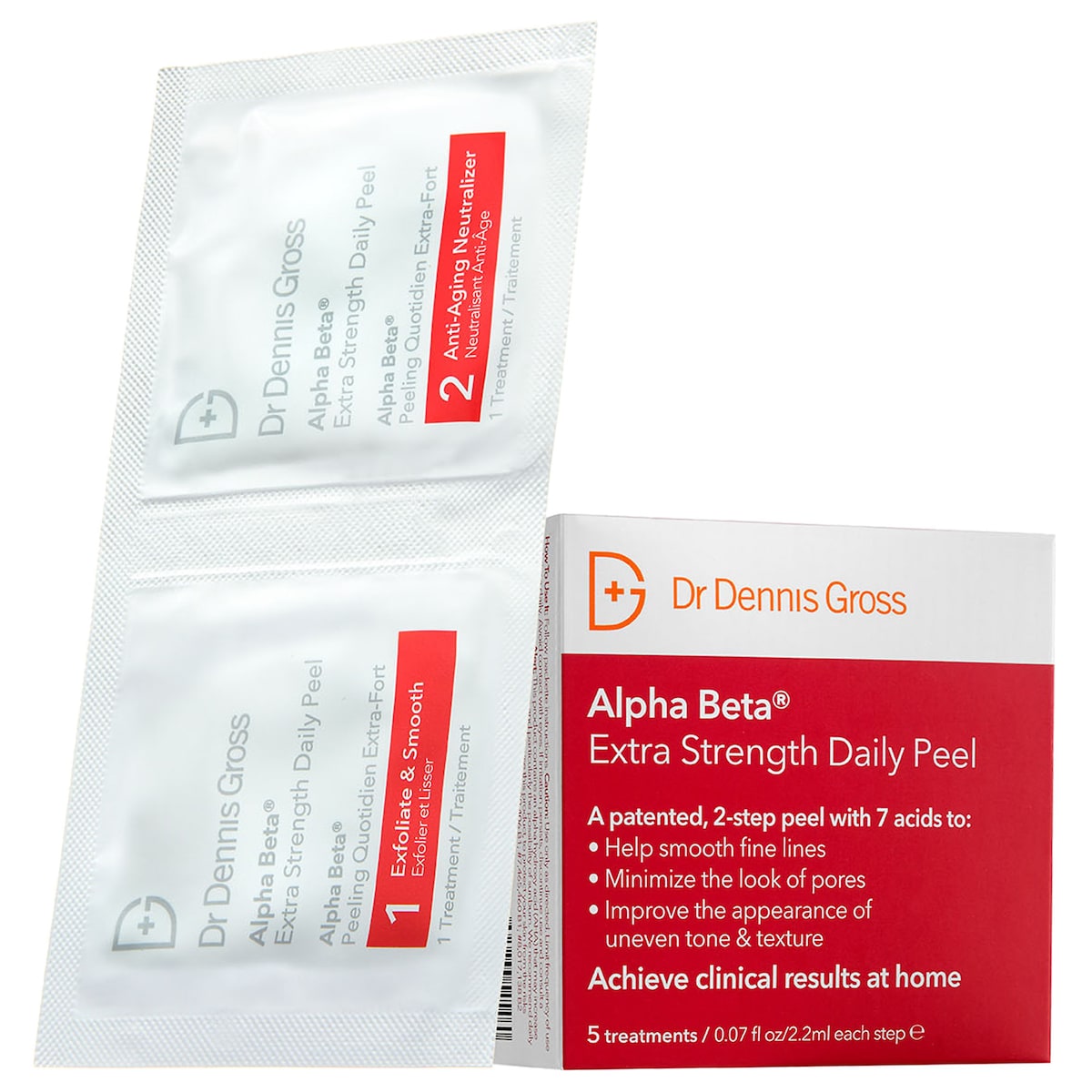
But the formula is still a two-step AHA/BHA peel pad with glycolic acid, mandelic acid, lactic acid, malic acid, citric acid, salicylic acid, willow bark, antioxidants, and a second pad that follows after a two-minute wait. In normal language: this is an active exfoliating treatment, not a cute wipe.
As of May 2026, Dr. Dennis Gross Skincare Mini Alpha Beta Extra Strength Daily Peel Pads sit in the $20 mini-treatment lane in the Glass catalog, with a rating around 4.52 from about 826 reviews. The product is positioned for normal, dry, combination, and oily skin, with fine lines, uneven texture, and acne or blemishes as the concern lane.
My short read: I would consider the mini peel pads if my skin is already calm and I want a structured way to test a stronger exfoliation night for texture, clogged-looking pores, dullness, or post-breakout roughness. I would skip them if my skin is irritated, sensitive, peeling, sunburned, newly on retinoids, or already using multiple acid products.
The Quick Read
| Detail | My read |
|---|---|
| Product | Dr. Dennis Gross Mini Alpha Beta Extra Strength Daily Peel Pads |
| Format | Two-step peel pads |
| Glass catalog price | $20 mini format |
| Rating signal | About 4.52 stars from about 826 reviews |
| Main acid lane | AHA plus BHA |
| Key ingredients I notice | Glycolic acid, mandelic acid, salicylic acid, resveratrol, green tea |
| Best fit | Calm skin with rough texture, dullness, clogged-looking pores, or post-breakout unevenness |
| Biggest risk | Using them too often or stacking them with other actives |
The mini format is the part I like most. A five-treatment box is a smarter way to learn than buying a full routine around a product your skin may not want.
What These Peel Pads Are Actually Doing
The product is built as a two-step system.
Step 1 is the acid pad. It includes alpha hydroxy acids and salicylic acid. That is the resurfacing and pore-clearing side of the product. The pad is meant to be massaged over clean, dry skin until it feels spent.
Then you wait two minutes.
Step 2 is the follow-up pad. It brings ingredients such as resveratrol, retinol, ascorbic acid, ubiquinone, green tea, sodium PCA, glycerin, and other support ingredients. You do not rinse after either step.
That structure matters because it makes the product less vague than a normal toner. You are not free-pouring acid into your palm and hoping the amount is reasonable. Each treatment is pre-dosed.
Pre-dosed does not mean impossible to overdo. It means the dose is controlled inside the packet. Frequency is still your responsibility.
Who I Think They Fit Best
I would consider these pads for someone who says:
- my skin is calm, but texture will not smooth out
- my makeup catches on rough patches
- my pores look clogged around the nose or chin
- my skin looks dull even when moisturized
- post-breakout marks look worse because the surface is uneven
- I want an exfoliation step that has clear instructions
- I do not want a full bottle of acid toner yet
That last point is underrated. A mini peel pad format is useful for decision-making. You can learn whether your face likes a stronger acid night without committing to months of product.
I would not make this the first active in a beginner routine. I would make it the active I test only after cleanser, moisturizer, and sunscreen are already stable.
Who Should Skip Them
I would skip these pads if your skin is already stinging, red, flaky, sunburned, freshly waxed, or reacting to basic moisturizer.
That is not the moment to resurface. That is the moment to calm down.
I would also skip them if you are using a prescription retinoid, strong retinol, benzoyl peroxide, another AHA/BHA toner, a peel mask, or an acne routine that already dries you out unless a clinician has helped you place everything. The American Academy of Dermatology warns that products such as retinol, benzoyl peroxide, and exfoliating products can make skin more sensitive, and that exfoliation can lead to redness or acne flares when it is not matched to the skin.
I would be especially careful if you have eczema, rosacea, active irritation, a history of chemical peel reactions, or skin that develops dark marks easily after irritation. This is a home exfoliant, not a substitute for a dermatologist.
The First-Time User Problem
The product says first-time peel users may start every other day until the skin gets used to it.
I would be more conservative than that if I were new to peels.
For a first box, I would use one treatment, then wait at least several days before deciding on the next one. Not because the product cannot be used more often by some people. Because the first goal is not maximum speed. The first goal is learning how your skin responds.
A five-pack can become:
| Treatment | When I would use it |
|---|---|
| Pad 1 | A calm night with no other actives |
| Pad 2 | Four to seven days later if skin stayed calm |
| Pad 3 | The next week if texture improved without irritation |
| Pad 4 | Only if the routine still feels stable |
| Pad 5 | Save for a planned texture-reset night, not a panic night |
That pace sounds slow. Slow is how you avoid turning a $20 test into a barrier problem.
How Strong Do They Feel On Paper?
I look at these as stronger than a casual hydrating toner and more structured than a single-acid product.
The acid side includes glycolic, mandelic, lactic, malic, citric, salicylic, and willow bark. That mix covers surface exfoliation plus a pore-focused BHA lane. For someone with dullness and rough texture, that is why the product is appealing.
For someone with reactive skin, that is also why I would slow down.
More acids do not automatically mean better skin. The face has to tolerate the routine around them. If the cleanser is harsh, the moisturizer is too light, the sunscreen is inconsistent, and retinoid nights are already irritating, these pads may push the routine over the edge.
The useful question is not "Are they strong?" It is "Does my current routine have enough recovery space for them?"
The Review Signal I Would Trust
The rating and review count are strong enough to tell me this is not a random product. Still, I would not buy peel pads from the number alone.
For this kind of treatment, I care about specific patterns:
- people noticing smoother texture without constant stinging
- people using them less often than daily and still finding value
- people understanding that they replace an acid night
- people pairing them with moisturizer and sunscreen
- people with sensitive skin stepping down or skipping
- people not treating purging, burning, and irritation as the same thing
The best review pattern is not "my face tingled a lot, so it must be working." The best pattern is "my skin looked smoother and stayed comfortable."
How I Would Use Them At Night
I would use these at night, not because they can never be used in the morning, but because night gives the routine more room. No makeup. No rushing sunscreen. No outdoor sun exposure right after exfoliation.
My peel-pad night:
- Cleanse gently.
- Dry the skin fully.
- Use Step 1 over face, avoiding eye area and broken skin.
- Wait two minutes.
- Use Step 2.
- Do not rinse.
- Apply a simple moisturizer.
- Stop.
No retinol. No scrub. No acid toner. No benzoyl peroxide. No new vitamin C. No brightening serum you have never used before.
The peel pad is the treatment.
What I Would Use The Next Morning
The next morning should be boring.
Gentle cleanse or rinse. Moisturizer if needed. Sunscreen.
That is it.
This matters because exfoliation can make skin more sun-sensitive. If you are going to use acid pads, sunscreen is not optional. It is part of the treatment plan.
If you tend to skip SPF, I would fix that before buying peel pads. Smoother skin is not worth making sun exposure and irritation worse.
The Texture And Acne-Mark Use Case
These pads make the most sense when the problem is surface-level texture.
Post-breakout marks can look worse when the skin around them is dull, rough, or uneven. Exfoliation can help the surface look smoother over time, but it is not the same as treating every type of discoloration or scar.
The American Academy of Dermatology distinguishes flat post-acne discoloration from true acne scars. That distinction matters. A peel pad may help roughness and brightness. It will not refill pitted scars.
I would use the pads for:
- rough-feeling texture
- dull surface buildup
- clogged-looking pores
- makeup catching on uneven spots
- post-breakout unevenness when skin is calm
I would not use them on open pimples, picked skin, inflamed cysts, or raw areas.
The Over-Exfoliation Check
Over-exfoliation does not always look like dramatic peeling.
Sometimes it looks like skin that is shiny but tight. Sometimes moisturizer suddenly burns. Sometimes you get more small bumps and assume you need more acid, when your barrier may actually be annoyed.
I would stop peel pads temporarily if I noticed:
- moisturizer stinging
- unusual redness
- tightness that does not improve with cream
- peeling around the mouth or nose
- sunscreen burning
- sudden sensitivity to products that usually feel fine
- breakouts that look more irritated than clogged
The move is not to push through. The move is to simplify.
Where Glass Fits
This is exactly the kind of product I would track in Glass.
Add the peel pads as an exfoliation-night product. Log the exact date, what else you used, and how your skin felt the next morning. Do not rely on memory. Peel pads are easy to overuse because the individual packets feel like small decisions.
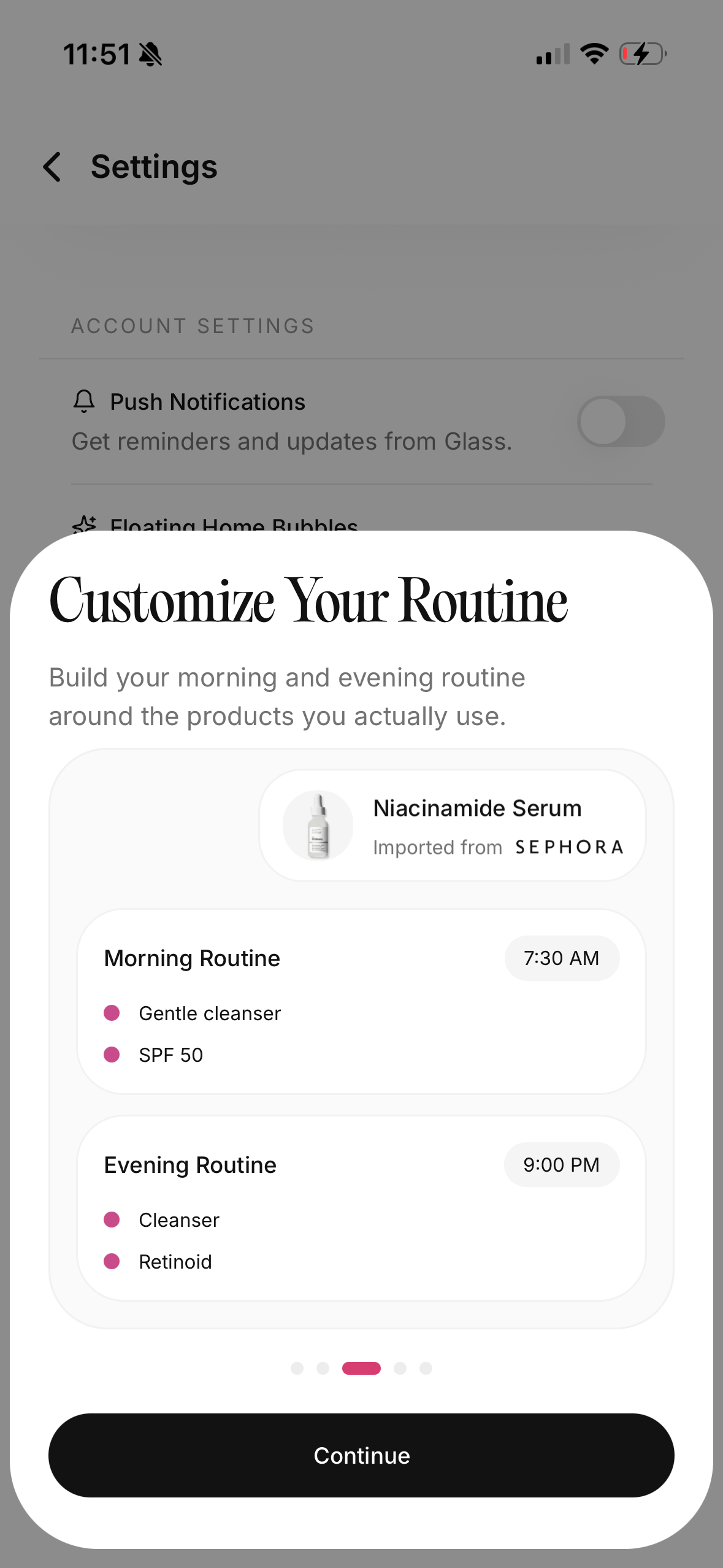
If your routine already has retinol, I moved my nighttime skincare routine earlier is a useful framework for separating retinol nights, exfoliation nights, and recovery nights.
My Verdict
Dr. Dennis Gross Mini Alpha Beta Extra Strength Daily Peel Pads are a strong mini-format test for people who want smoother texture, brighter-looking skin, and a more structured exfoliation step.
I like the five-treatment size because it forces a decision instead of a full bottle commitment. I like that the two-step format gives clear instructions. I like the AHA/BHA structure for calm skin with dullness, rough texture, and clogged-looking pores.
The catch is frequency. The product name says daily, but your skin does not have to. I would treat the mini as a tolerance test, not a challenge. If the pads make the routine easier and smoother without irritation, they can earn a place. If they make the skin tight, hot, stingy, or more reactive, they are too much for that moment.
FAQ
Are Dr. Dennis Gross Mini Extra Strength Peel Pads good for beginners?
They can be too strong for a true beginner. I would start only if the rest of the routine is stable, use one pad on a calm night, and wait several days before deciding on the next treatment.
Can I use the peel pads every day?
Some people may tolerate frequent use, but I would not start there. First-time users should build slowly and watch for stinging, tightness, redness, peeling, or a moisturizer that suddenly burns.
Do I rinse after Step 2?
No. The usage directions say to use Step 1, wait two minutes, use Step 2, and do not rinse.
Can I use them with retinol?
I would keep peel-pad nights separate from retinol nights unless a clinician has told you otherwise and your skin already tolerates both well. For most people, separate nights are easier to manage.