
Chemical peels sound simple.
They are not.
A peel can be a light refresh before an event. It can also be a controlled skin injury with real downtime, pigment risk, and aftercare rules that matter more than the pretty treatment-room photo. That is why I would not book a chemical peel in Midlothian, Texas from the first page that says "glow."
I would slow down.
Midlothian has local options, nearby Mansfield and Waxahachie options, and a little search confusion with Midlothian, Virginia. Before I let anyone put acid on my face, I would confirm the exact city, the exact provider, the exact peel depth, and the exact plan for my skin tone, acne history, sun exposure, and current routine.
That is not being dramatic. That is how you avoid turning a cosmetic appointment into a repair project.
The quick answer
If I were booking chemical peels in Midlothian, TX in May 2026, I would start with a consultation, not a prepaid package. I would compare local providers like Lift Medical Aesthetics, Truelove Aesthetics, Paired Precision Health & Aesthetics, and the broader Midlothian skin care directory by provider training, peel type, pre-care rules, aftercare, pigment-risk screening, and whether they can explain why that peel fits my skin.
I would not book a medium or aggressive peel from a vague menu. I would not choose based only on price. I would not do it right before a wedding, vacation, lake weekend, spray tan, or outdoor sports stretch.
The best chemical peel appointment is usually the one where the provider talks you out of the wrong peel before selling you the right one.
Midlothian first: make sure you are looking at Texas
This sounds obvious until you search.
Midlothian, TX and Midlothian, VA both show up around spa and chemical peel searches. A provider page can look legitimate while belonging to the wrong state. I would check the address before reading reviews, comparing prices, or planning downtime.
For Midlothian, Texas, I would look for signals like:
- Midlothian, TX 76065
- Mansfield, Waxahachie, Cedar Hill, or Ellis County service-area language
- a Texas phone number
- a provider website that matches the map listing
- treatment pages that name the same clinic and city
- consultation or intake forms that match the exact business
If a page mentions Richmond, Chesterfield, or a Virginia zip code, it is not your appointment.
That simple city check matters because chemical peel advice is local in a practical way. You are not only choosing a treatment. You are choosing where you can return if your skin reacts, where you can ask follow-up questions, and who will see you if the healing does not look right.
I would choose the provider before the peel
The provider matters more than the peel name.
A glycolic peel, salicylic peel, TCA peel, VI Peel-style treatment, lactic peel, or brightening peel can all sound reasonable in a menu. The real question is whether the person treating you knows how to match that peel to your skin.
Before booking, I would ask:
| Question | What I am listening for |
|---|---|
| Who performs the peel? | A licensed, trained person with peel experience, not just "our staff" |
| What peel depth are you recommending? | Light, medium, or deeper language with a clear reason |
| How many have you done on my skin tone? | Experience with pigment risk, not generic reassurance |
| What should I stop before the peel? | Specific rules for retinoids, acids, acne meds, waxing, and sun |
| What could go wrong? | Honest discussion of burns, pigment change, infection, scarring, and prolonged redness |
| What do I do if healing looks wrong? | A clear contact plan, not "just wait it out" |
The American Academy of Dermatology says a dermatologist offers a consultation before a chemical peel to protect health and understand the desired result. That consultation mindset is the standard I would bring into any med spa or skincare clinic, even if I am booking a lighter peel.
If the clinic skips straight to a package, I would slow down.
The depth changes everything
People talk about chemical peels like one category.
Depth is the difference.
A light peel may target dullness, rough texture, clogged pores, mild discoloration, or an early acne-care plan. It can still irritate, but the downtime is usually more manageable.
A medium peel is a bigger decision. It can be used for more visible pigmentation, texture, acne marks, or sun damage, but it brings more healing, more redness, more peeling, and more risk if the skin is not screened well.
A deep peel is a medical-level decision, not a casual spa add-on. Mayo Clinic notes that chemical peels can have risks including redness, scabbing, swelling, pigment changes, infection, scarring, and, for deep phenol peels, possible heart, kidney, or liver concerns. I would not treat any deep peel like a beauty errand.
The words I want to hear are controlled and appropriate.
Not strongest.
Not fastest.
Not "you will peel like crazy."
More peeling does not automatically mean a better result. A good provider should care about the right depth for your skin, not the most dramatic healing week.
Skin tone changes the risk conversation
This is where I would pay close attention.
Chemical peels can be safe for many skin tones, but the provider needs experience with pigment behavior. The AAD warns that people with skin of color can develop permanent pigment problems if a provider lacks expertise with darker skin tones.
That does not mean darker skin should never get peels. It means the consultation needs to be more specific.
I would ask:
- Have you performed this peel on my skin tone before?
- What is my risk of hyperpigmentation?
- Would you use a lower strength or different peel for me?
- Do I need pigment-prep skincare first?
- How strict does sun protection need to be after?
- What signs mean I should call you immediately?
If the answer is "it is fine for everyone," I would not feel reassured. Universal answers are not careful answers.
The current routine matters more than people admit
The peel does not happen in isolation.
Your skin walks into the appointment carrying everything you did to it that week: retinoids, exfoliating acids, benzoyl peroxide, vitamin C, waxing, shaving, scrubs, sun exposure, acne medication, self-tanner, and barrier damage from over-cleansing.
That is why I would bring a product list.
Not just the "serious" products. Everything.
Cleanser. Toner. Serum. Moisturizer. Sunscreen. Spot treatment. Retinoid. Peel pads. Face masks. Scrubs. Prescription acne products. Hair removal. Recent facial treatments.
Mayo Clinic says patients may be asked about current and past medical conditions, medications, and recent cosmetic procedures before a chemical peel. That makes sense. The provider needs to know what your skin can tolerate before deciding what to apply.
I would also be honest if my barrier feels off. If water stings, sunscreen burns, cheeks are flaky, or every moisturizer feels wrong, I would not chase a peel yet. I would repair first.
Who should probably wait
I would not book a peel while my skin is already angry.
I would wait if I had:
- active sunburn
- a rash or open skin
- burning from retinoids or acids
- a recent wax on the area
- unexplained swelling or crusting
- a cold sore history without asking about antivirals
- a big outdoor trip coming up
- a major event in the next week or two
- a new skincare routine I have not stabilized yet
The FDA warned in 2024 against using certain chemical peel products without professional supervision because high-concentration acids can cause serious injuries, including chemical burns. That warning is mainly about unsupervised products, but the logic still applies: acid strength and skin condition matter.
If my skin is not in a stable place, I would rather spend two weeks calming it down than pay someone to create a stronger injury on top of irritation.
How I would compare Midlothian options
I would compare Midlothian providers by fit, not by who uses the prettiest treatment words.
Here is the practical read:
| Provider lane | Why I would look at it | What I would verify |
|---|---|---|
| Lift Medical Aesthetics | Med spa menu with skin, injectables, laser, and facial-treatment signals | Whether chemical peels are offered, who performs them, and how they screen skin tone |
| Truelove Aesthetics | Local aesthetics provider with chemical peel and injectable service language visible online | Peel type, price, provider credentials, and aftercare plan |
| Paired Precision Health & Aesthetics | Health and aesthetics angle with injectables and microneedling signals | Whether peels fit their treatment menu and how consults are handled |
| Escala Aesthetics MedSpa | Local med spa option with filler and aesthetics signals | Whether skin treatments are part of the current menu and who supervises care |
| Midlothian skin care directory | Broad local comparison if the first few do not fit | Address, services, provider-owned website, and whether the listing is current |
I would call or use the booking form with a few direct questions before paying.
The best answer sounds like this: "We need to see your skin first. Bring your product list. Stop these actives before treatment. Based on your skin tone and history, we may start with a lighter peel."
The weaker answer sounds like this: "Just book the peel online. Everyone loves it."
Price is not the whole value
A cheap peel can be fine.
A cheap peel can also become expensive if it creates pigment, burns, or a month of repair skincare. I would not judge value by the appointment price alone.
I would ask what is included:
- consultation
- skin analysis
- pre-care instructions
- the peel itself
- post-care products or written instructions
- follow-up access
- whether a series is being recommended
- whether the first appointment may become a facial instead
That last point is important. A careful provider might decide your skin is not ready for a peel that day. I would rather pay for the right pivot than force the wrong treatment because I already drove there.
If a clinic is honest enough to say "not today," that earns trust.
What I would do one week before
I would follow the provider's instructions first.
If they do not give clear instructions, I would ask for them in writing.
In general, I would want to know when to pause retinoids, exfoliating acids, benzoyl peroxide, scrubs, waxing, dermaplaning, strong vitamin C, at-home peels, and any prescription acne step. I would also ask whether my skin tone or pigment history means I need a prep plan.
I would keep the routine boring:
Morning: gentle cleanse or rinse, moisturizer, sunscreen.
Night: gentle cleanse, moisturizer.
No experiments.
No new masks.
No "I should exfoliate before the exfoliation" logic. That is how people make appointments harder than they need to be.
What I would ask in the room
Right before the peel, I would ask the provider to say the plan out loud.
I want to hear:
- The peel name or acid family.
- The expected depth.
- Why it fits my skin.
- What sensation is normal.
- What sensation is not normal.
- How long it stays on.
- What neutralizes it, if applicable.
- What I should do tonight.
- What I should avoid this week.
- When to contact the clinic.
That conversation does not need to be tense. It should feel normal. If questions irritate the provider, I would treat that as information.
Aftercare is where results are protected
The peel appointment is not the whole treatment.
Aftercare protects the result.
For the first several days, I would expect some version of gentle cleansing, moisturizer, strict sun protection, no picking, no scrubs, no exfoliating acids, no retinoid until cleared, and no trying to accelerate peeling with my fingers.
Picking peeling skin is the mistake I would fight hardest. It feels satisfying for three seconds and can create marks that last much longer than the peel.
If the skin feels tight, I would moisturize. If it feels hot, swollen, painful, blistered, infected, or wrong in a way that does not match the aftercare sheet, I would call the provider. I would not crowdsource a possible burn while waiting for it to become obvious.
How I would time it
I would not book a first peel close to a major event.
For a light peel, I would still want breathing room because skin is individual. Some people get mild flaking. Some get more redness than expected. Some look fine quickly. Some do not.
For a medium peel, I would want much more margin.
I would avoid scheduling around:
- weddings
- photos
- vacations
- lake weekends
- outdoor work stretches
- spray tans
- new workouts with heavy sweat
- other cosmetic treatments
If the provider cannot give a realistic downtime range, I would not book. "No downtime" often means "less downtime," not "nothing can happen."
When a facial makes more sense
Sometimes the smarter appointment is not a peel.
If my skin is dry, irritated, or unpredictable, I would consider a gentler facial first. If the issue is blackheads or congestion, a provider may suggest extractions, a lighter exfoliation, or a longer acne plan. If the issue is deeper acne scarring, a peel may be only one part of a larger plan.
The point is not to downgrade the result. The point is to choose the treatment your skin can actually handle.
Chemical peels work best when they are part of a clear routine, not a punishment for skin that is already struggling.
How I would track whether it helped
I would take photos before the appointment and again after the skin has fully settled.
Same lighting.
Same angle.
No harsh bathroom close-ups.
I would track:
- redness
- dryness
- new breakouts
- dark marks
- texture
- sensitivity
- sunscreen tolerance
- how long peeling lasted
- whether the result was worth the downtime
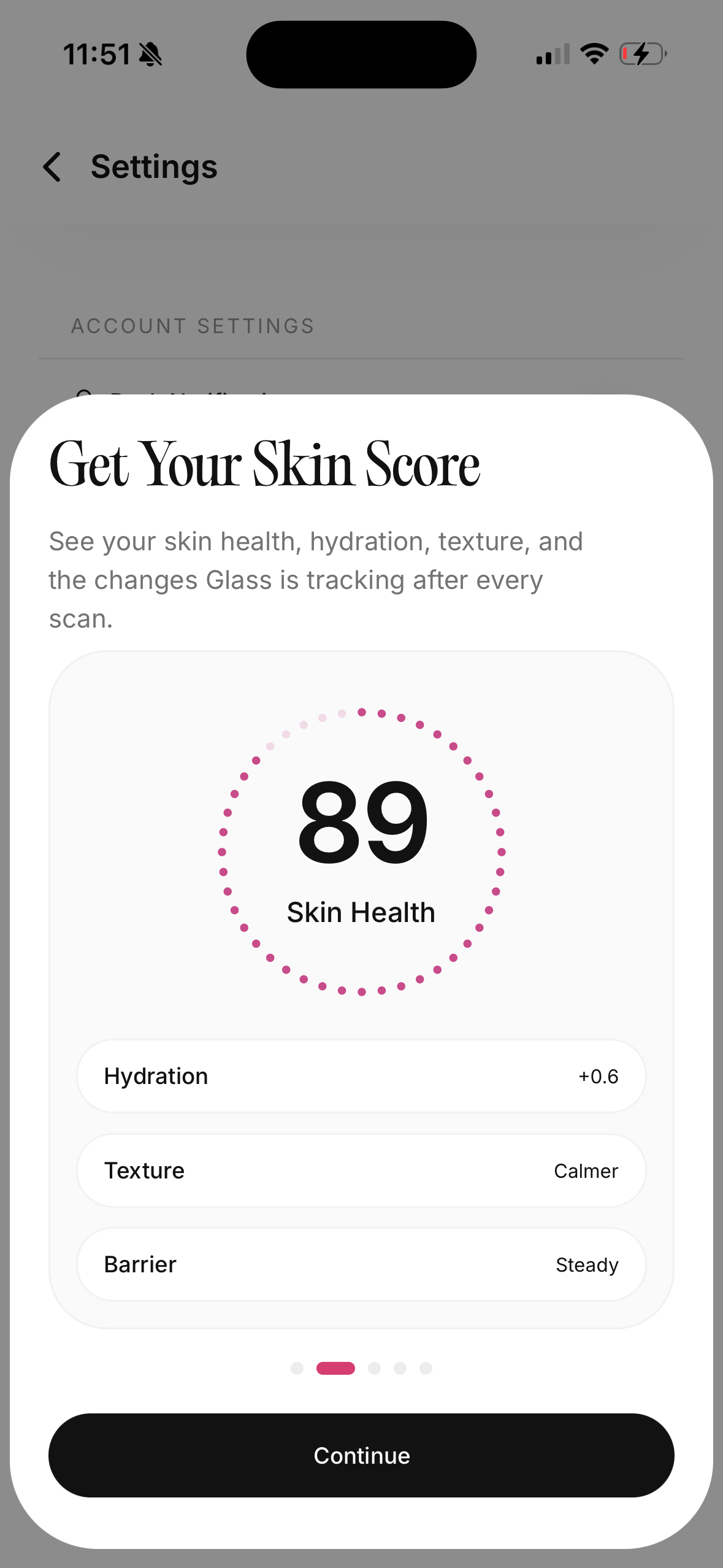
Glass is useful here because the memory of skin is unreliable. If you rely on mood, every good day feels like a miracle and every bad day feels like failure. A simple photo and routine log makes the pattern clearer.
My booking rule
I would book the provider who gives me the clearest plan, not the provider with the loudest promise.
For chemical peels in Midlothian, TX, that means the right clinic should be able to explain the peel depth, screen my routine, discuss pigment risk, give written pre-care and aftercare, and tell me what happens if healing goes sideways.
If the appointment feels rushed before I have paid, it will probably feel rushed after the peel is on my face.
I would rather wait for the right consultation than spend weeks calming down skin that was never ready.
FAQ
Are chemical peels in Midlothian, TX worth it?
They can be worth it if the peel matches your skin concern, tone, routine, and downtime tolerance. I would treat the consultation as the deciding step. A good provider should tell you whether a peel, facial, microneedling, laser, or a simpler home routine makes more sense.
What should I ask before a chemical peel?
Ask who performs it, what peel is being used, how deep it is, what risks apply to your skin tone, what products to stop, how much downtime to expect, what aftercare looks like, and who to contact if your skin reacts badly.
Should I get a peel before a big event?
Not as a first-time experiment. Even lighter peels can cause redness, flaking, dryness, or irritation. I would test well before an event, then only repeat close to an event if I already know exactly how my skin heals.
Can darker skin tones get chemical peels?
Yes, but provider experience matters. Ask how many peels they have performed on people with your skin tone, what pigment risks apply, and whether a lighter peel or prep routine is safer.
What if I am using retinol or acne treatments?
Tell the provider before booking. You may need to pause retinoids, acids, benzoyl peroxide, or prescription acne products before and after the peel. Do not guess on timing when irritation or pigment risk is involved.
Useful references: AAD chemical peel preparation, AAD questions before cosmetic procedures, Mayo Clinic chemical peel overview, FDA warning on unsupervised chemical peel products, and Glass Midlothian skin care directory.