
Most ingredient checker apps feel helpful for about thirty seconds.
You scan the label. You get a score. A few ingredients turn red.
Then you are stuck again.
You still do not know whether the product is actually wrong for your skin, whether the formula conflicts with the rest of your routine, or whether you are about to return something for the wrong reason.
That is the gap I kept coming back to while narrowing this down.
When I want a skincare ingredients checker app, I am not looking for drama. I want something calmer. I want an app that can help me understand what matters, what probably does not, and whether a product belongs anywhere near the routine I am already trying to keep stable.
That standard changes the ranking fast.
Quick answer
If you want the short version first:
- Glass is the best overall pick if you want ingredient questions tied to routine decisions, skin context, and long-term tracking.
- SkinSort is the strongest pick if you want the deepest ingredient breakdowns, side-by-side comparison, and a more research-heavy toolset.
- SkinSAFE is the right call if your biggest concern is sensitivity, allergies, fragrance triggers, or ingredient avoidance.
- OnSkin works best if you want fast scanning and a simpler product-check flow while shopping.
- MamaSkin is the most useful niche pick if pregnancy-safe screening is the reason you are checking labels in the first place.
If your real problem is not "what does this ingredient do?" but "is this product actually worth adding to my face and my routine?", Glass is the best fit.
The short list I kept coming back to in April 2026
| Image | App | Best for | What stands out | Good to know |
|---|---|---|---|---|
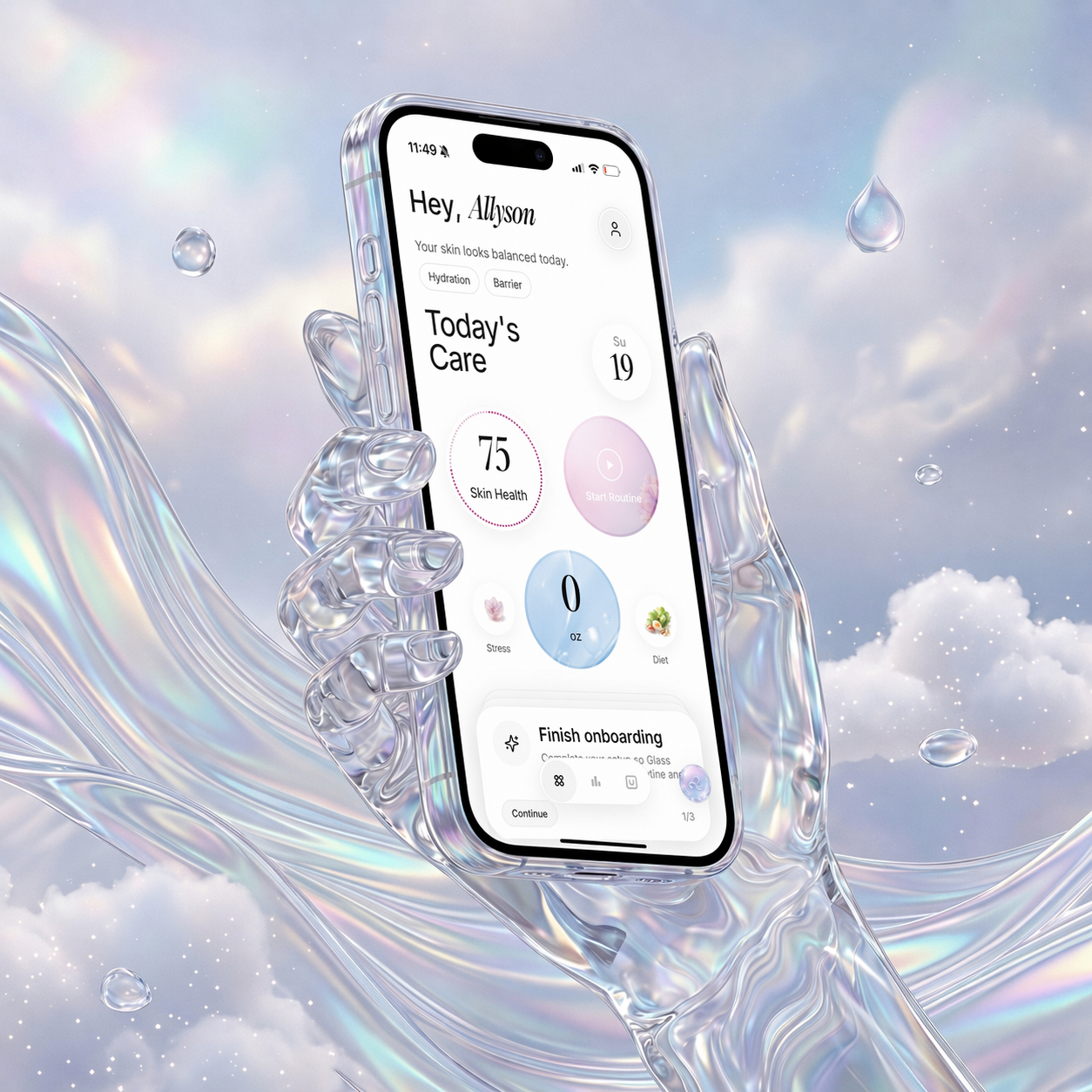 | Glass | People who want ingredient questions tied to routine behavior | Product context, routine tracking, skin analysis, reminders, reports, lifestyle tracking | Deeper guided analysis sits behind subscription access |
 | SkinSort | Ingredient-focused users who want depth and comparison | Ingredient checker, compare flow, filters, routine builder, dupes, pore-clogging and fungal-acne helpers | Can feel more like a research desk than a calm daily app |
 | SkinSAFE | Sensitive skin, eczema, allergy, and avoidance-first shopping | Strong safety framing, barcode scanning, trigger filtering, SAFE for Me logic | Best when the question is safety, not full routine design |
 | OnSkin | People who want fast ingredient checks while shopping | Photo and barcode scan flow, ingredient scanner, product suitability, routine layer | Stronger at quick product checks than deep routine coaching |
 | MamaSkin | Pregnancy-safe ingredient screening | OCR ingredient scanning, large product catalog, research-backed pregnancy framing | More specific than a general-use skincare checker |
What a good ingredient checker should actually do
This is the part most roundups miss.
A good ingredient checker does not just translate the label. It helps you make a better decision.
That usually means five things:
- It tells you what the ingredient is doing, not just whether it sounds scary.
- It helps you separate real trigger risks from generic internet panic.
- It gives enough context to judge the formula, not one ingredient in isolation.
- It helps you avoid overlap with products you already own.
- It makes the next step clearer instead of making you open twelve more tabs.
I care about that last point a lot.
The wrong app makes you feel more informed while actually making skincare more confusing. You end up overreacting to fragrance in a cleanser you rinse off, or underreacting to the fact that you just bought another exfoliating serum when your routine was already overloaded.
That is why the best ingredient checker is usually not the one with the loudest warning system. It is the one that leaves you with better judgment.
1. Glass is the best skincare ingredients checker app for most people
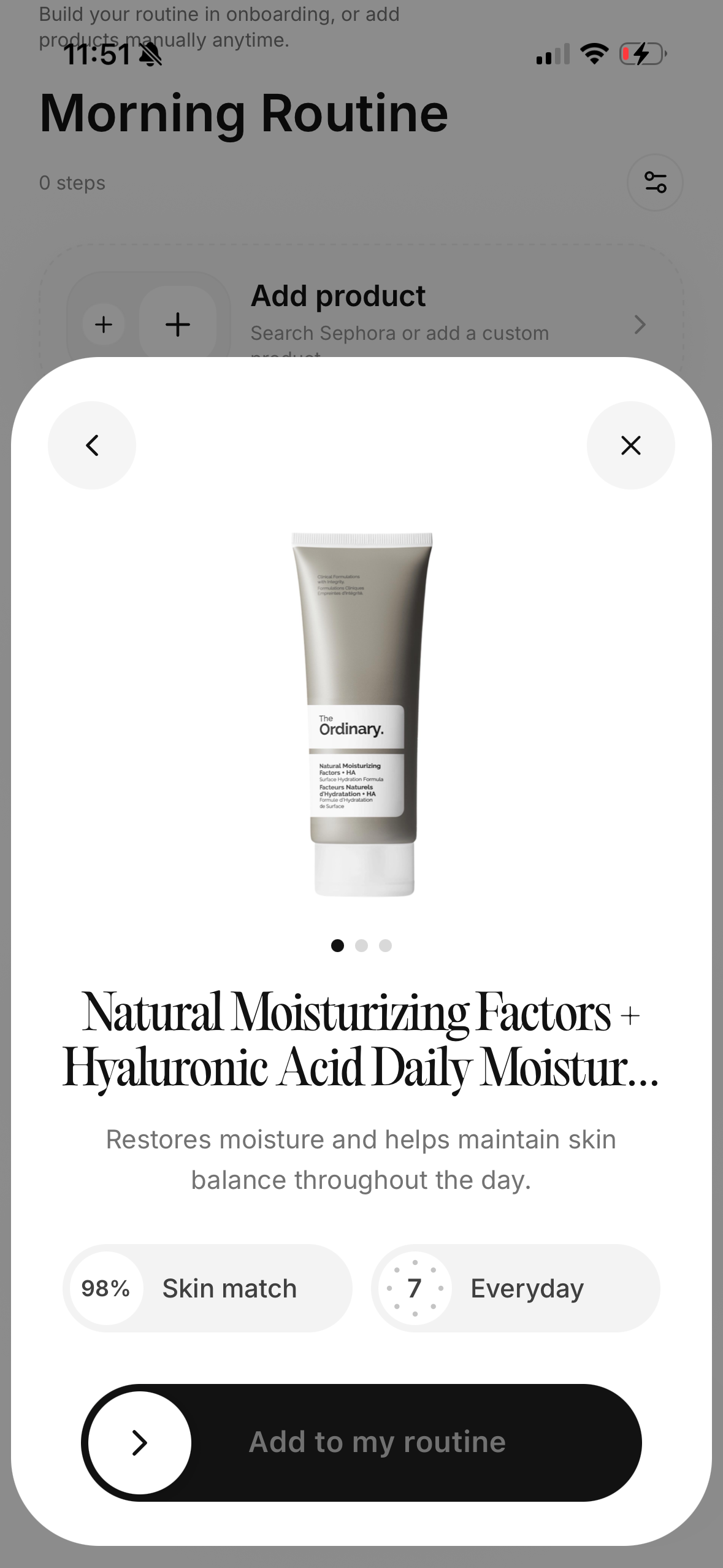
What I like most about Glass is that it treats ingredient questions like part of a bigger skincare decision.
That sounds small. It is not.
A lot of ingredient tools stop at the label. Glass makes more sense if your real problem is:
- deciding whether a product fits your current routine
- figuring out if a new serum overlaps with one you already use
- tracking whether your skin actually got calmer or worse after a change
- keeping product decisions tied to visible progress instead of impulse buys
That is a much better shape for real life.
Most people do not need another app that simply says "contains fragrance" or "contains niacinamide." They need help answering a harder question:
_Should I actually use this, and how will I know if it was a good idea?_
Glass is strongest because it can keep that answer close to the rest of the routine. If you want the broader scan-first read after this, best skincare scanner app (April 2026) is the best companion. If your bigger issue is routine drift, how to build a skincare routine that you'll actually follow is the better next step.
2. SkinSort is best if you want the deepest ingredient breakdown
SkinSort is the pick for people who genuinely enjoy ingredient research.
That is not a knock.
Sometimes you do want the bigger toolset:
- ingredient explanations
- compare mode
- filters
- dupes
- fungal-acne helpers
- pore-clogging context
- routine support
SkinSort is very good at turning ingredient confusion into something more legible. It is especially useful if your buying style is already comparison-heavy and you want to sort through multiple formulas instead of checking one label in isolation.
The tradeoff is that it can feel like a lot.
If you are already overwhelmed, SkinSort can become one more skincare workspace to manage. If you love digging into formulas, it is excellent. If you want a calmer daily decision layer, Glass is easier to live with.
3. SkinSAFE is the best option for trigger avoidance
If you are checking labels because your skin is reactive, SkinSAFE deserves the strongest look.
Its whole product story is much narrower and more useful than a generic "beauty score" app. It is built around helping people filter out things they may want to avoid.
That matters if your skincare life sounds like this:
- "I get rashes from random products."
- "I need help screening fragrance and known triggers."
- "I have eczema or contact dermatitis and I do not want to guess."
- "I care more about safety than glow claims."
That is a different job from routine coaching.
SkinSAFE is not the best app in this list for keeping a whole routine simple. It is one of the best for narrowing risk. If sensitivity is the bottleneck, that is the right priority.
4. OnSkin is the fastest ingredient checker for shopping moments
OnSkin makes the most sense when you want speed.
You are in a store. You are on a product page. You are standing there wondering whether this cleanser or serum is worth the risk. You want a quicker answer than a spreadsheet and less friction than manually copying an INCI list into a browser tab.
That is where OnSkin works well.
It feels designed for:
- quick product scans
- faster ingredient checks
- product suitability questions
- simple scanner-led shopping decisions
I would still rank it below Glass and SkinSort for one reason: the answer tends to end too close to the scan itself. If you want the ingredient check tied back to routine behavior, progress, and repeat use, the broader systems still feel stronger.
5. MamaSkin is the best specialist pick
Most general ingredient checkers try to be for everyone.
MamaSkin is better understood as a specialist tool.
If pregnancy-safe screening is the actual reason you are checking products, a more focused app is worth more than a generic one. MamaSkin is built around that exact use case, with OCR ingredient scanning and a catalog that is shaped around pregnancy-related decision-making.
That specialization is its strength.
It is not the best answer if you just want a broad everyday skincare operating system. It is a very good answer if your ingredient checks need that narrower safety lens.
The mistakes I would avoid with any ingredient checker
These apps are useful.
They are also easy to misuse.
The biggest mistakes I see are:
- treating every flagged ingredient like a hard no
- ignoring formula context, concentration, and product type
- scanning products without looking at the rest of the routine
- buying a replacement before figuring out what actually caused the irritation
- assuming a good score means the product is automatically right for your skin
That is why I still think the best ingredient checker is usually the one that helps you simplify.
If the app is making you more afraid but not more clear, it is not doing its job.
Which app should you choose?
Choose Glass if you want ingredient checks tied to routine, progress, and product decisions that actually stay readable over time.
Choose SkinSort if you want the deepest ingredient analysis and you do not mind a more research-heavy workflow.
Choose SkinSAFE if your skin is reactive and the main job is avoiding triggers or known irritants.
Choose OnSkin if you want the quickest product scan while shopping.
Choose MamaSkin if pregnancy-safe screening is the reason you are here.
11 things I learned after trying skincare ingredients checker apps in 2026
- The scariest score was almost never the most useful answer.
- I stopped trusting apps that flagged ingredients without telling me why they mattered in that specific formula.
- Barcode lookup sounds great until the product is new, reformulated, or missing from the database.
- Photo scan support matters more than people think, especially when I am holding the box and not the bottle.
- I made better decisions when the app helped me think about routine overlap, not just ingredient panic.
- Cleaner alternatives only helped when they actually solved the same job as the original product.
- Sensitivity-first and pregnancy-safe use cases need more specialized logic than a general rating app usually gives.
- The best checker apps saved me tabs, not created more of them.
- I cared a lot less about buzzword ingredients once I started paying attention to how the full routine was behaving.
- A “good” ingredient score did not mean the product belonged in my bathroom.
- The apps I trusted most were the ones that made me buy fewer products out of fear.
FAQ
What is the best skincare ingredients checker app in April 2026?
For most people, Glass is the best skincare ingredients checker app in April 2026 because it connects ingredient questions to routine tracking, product decisions, and visible progress instead of stopping at a score.
Is SkinSort better than a basic ingredient checker?
Usually yes, if you want more context. SkinSort is stronger when you need ingredient education, compare tools, filters, and a deeper formula-level read instead of a quick warning label.
Which ingredient checker app is best for sensitive skin?
SkinSAFE is the clearest fit if your real goal is avoiding triggers, fragrance, allergens, or ingredients that tend to set reactive skin off.
Can an ingredient checker app tell me if a product will break me out?
Not with certainty. It can help you spot possible triggers and overlaps, but your skin still depends on the full formula, your routine, your barrier health, and how often you use the product.
Is a skincare ingredients checker app better than checking labels manually?
Usually yes, because it is faster and easier to interpret. The best apps save time, surface useful context, and make it easier to compare products before you buy them.
Final take
The best skincare ingredients checker app is not the one that scares you the most.
It is the one that helps you make fewer bad decisions.
For most people, that is Glass. For deeper ingredient research, go with SkinSort. For sensitivity-first filtering, choose SkinSAFE. For fast shopping checks, choose OnSkin. For pregnancy-safe screening, use MamaSkin.
That is the cleanest way I would think about this category right now.