
Most people are not bad at skincare.
They are bad at reading the signal.
That is the part nobody warns you about when you start building a routine. You can cleanse every night, wear sunscreen, buy the better serum, and still feel like you are staring at your face every morning with no idea what changed.
Was it the new moisturizer?
Was it your period?
Was it stress?
Was it the fact that you slept four hours and ate salty takeout at midnight?
The hard part is not always finding a good product. The hard part is knowing whether the product belongs in your life.
Quick answer
Your skincare routine is probably working if your skin is becoming more predictable over time: fewer surprise breakouts, less stinging, better comfort after cleansing, smoother makeup or sunscreen wear, calmer redness, and a baseline that looks slightly steadier across several weeks.
Your routine is probably not working if you keep adding products, your skin feels tighter or more reactive, breakouts keep appearing in the same areas, or you cannot tell what changed because you introduced too many variables at once.
The easiest way to know is to track four things for at least six weeks:
- What you used.
- How often you used it.
- What your skin looked and felt like.
- What else changed around your skin, like sleep, stress, diet, weather, shaving, workouts, or your cycle.
That does not need to become a second job. It just needs to be consistent enough that your future self has something better than memory.
The mistake is judging one morning like it tells the whole truth
One morning is noisy.
Your face can look dull because you slept badly. Your cheeks can look red because the weather changed. Your forehead can feel greasy because you used a richer night cream. A breakout can be from something you did today, or something that started forming days ago.
That is why I do not trust a single mirror check.
I trust patterns.
If your skin stings every time you cleanse, that is a pattern. If your new serum looks amazing twice and then your skin starts feeling raw, that is a pattern. If your routine is boring but your breakouts slowly become less frequent, that is also a pattern.
The goal is not perfect certainty. Skincare will never give you lab-clean cause and effect at home. The goal is enough signal to stop panic-editing your routine every time your skin has a normal human week.
Give the routine enough time to speak
This is the part that requires discipline.
You need to give most routines enough time before declaring them useless. The American Academy of Dermatology notes that acne treatment can take at least 6 to 8 weeks before fewer breakouts are visible. That does not mean every cleanser or moisturizer needs two months to show comfort, but it does mean you should be careful about quitting every treatment after ten restless days.
Some signals show up fast:
- A cleanser feels stripping within a few uses.
- A moisturizer pills under sunscreen right away.
- A product burns in a way that does not feel like mild adjustment.
- A sunscreen breaks the habit because you hate wearing it.
Other signals are slower:
- fewer new breakouts
- softer texture
- less post-breakout marking
- better tolerance to retinoids
- a calmer moisture barrier
- a more even baseline
Fast irritation deserves attention. Slow improvement deserves patience.
That is the tension.
Track the boring stuff first
If I were starting from zero, I would not track twenty categories. I would track the boring things that explain the most:
| What to track | Why it matters | What I would write down |
|---|---|---|
| Products used | Shows what actually touched your skin | Cleanser, serum, treatment, moisturizer, SPF |
| Frequency | Prevents accidental overuse | Retinol 2 nights, exfoliant 1 night, SPF 6 mornings |
| Skin feel | Catches barrier stress early | Tight, stingy, itchy, oily, comfortable, rough |
| Visible changes | Gives the mirror context | New breakouts, flakes, redness, smooth areas |
| Lifestyle context | Explains false product blame | Sleep, stress, workout sweat, cycle, shaving, weather |
That is enough.
You do not need a novel. You need a trail.
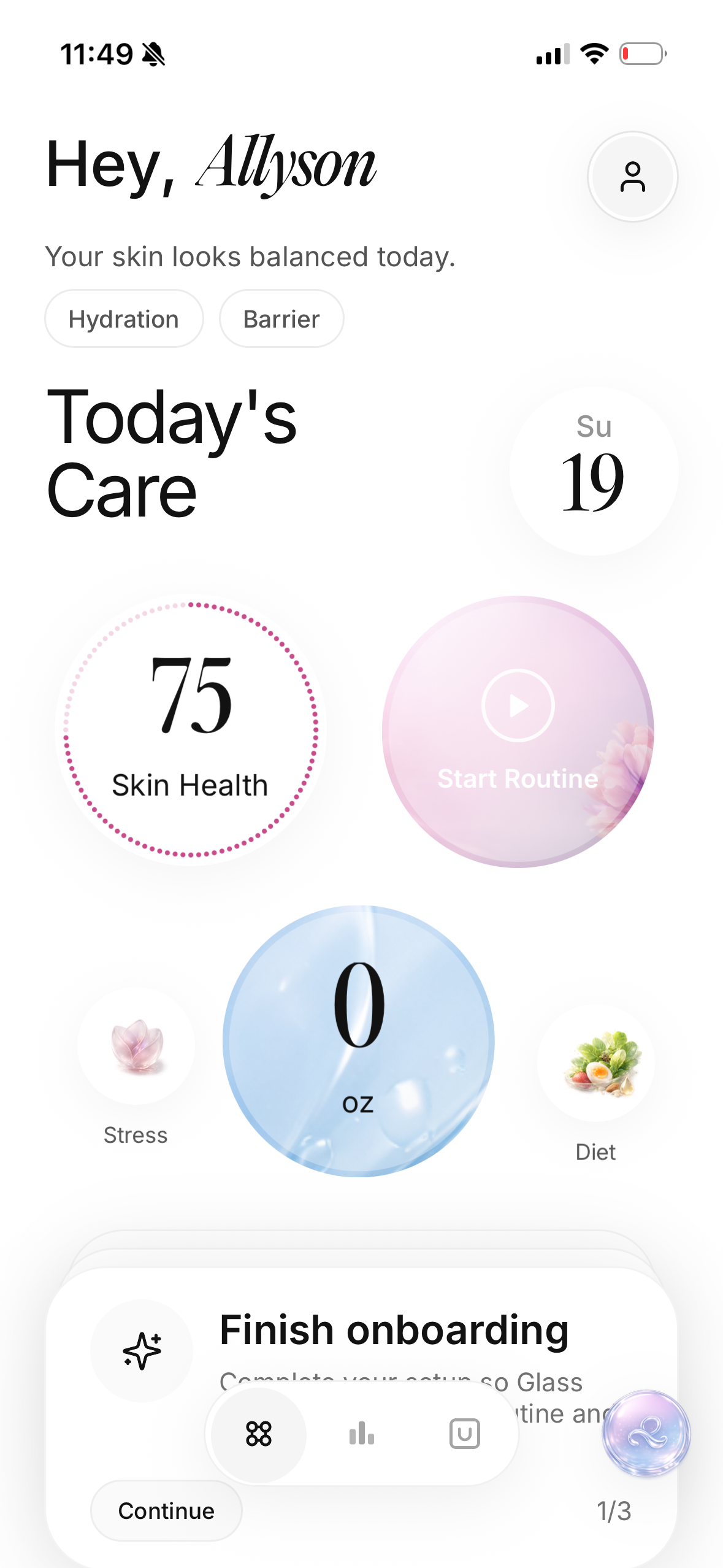
The reason a skin care tracker app can help is not because your phone magically understands your face. It helps because it keeps the trail in one place. Photos, products, routines, notes, and reminders stop living in separate mental drawers.
Use photos, but do not let photos bully you
Progress photos are useful. They are also easy to misuse.
Bad lighting can make healthy skin look worse. A different angle can exaggerate texture. Morning puffiness can make you think a product failed when your skin simply has not settled yet.
If you take photos, keep the setup boring:
- Same room.
- Same lighting.
- Same time of day when possible.
- Same distance.
- Same angles.
- No beauty filter.
- No checking every hour.
I like weekly photos more than daily judgment. Daily notes can be useful for reactions and consistency, but weekly photos are usually calmer for seeing whether the baseline is moving.
The best photo question is not, "Do I look perfect today?"
It is, "Is the average version of my skin becoming easier to manage?"
That shift matters because a routine can be working even if you still have pores, texture, oil, redness, or occasional breakouts. Skin is not supposed to become a flat surface.
The clearest signs your routine is working
Working skincare usually looks less dramatic than people expect.
It is rarely one morning where everything changes. It is more often a quiet reduction in chaos.
Your skin feels less reactive
This is one of the first wins I care about.
If cleansing stops making your face feel tight, if moisturizer no longer stings, if your cheeks do not flush as easily after every active night, the routine may be doing something important even before the photo looks exciting.
Barrier comfort is not a boring side quest. It is the base layer.
Breakouts become less random
You may still break out. That does not automatically mean the routine is failing.
What I care about is whether breakouts become less frequent, less inflamed, easier to predict, or faster to calm down. If the same product stack gives you fewer surprise bumps over several weeks, that is meaningful.
If you are acne-prone, this is where patience matters most. A good routine is not always a routine that prevents every breakout. Sometimes it is the routine that stops turning every breakout into a full-face emergency.
Sunscreen and makeup sit better
This is an underrated signal.
When skin is over-cleansed, dehydrated, or irritated, sunscreen can pill, makeup can cling, and everything feels harder to wear. If your sunscreen starts sitting more evenly and your base looks less patchy, your hydration and barrier steps may be doing real work.
That is still progress.
You stop needing emergency fixes
The routine is working when it reduces the number of dramatic interventions you feel tempted to make.
Fewer random masks. Fewer "reset" purchases. Fewer nights where you throw every active at your skin because you are frustrated.
Stable skin is not always glossy. Sometimes stable skin just means you are no longer negotiating with your face every morning.
The clearest signs your routine is not working
The wrong routine usually leaves fingerprints.
Your skin is getting tighter, hotter, or more stingy
Stinging is not automatically proof that a product is "active." Burning, persistent tightness, flaking, or rawness can mean the routine is asking too much of your barrier.
This is especially common when someone stacks retinol, exfoliating acids, vitamin C, acne treatments, and a strong cleanser because each product sounded reasonable alone.
Alone is not the same as together.
You keep changing more than one thing at a time
This is the fastest way to lose the plot.
If you add a new cleanser, serum, moisturizer, and exfoliant in the same week, you may get lucky. But if your skin reacts, you will not know what caused it.
The cleaner method is boring:
- Keep the routine stable.
- Add one new product.
- Use it at a realistic frequency.
- Watch for several weeks.
- Decide based on the pattern, not the first mood swing.
That is how a routine becomes readable.
Your products overlap too much
Sometimes the problem is not that a product is bad. It is that three products are doing the same job.
Too many brightening products can become irritation. Too many hydrating layers can become pilling. Too many acne steps can leave skin dry enough to overproduce oil and look worse.
When a routine feels confusing, I look for duplicate jobs first.
A simple tracking setup that actually works
Here is the setup I would use if the routine felt messy and I wanted real answers.
Week 1: Freeze the routine
Do not add anything.
Use the routine you already have, but write it down clearly. Morning. Night. Frequency. Products. Anything you use only sometimes.
This week is not about fixing. It is about seeing what is already happening.
If your routine is already irritating, simplify immediately to cleanser, moisturizer, and sunscreen in the morning, then cleanser and moisturizer at night. If your skin is medically inflamed, painful, infected-looking, or cystic, that is a dermatologist lane.
Weeks 2 and 3: Remove obvious noise
If the routine has too many actives, reduce overlap.
You do not need retinol and exfoliating acid on the same night just because both are popular. You do not need three serums before moisturizer if one of them is the only one pulling its weight.
The best early move is often subtraction.
That is why skin barrier repair routine: what to do when everything suddenly stings is worth reading if your routine feels angry. When the skin is stressed, adding more intelligence is less useful than adding less friction.
Weeks 4 through 6: Test one change at a time
Now you can test.
Pick one variable:
- a gentler cleanser
- a lighter moisturizer
- a lower retinol frequency
- a hydrating serum
- a sunscreen you actually like wearing
- removing an exfoliant for a few weeks
Then leave the rest alone.
This is where tracking becomes useful. You are no longer writing notes for decoration. You are trying to answer one clean question:
Did this change make my skin easier to live with?
A practical product map for routine troubleshooting
These are not universal winners. They are examples of how I think about product roles when I am trying to make a routine easier to read.
| Image | Routine problem | Product example | Why it helps the test |
|---|---|---|---|
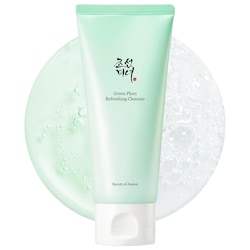 | Your face feels tight after washing | Beauty of Joseon Green Plum Refreshing Cleanser | Tests whether a gentler cleanse makes the whole routine calmer |
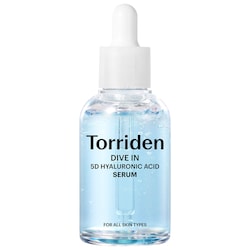 | Skin looks dull but gets irritated by stronger actives | Torriden DIVE IN 5D Hyaluronic Acid Ultra Hydrating Serum | Adds water support without pretending to be a treatment step |
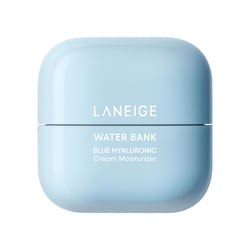 | Your routine feels incomplete by morning | LANEIGE Water Bank Blue Hyaluronic Cream Moisturizer | Tests whether comfort and barrier support are the missing piece |
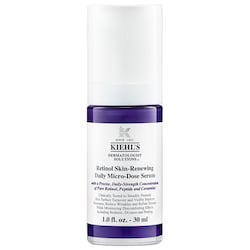 | You want texture help but keep overdoing retinol | Kiehl's Micro-Dose Anti-Aging Retinol Serum | Gives retinol a clear night-treatment lane instead of a chaos lane |
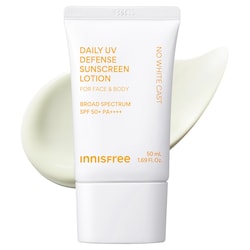 | Brightening products seem useless | innisfree Daily UV Defense Invisible Korean Sunscreen SPF 50+ PA++++ | Tests the unglamorous truth: tone work falls apart without daily SPF |
The point is not to buy all five. The point is to give each product one job.
If you want a broader product lane after this, best sunscreens at Sephora for daily wear, best hydrating serums at Sephora for dehydrated skin, and best retinol serums at Sephora for beginners are cleaner next reads.
How Glass fits into this without making skincare feel like homework
The best skincare routine tracker is not the one that makes you log the most.
It is the one that makes the right things easy to remember.
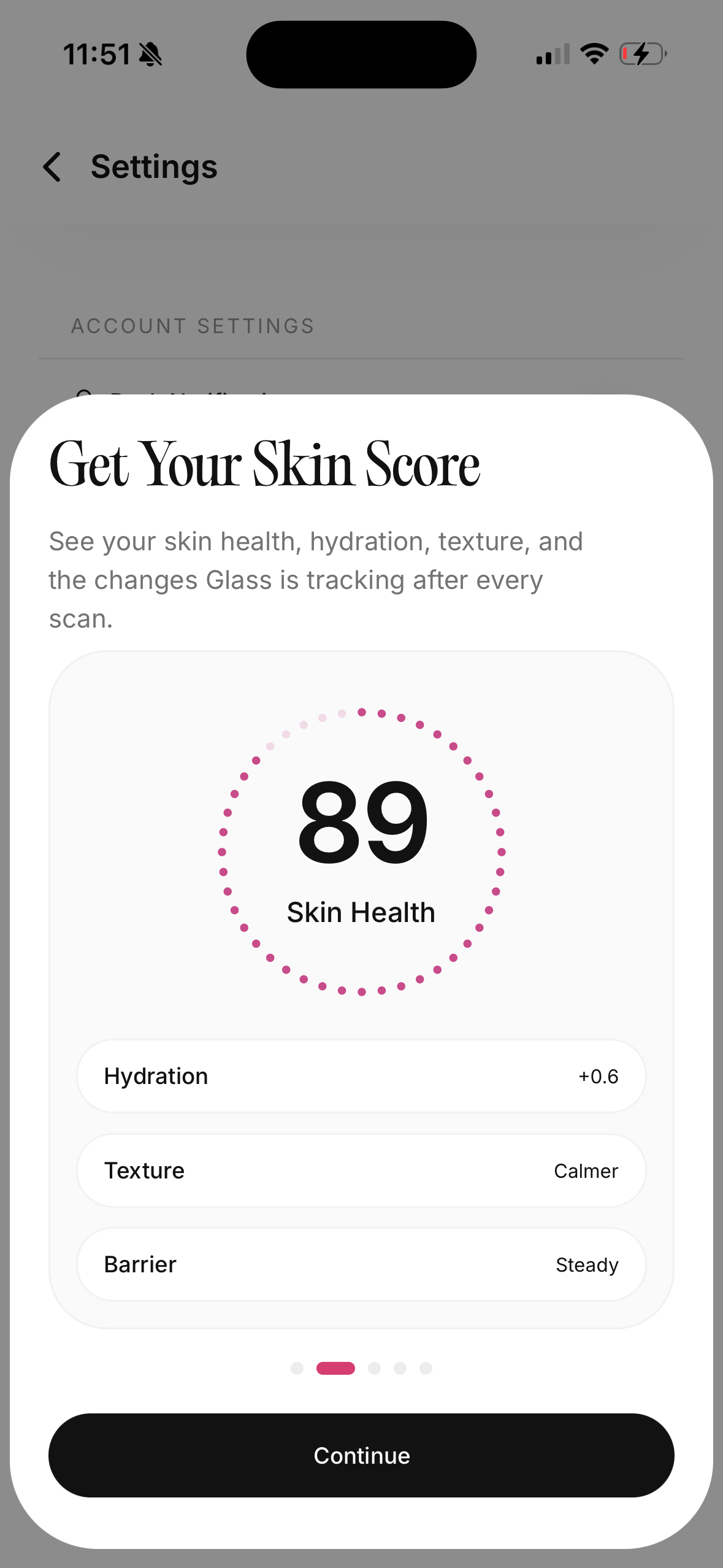
Glass is built around that loop: routine, products, reminders, skin scans, progress reports, and context in one place. That matters because the most useful skincare record is not just "I used moisturizer." It is "I used this routine consistently, my skin felt less tight, my sleep was bad twice, I added retinol too fast, and the photos show the baseline is still improving."
That is the difference between tracking for control and tracking for clarity.
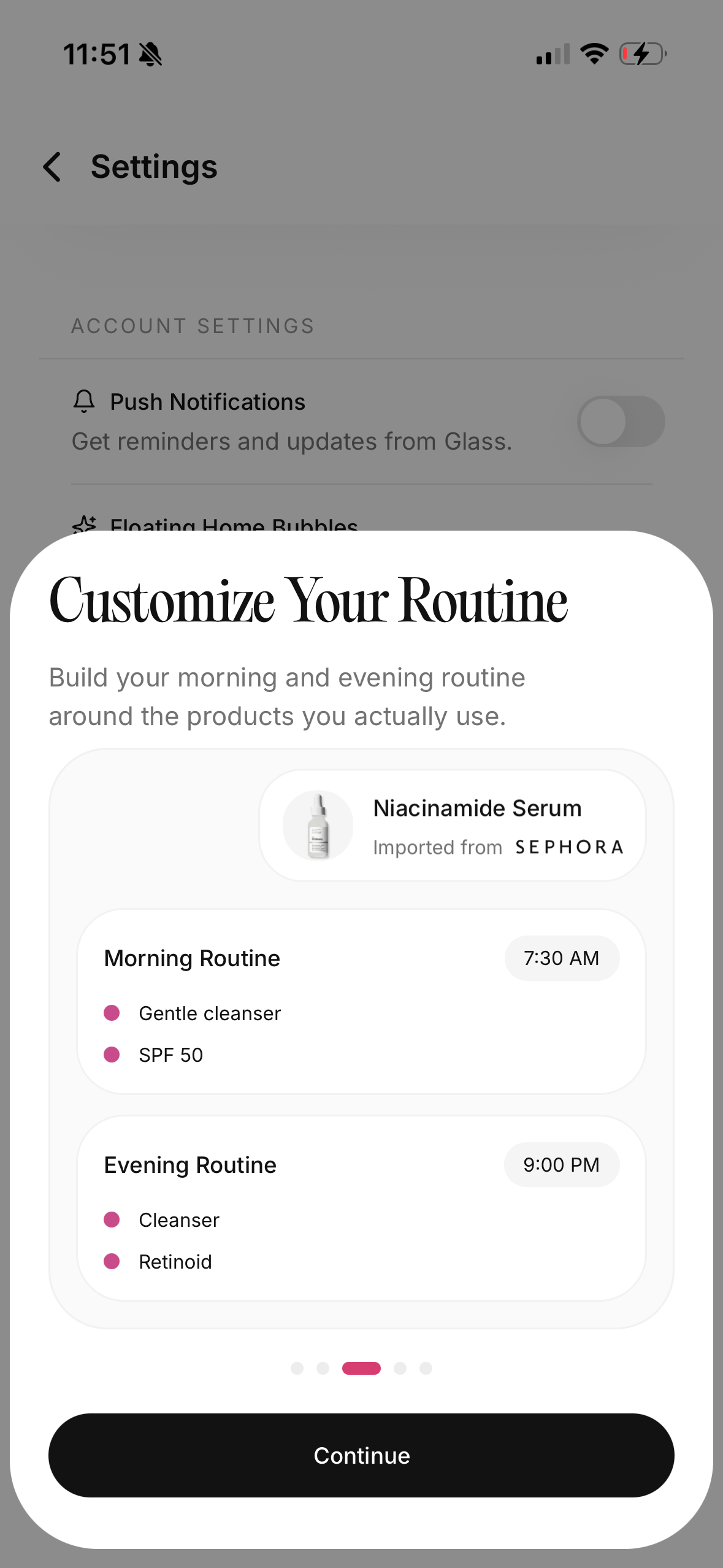
Use Glass if your current problem sounds like this:
- You cannot remember what you changed.
- You keep buying products before evaluating the last one.
- You want a skin care tracker app that connects routine steps to visible progress.
- You need reminders, but you also need context.
- You want your skincare journal to feel calm enough to keep using.
If you want a deeper app comparison, best skincare routine tracker 2026, best skin care tracker app 2026, and best skincare journal app 2026 are the better next pages.
The three-question review I trust
When I am deciding whether a routine is working, I come back to three questions.
Is my skin more comfortable?
Comfort is not everything, but discomfort is useful information.
If the routine is making your face sting, burn, peel, or feel tight every day, I do not care how impressive the ingredient list is. The routine needs adjusting.
Is my baseline improving?
Do not ask whether your skin looked perfect today.
Ask whether your average week is better than your average week a month ago. Fewer angry days count. Better sunscreen wear counts. Less panic counts. A calmer breakout cycle counts.
Can I keep doing this without resenting it?
This is the question people skip.
A routine that only works when you have unlimited time, perfect sleep, and no stress is not your real routine. It is a fantasy routine.
Your real routine has to survive late nights, travel, bad moods, rushed mornings, and the nights when you want to do the least possible thing and go to bed.
What to change first when the routine is not working
Start with the least dramatic fix.
If your skin is irritated, reduce actives before replacing every product.
If your skin is dehydrated, add water support before adding another exfoliant.
If your skin is breaking out, check whether you introduced too many new products before blaming the entire routine.
If your tone is not improving, check sunscreen consistency before buying another dark-spot serum.
If your routine is too long, remove duplicate jobs before buying a "better" version of the same step.
That order saves money. It also saves your barrier.
FAQ
How long should I track my skincare routine before changing it?
Track a stable routine for at least four to six weeks when possible, and give acne-focused treatment closer to six to eight weeks unless irritation is clearly getting worse. Change sooner if a product causes persistent burning, swelling, painful irritation, or a reaction that feels unsafe.
Should I track every single product?
Track every product that touches your face, but keep the note simple. Product name, morning or night, frequency, and any obvious reaction are enough for most people.
Is a skincare routine working if I still get breakouts?
Yes, it can be. A working routine may reduce frequency, severity, healing time, or irritation even if it does not eliminate every breakout. The pattern matters more than one blemish.
What is the easiest skincare tracking mistake?
Changing too much at once. If you add three products in one week, you may get a result, but you will not know which product caused it.
Do I need a skincare app?
You do not need one, but a skincare app helps if notes, photos, product lists, and reminders keep getting scattered. The best app is the one you will actually keep using.
The calmer standard
Skincare gets easier when you stop treating every skin change like an emergency.
Track the routine. Watch the pattern. Change one thing at a time. Give slow improvements enough room to show up.
That is not flashy.
It works better than guessing.