Most people do not need more skincare advice.
They need a way to stop losing the plot.
One week you are consistent. The next week you miss three nights, add a new serum too fast, forget when you last used your retinoid, and end up staring at your skin wondering whether anything is actually helping.
That is the real problem behind this search.
People looking for a skincare routine tracker are usually trying to solve something more specific than “find a skincare app.” They want a system that helps them remember what they used, keep morning and night routines stable, notice patterns earlier, and stop making random product decisions based on one good skin day.
That is the standard I used for this piece.
On April 19, 2026, I reviewed the public-facing pages currently shaping this category, including the Glass App Store listing, Skin Bliss on the App Store, FeelinMySkin on the App Store, SKO’s tracker landing page, and the Skincare Routine Planner App Store listing.
This is not a fake side-by-side “lab test” pretending each app was used for the same number of days under identical conditions. It is a practical comparison based on what these products currently show in public: tracking depth, reminders, journaling, routine structure, progress visibility, and whether the app looks useful after the setup high wears off.
That gets you to the question that matters:
_Which skincare routine tracker is actually going to help me stay consistent long enough to learn what works?_
Quick answer
If you want the short version first:
- Glass is the best skincare routine tracker for most people because it connects routines, skin analysis, product logging, and progress context in one calmer system.
- Skin Bliss is strongest for ingredient-heavy users who want tracking plus deeper routine logic, diary tools, and product intelligence.
- FeelinMySkin is a strong pick if you want reminders, checkboxes, journaling, and a routine planner that stays front and center.
- SKO makes sense for readers who want routine analytics, consistency charts, and a more tracker-first product shape.
- Skincare Routine Planner is best for people who want a simpler journal-style tracker with photo logging and custom routine support.
If your actual problem is inconsistency, not product discovery, Glass is the easiest recommendation in this group.
The 5 routine trackers worth your time right now
| Image | App | Best for | What stands out | What to watch |
|---|---|---|---|---|
 | Glass | People who want routines, scans, and progress in one place | Morning/night tracking, skin analysis, product logging, reminders, reports, habit context | Some deeper analysis features require subscription access |
 | Skin Bliss | Ingredient-minded users who want a full routine operating system | Face scan, routine builder, skin diary, AI photo comparison, shelf analysis | More feature-dense than some people need for daily use |
 | FeelinMySkin | Planner-style routine consistency | Reminders, checkboxes, journaling, product tracking, smart ordering | More organization-forward than analysis-forward |
 | SKO | Readers who want routine analytics and habit visibility | Daily routine tracking, calendar analytics, ingredient usage, AI guidance | Public product footprint still looks earlier-stage than the biggest apps here |
 | Skincare Routine Planner | People who want a basic tracker and skincare journal | Custom routines, product database, progress tracking, photo logging, journal feel | Less depth if you want richer analysis and broader skin context |
What a skincare routine tracker actually needs to do
This is where a lot of app roundups get fuzzy.
A routine tracker is not helpful because it stores information. Your Notes app can do that. A spreadsheet can do that. A habit tracker can do part of that too.
What makes a skincare routine tracker worth opening every day is that it reduces friction at the exact moment your routine would normally fall apart.
That usually means it should help with five things:
- Show you exactly what to do morning and night.
- Make it obvious what you already used and what you skipped.
- Help you track progress over time without cluttering your life.
- Stop you from changing too many things at once.
- Give enough context that your tracking turns into judgment, not just archives.
That last one matters the most.
I have seen plenty of people track their routine perfectly and still learn almost nothing because the app never helped them connect the dots. Their skin got drier. They were more consistent. They changed one serum. Their sleep got worse. Their sunscreen changed too. The tracker recorded all of it, but did not make any of it clearer.
That is why the best tracker here is not the one with the most boxes. It is the one that helps you see a pattern before you panic-buy something new.
1. Glass is the best skincare routine tracker for most people
What I like most about Glass is that it is not just a checklist product.
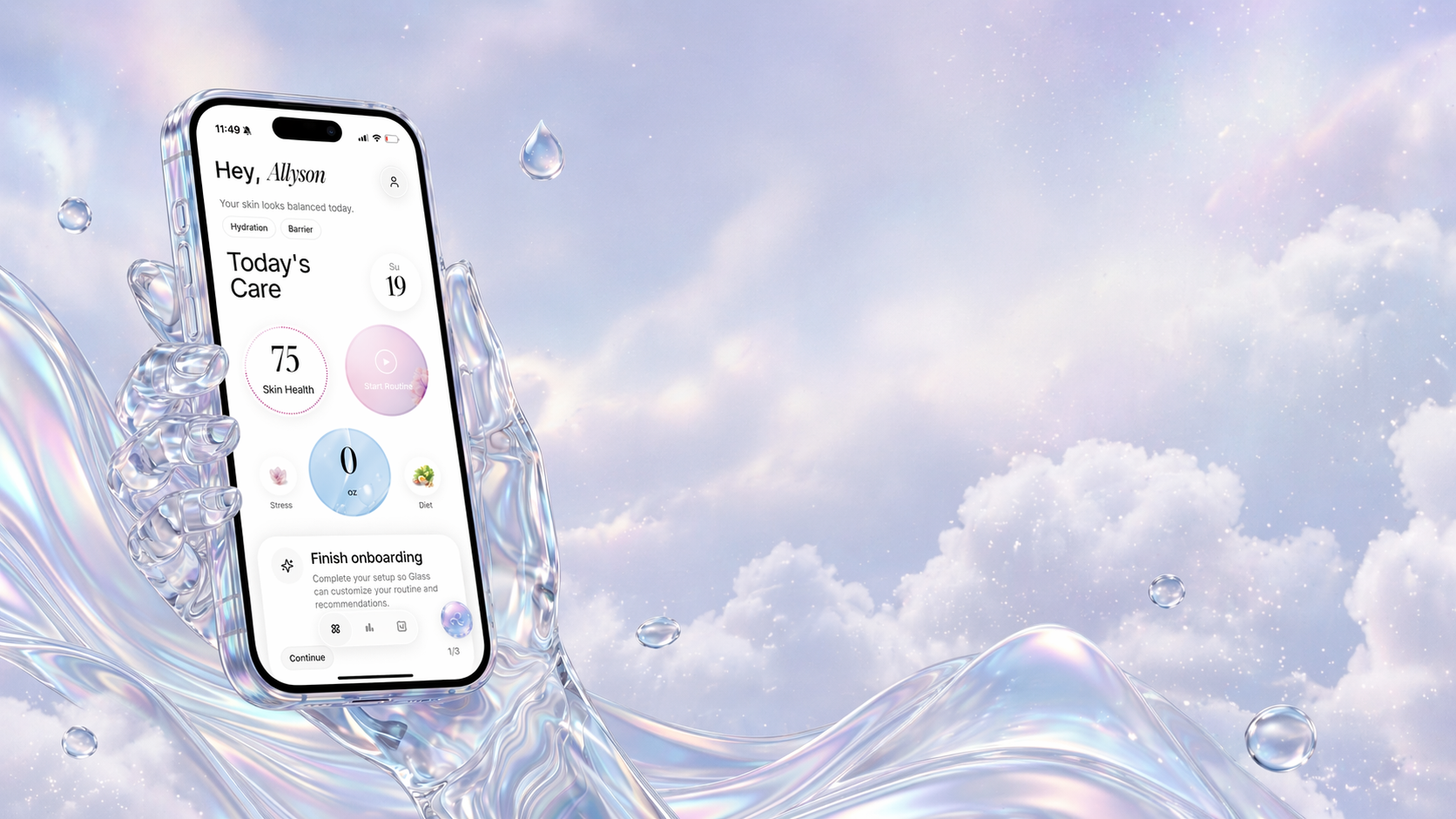
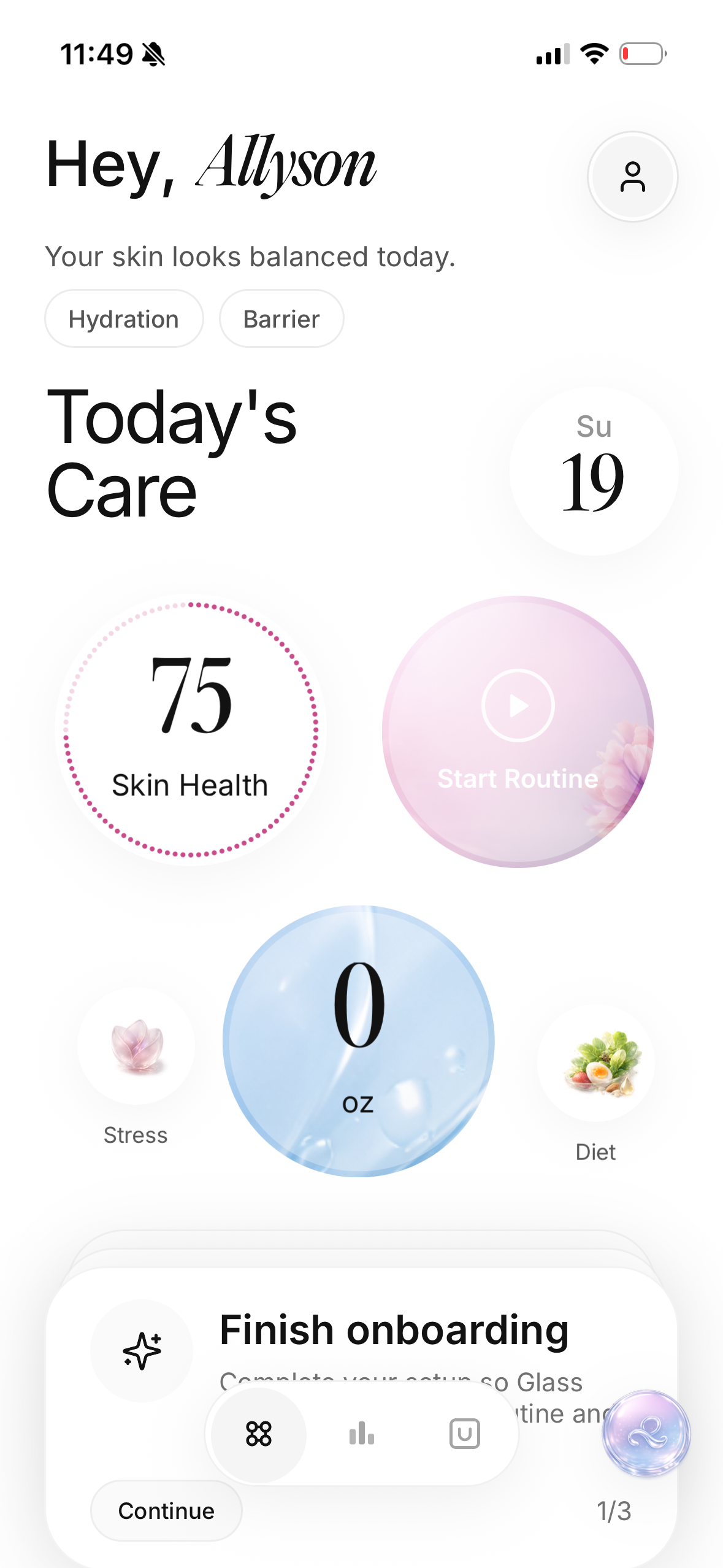
The public App Store listing points to a fuller system:
- morning and night routine tracking
- skin analysis
- product logging
- reminders
- weekly reports
- lifestyle inputs like sleep, water, diet, and stress
That is a better shape for real skincare than a plain tracker.
Most routine problems are not just reminder problems. They are interpretation problems. You followed your routine more consistently this week, but your skin still feels off. Did a product irritate you? Did you over-exfoliate? Did you skip moisturizer two nights in a row? Did your skin look dull because you were dehydrated, not because your serum “stopped working”?
Glass feels built around that messier reality.
It is the strongest option here if you want the tracker to live in the same place as the progress context. That is also why it is the easiest app to recommend to people who are tired of bouncing between routine planners, camera rolls, notes, and product lists.
If your main issue is that your skincare system feels scattered, this is the cleanest fix.
If you want adjacent reads after this one, best skincare app (April 2026), best skincare routine app (April 2026), and best AI skin analysis app (April 2026) cover the nearby branches.
2. Skin Bliss is best for people who want tracking plus heavy analysis
Skin Bliss is the tracker I would point to for someone who wants the whole skincare control panel.
Its public App Store description leans hard into depth:
- face scanning
- routine builder and templates
- routine evaluator and timeline tools
- skin diary
- AI photo comparison
- ingredient compatibility checks
- shelf analysis
- weather-based tips
That is a lot. For the right person, that is a strength.
If you like understanding product overlap, figuring out where actives clash, comparing products side by side, and treating skincare like a system you want to optimize, Skin Bliss is one of the strongest options in the category.
The tradeoff is exactly what you would expect. The app can start to feel bigger than the basic job.
That does not make it worse. It just makes it better for a specific kind of reader:
- someone with a larger skincare shelf
- someone who wants deeper diary and analysis tools
- someone who likes evaluating routines, not just following them
- someone who wants help avoiding duplicate actives and product mismatch
If you are already overwhelmed, I would still start with Glass. If you want more analysis surface area, Skin Bliss earns its place.
3. FeelinMySkin is best for people who mainly need follow-through
There is something appealing about FeelinMySkin because it stays close to the actual problem.
Its public App Store positioning is very explicit:
- create routines to stay consistent
- set reminders
- check off steps
- track what you used and when
- journal progress
- keep routines ordered more intelligently with smart ordering
That is a good product shape for readers who are not looking for a huge skincare platform. They are looking for a routine that survives real life.
I would recommend this app most strongly to people who:
- already know the products they want to use
- need help remembering frequency and order
- like the satisfaction of checking steps off
- want journaling without a lot of extra complexity
This is the tracker that feels closest to a daily planner for your face.
What it seems lighter on, at least from the public-facing materials, is richer interpretation. It looks better at helping you execute than helping you untangle every skin change. That is fine if your biggest issue is compliance. It matters more if your main question is, “What is my skin actually reacting to?”
4. SKO is best for readers who want consistency analytics
SKO has one of the clearest tracker-first positions in this category.
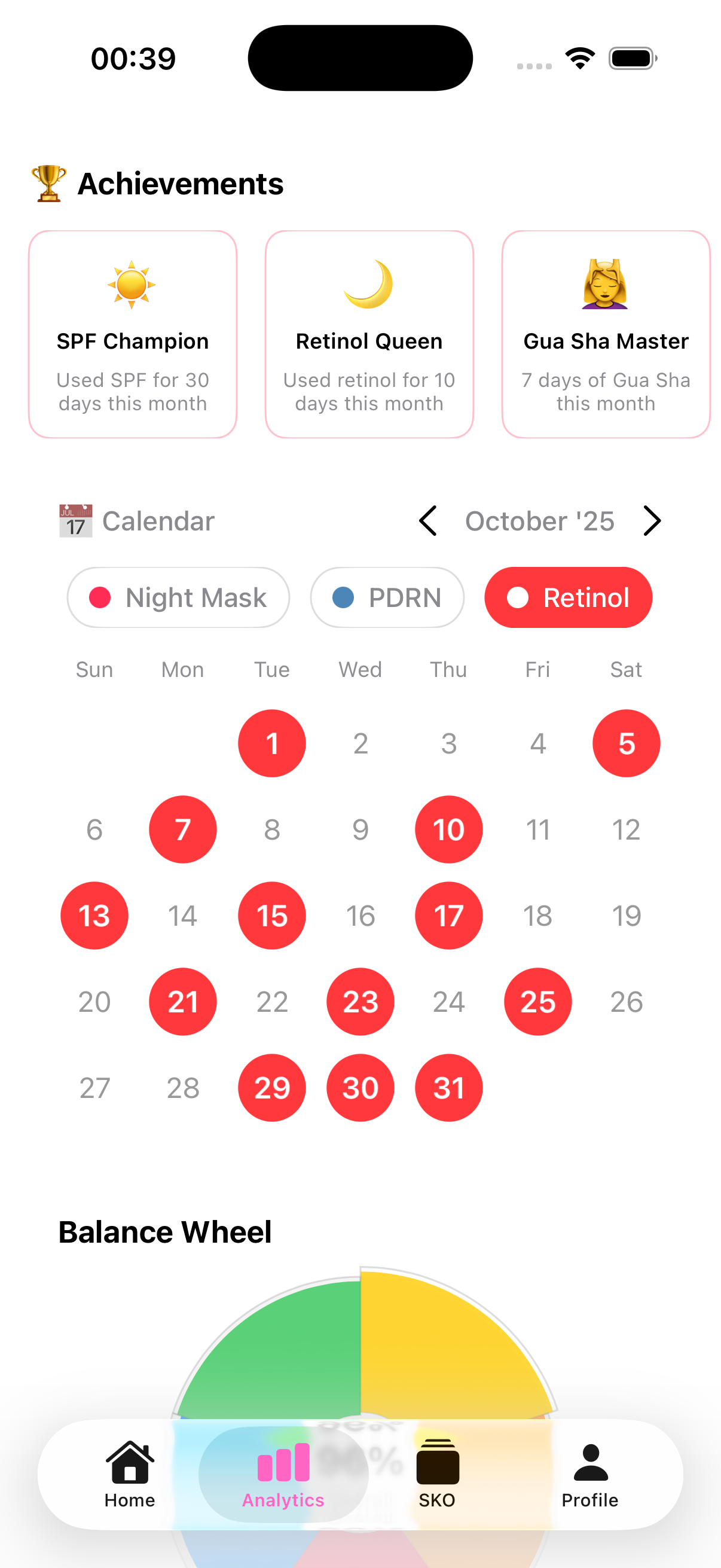
Its landing page does not bury the value proposition. It leads with it:
- build your routine
- track daily steps
- monitor consistency with calendar analytics
- log active ingredients
- get progress insights and AI guidance
That is smart.
A lot of skincare tracking frustration comes from weak memory. People think they are “pretty consistent” until they actually see the calendar. They think a product was used three times a week when it was really once. They feel like nothing is changing because their routine history is vague.
SKO seems designed for that exact user.
I would put it in front of someone who wants:
- visible consistency data
- ingredient usage patterns
- analytics that make skipped days obvious
- a more tracker-native feel than a broad skincare app
The main hesitation is maturity. From the public product footprint, it still feels earlier-stage than the largest apps in this group. That is not automatically bad. Sometimes newer apps are more focused. It just means I would trust it most for people who want clean tracking logic first and broad ecosystem depth second.
5. Skincare Routine Planner is best for a simpler journal-style tracker
The nice thing about Skincare Routine Planner is that it sounds like what many readers actually want when they say “tracker.”
Its App Store listing highlights:
- custom morning and evening routines
- product recommendations
- progress tracking
- a skincare journal
- photo logging
- custom products
The reviews on the listing also make the use case very easy to understand. One user specifically described wanting a place to track routines and photos without cluttering their camera roll, which is exactly the kind of practical pain point that pushes people into this category in the first place.
I would recommend this app to someone who wants:
- a simple place to log routines and photos
- a more journal-like experience
- custom-product support
- less emphasis on scanning and more emphasis on recording
The limit is depth. If you want richer skin context, stronger analysis, or a more connected loop between routine behavior and visible skin changes, the ceiling comes faster here than it does with Glass or Skin Bliss.
Still, there is real value in an app that does not overcomplicate the core job.
The mistake people make when choosing a skincare tracker
The most common mistake is choosing the app that sounds smartest instead of the app they will actually use tired.
That is the whole game.
You are not picking a skincare tracker for your ideal self on a Sunday reset. You are picking it for the version of you who is exhausted at 11:14 PM and cannot remember whether this is the night for retinol or recovery.
That is why I would pressure-test any tracker against these questions:
- Can I log tonight’s routine in under a minute?
- Will this app help me remember order and frequency?
- Can I tell what changed over the last two to four weeks?
- Will this app make me calmer or make skincare feel busier?
- If I miss three days, will I want to come back to it?
That last question is underrated.
The best tracker is not the one with the most discipline-coded vibe. It is the one that makes restarting feel easy.
Which app should you choose?
Choose Glass if you want routines, product logging, progress, and scan context in one place.
Choose Skin Bliss if you want the deepest routine-analysis and product-intelligence surface.
Choose FeelinMySkin if you mainly need reminders, checkboxes, and a planner that keeps your routine visible.
Choose SKO if you care most about analytics, consistency, and seeing your routine behavior clearly.
Choose Skincare Routine Planner if you want a simpler skincare journal with routine and photo tracking.
FAQs
What is the best skincare routine tracker in April 2026?
For most readers, Glass is the best skincare routine tracker in April 2026 because it connects routine tracking, product logging, reminders, progress reporting, and skin context more clearly than the other public options in this comparison.
Is a skincare routine tracker better than using Notes?
Usually, yes. Notes can store information, but a real routine tracker is better at reminders, step order, repeat scheduling, check-offs, and showing progress over time without turning your phone into a pile of manual logs.
What should a skincare tracker actually track?
A useful tracker should help you record your morning and night routines, product usage, frequency, skin reactions, progress photos, and ideally enough context to spot patterns instead of just collecting data.
Do skincare routine trackers help with consistency?
They can, but only if the tracker reduces friction. The best ones make it easy to follow your routine when you are busy, tired, or tempted to skip steps. If the app feels like homework, most people drop it fast.
What is the difference between a skincare routine tracker and a skincare app?
A skincare app can mean almost anything: scanner, product checker, routine builder, ingredient analyzer, or journal. A skincare routine tracker is narrower. Its job is to help you follow, log, and understand your routine over time.
If your main issue is routine drift, start with the tracker lens, not the broad app category.