If your skin suddenly feels tight after cleansing, moisturizer burns on contact, and products you used to tolerate now feel like a bad idea, the problem is often not that your skin “needs more actives.” It is that your skin barrier is irritated and needs less.
That is the part many people miss.
When barrier damage shows up, the instinct is usually to fix it with more effort: stronger hydration, more soothing serums, another cream, maybe even a scrub to remove the flakes. In real life, that usually makes the situation noisier. A good skin barrier repair routine is less about doing more and more about taking away the things that keep resetting the irritation.
This guide is for that exact moment. The goal is not to build the most advanced routine. The goal is to get your skin calm enough that it can tolerate a normal routine again.
What a damaged skin barrier usually feels like
Most people do not need a microscope to notice barrier trouble. They notice it in the mirror and in the first ten seconds after washing their face.
Common signs include:
- tightness after cleansing
- stinging when you apply products
- redness or blotchiness
- flakes that do not improve with a random moisturizer
- rough texture that feels different from your normal skin
- skin that looks oily and dehydrated at the same time
- breakouts that show up alongside irritation
The hard part is that barrier damage can look messy. It does not always show up as one clean symptom. Sometimes it looks dry. Sometimes it looks shiny. Sometimes it looks like irritation plus clogged pores at the same time. That is why people often misread it and start treating the wrong problem.
If your skin feels reactive in a way that is new for you, the safest first assumption is usually not “I need a stronger treatment.” It is “I should simplify for a week and see whether the skin settles.”
Why the barrier gets disrupted in the first place
Barrier damage is often less dramatic than people expect. It is usually not one catastrophic mistake. It is a pileup of small things that all push in the same direction.
The common triggers are:
- over-exfoliating
- starting too many active ingredients at once
- cleansing too often or with a harsh cleanser
- using very hot water
- dry weather, wind, indoor heat, or heavy AC
- sun exposure without reliable SPF
- trying to treat breakouts, dark spots, and texture all at the same time
This is also where routine design matters. If you are layering acids, retinoids, vitamin C, acne products, and spot treatments into the same week without much structure, the problem is often not one “bad” product. The problem is that the stack became harder for your skin to tolerate than it looked on paper.
That is one reason I keep coming back to how to build a skincare routine you will actually follow. A stable routine is not just easier to repeat. It is also easier to troubleshoot when something goes wrong.
The first rule: stop trying to win the week
If your barrier is irritated, this is not the week to be ambitious.
The repair phase should feel a little boring. That is a good sign.
For most people, the first move is to pause:
- exfoliating acids
- retinoids or retinal
- strong vitamin C formulas
- scrubs or cleansing brushes
- anything fragranced that already felt borderline
- masks that leave skin hot, tingly, or stripped
There is sometimes anxiety around this step because people feel like they will “lose progress” on acne, texture, or dark spots. In practice, pushing through barrier irritation usually slows those goals down anyway. Calm skin is more cooperative skin.
The simplest morning routine
The best morning skin barrier repair routine is usually three or four steps, not ten.
Step 1: Cleanse gently, or do less
If your skin is actively stinging and very dry, you may not need a full cleanser every morning. A lukewarm water rinse can be enough for a short repair phase. If you do need a cleanse, use something mild that leaves the skin comfortable, not squeaky.
What you want after rinsing is simple: clean skin that does not feel stripped.
Step 2: Use one hydrating layer if your skin likes it
A simple hydrating serum can help, especially if your skin feels tight under moisturizer. The key word is simple. This is not the moment for a five-active “barrier cocktail.”
Look for a formula built around ingredients like:
- glycerin
- hyaluronic acid
- panthenol
- beta-glucan
- lower-strength niacinamide if you already know your skin tolerates it
If serums are making you sting, skip the serum and let moisturizer do the work.
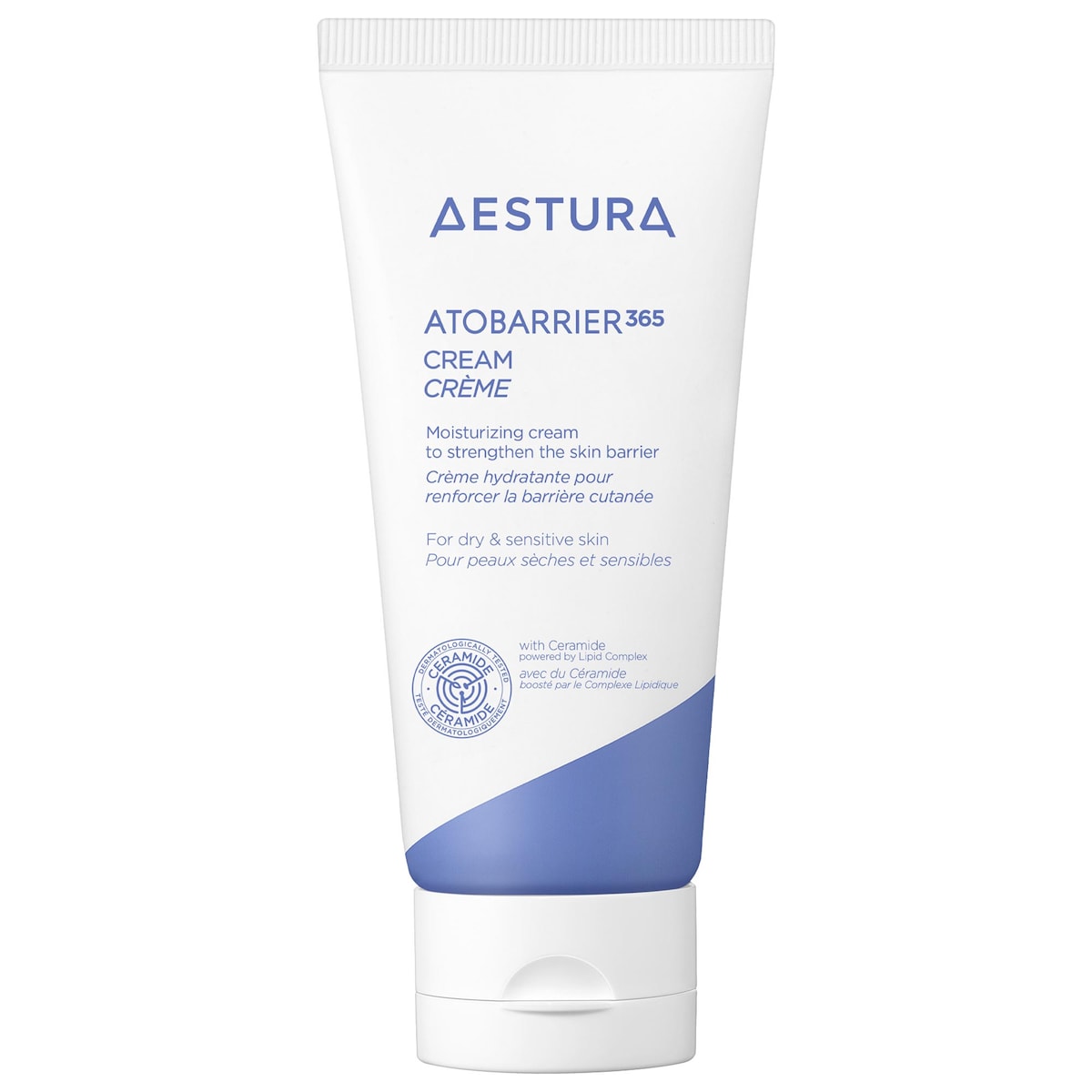
Step 3: Use a real moisturizer, not a hopeful one
This is the center of the routine. You want a moisturizer that focuses on comfort and barrier support, not a lightweight gel that disappears in thirty seconds and leaves you negotiating with your face by lunchtime.
Helpful ingredients often include:
- ceramides
- fatty acids
- cholesterol
- squalane
- colloidal oatmeal
- panthenol
The exact brand matters less than the job. During repair, moisturizer should make your skin feel quieter.
Step 4: Wear sunscreen every day
Skipping SPF during barrier recovery is one of the fastest ways to drag the process out. Sun exposure keeps irritation and discoloration in the loop.
If sunscreen suddenly stings, the answer is not to skip it forever. It usually means you need a gentler formula, fewer layers underneath, or a short reset before re-testing.
The simplest evening routine
Night is where people often overcorrect. They think the skin is damaged, so they pile on more products. Usually, the better move is to stay disciplined.
Step 1: Remove the day without scrubbing
If you wore sunscreen or makeup, remove it gently. A balm, oil cleanser, or very mild first cleanse is usually easier on irritated skin than trying to rub everything off with one harsh wash.
Step 2: Follow with a short second cleanse if needed
Not everyone needs a full double cleanse every night. If your first cleanse removed everything well and your skin is already irritated, keep the second step brief and gentle.
Step 3: Skip treatment unless the treatment is hydration
This is the step where people get themselves into trouble.
During repair, your “treatment” is often just:
- a hydrating serum
- a soothing serum
- or nothing at all before moisturizer
If you are still red, flaky, or stinging, this is not the time to sneak exfoliation back in because your skin “looks dull.”
Step 4: Seal in comfort
At night, many people do better with a slightly richer moisturizer than they use in the morning. If you still wake up tight, add a thin occlusive layer only where you need it most instead of coating your whole face in something heavy by default.
That distinction matters. Barrier repair should reduce irritation, not create a second problem with congestion.
What to avoid while your skin is repairing
This is where most routines either calm down or stay stuck.
Avoid:
- chasing flakes with exfoliation
- changing products every two days
- assuming “tingling” means a product is working
- cleansing multiple times because skin feels oily
- using acne spot treatments all over the face
- layering several soothing products that all have active extras tucked inside
One of the weirdest parts of barrier damage is that it can make people more impulsive. Skin looks bad, so they keep changing the plan. But repair usually comes from consistency, not creativity.
How long skin barrier repair usually takes
This is the answer people want immediately, and it is also the answer that gets oversimplified online.
If the irritation is mild, you may notice less tightness and less stinging within a few days. Visible improvement in redness and flaking often takes a couple of weeks. A more stable recovery commonly takes several weeks, and stubborn or repeated damage can take longer.
The useful rule is this: if things are gradually getting calmer, stay boring a little longer.
The unhelpful rule is: one good day means your strongest actives can all come back tonight.
How to reintroduce actives without wrecking your progress
Once your skin feels normal again, the next mistake is moving too fast.
Reintroduce one active at a time. Not one every night. One category at a time.
A reasonable approach looks like this:
- Keep the gentle cleanser, moisturizer, and SPF stable.
- Add back the single active you care about most.
- Use it less often than you used to at first.
- Watch for stinging, extra redness, new flaking, or delayed irritation.
- Only add the next active after the first one is clearly tolerating well.
If you are deciding between hydration support and a more treatment-focused step, niacinamide vs hyaluronic acid for glass skin is a useful read before you clutter the routine again.
When a “barrier issue” may be something else
Barrier damage is common, but not every rash, flare, or burning reaction is a simple barrier problem.
It is worth getting professional help if:
- the redness is severe or spreading
- you have swelling, hives, or significant itching
- your skin is cracking or oozing
- every product burns, including very bland ones
- symptoms keep recurring even when your routine is simple
- you think you may be dealing with eczema, dermatitis, rosacea, or an allergy
That line matters. A good routine can support recovery, but a routine is not a substitute for medical care when the picture stops looking like straightforward irritation.
The part most blog posts skip: repair only works if the routine stays trackable
This is where a lot of good skincare advice falls apart in real life.
Most barrier-repair guides tell you what to use. Fewer help you notice what keeps setting your skin back off again.
That is why tracking matters more than people think. If your skin gets irritated every time you restart a retinoid, every time sleep gets bad, every time you over-cleanse after a workout, or every time you stack too many “brightening” products together, that pattern is more valuable than another product recommendation.
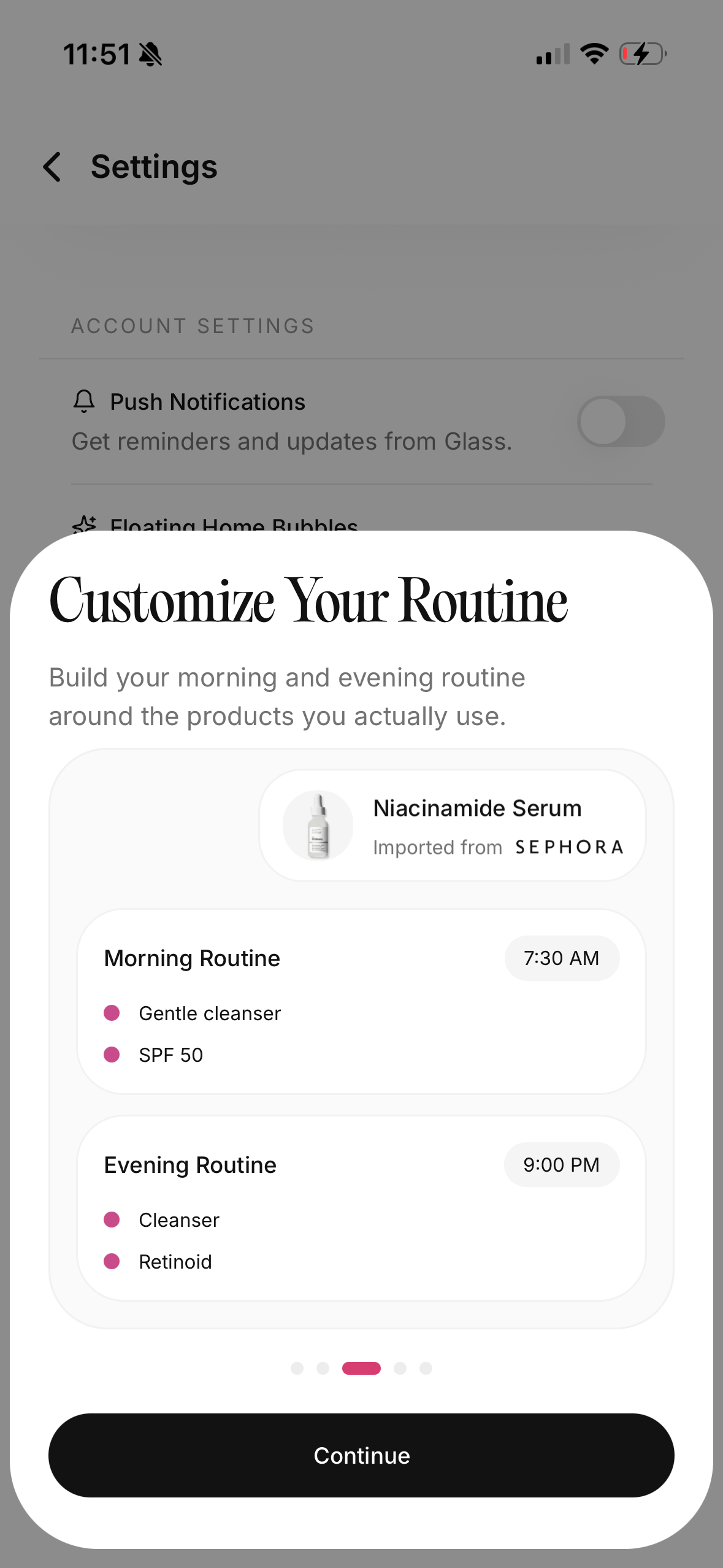
That is also where Glass fits naturally. The useful part is not just logging products. It is seeing the routine, the consistency, and the skin response in one place so you can stop guessing which change actually mattered.
If your skin leans dry or dehydrated even outside of flare-ups, a glass skin routine for dry skin that you can actually stick with is the next good read after this one.
A simple reset routine you can start tonight
If you want the shortest possible version, start here:
Morning
- rinse or use a gentle cleanser
- apply a simple hydrating layer if tolerated
- moisturize
- use sunscreen
Night
- remove sunscreen gently
- do a short second cleanse if needed
- moisturize
- add a thin occlusive layer only on the driest areas if necessary
That is enough for many people to stop the spiral.
Bottom line
The best skin barrier repair routine is not impressive. It is calm, repetitive, and slightly unexciting.
That is the point.
When skin is irritated, the win is not finding the most advanced product stack. The win is getting back to a routine that your skin can tolerate every day. Pause the noise. Use fewer products. Protect your skin in the morning. Reintroduce actives slowly. Track what actually triggers setbacks.
That is how you repair the barrier without turning recovery into another cycle of trial and error.
FAQ
Should I stop retinol if my skin barrier is damaged?
Usually, yes for the short repair phase. If your skin is stinging, flaky, and reactive, continuing retinol often prolongs the problem. Bring it back only after the skin feels stable again.
Can I still use niacinamide during barrier repair?
Sometimes. Many people tolerate it well, especially in simpler formulas, but irritated skin can suddenly dislike products it used to handle. If niacinamide stings, pause it and keep the routine more basic.
Why does my moisturizer burn if it is supposed to help?
When the barrier is compromised, even normally gentle products can sting because the skin is more permeable and reactive. It does not always mean the moisturizer is bad. It can mean the skin is too irritated right now.
How do I know if I need a richer cream or just a better routine?
If your skin stays tight shortly after moisturizing, you may need a more supportive cream. If your skin keeps getting irritated because the routine is overloaded, a richer cream alone will not fix it. Many people need both fewer triggers and a better moisturizer.
Is flaky skin a sign that I should exfoliate?
Not automatically. In a repair phase, flakes are often a sign to leave the skin alone, not scrub them off. Exfoliating too soon can reset the irritation and prolong recovery.