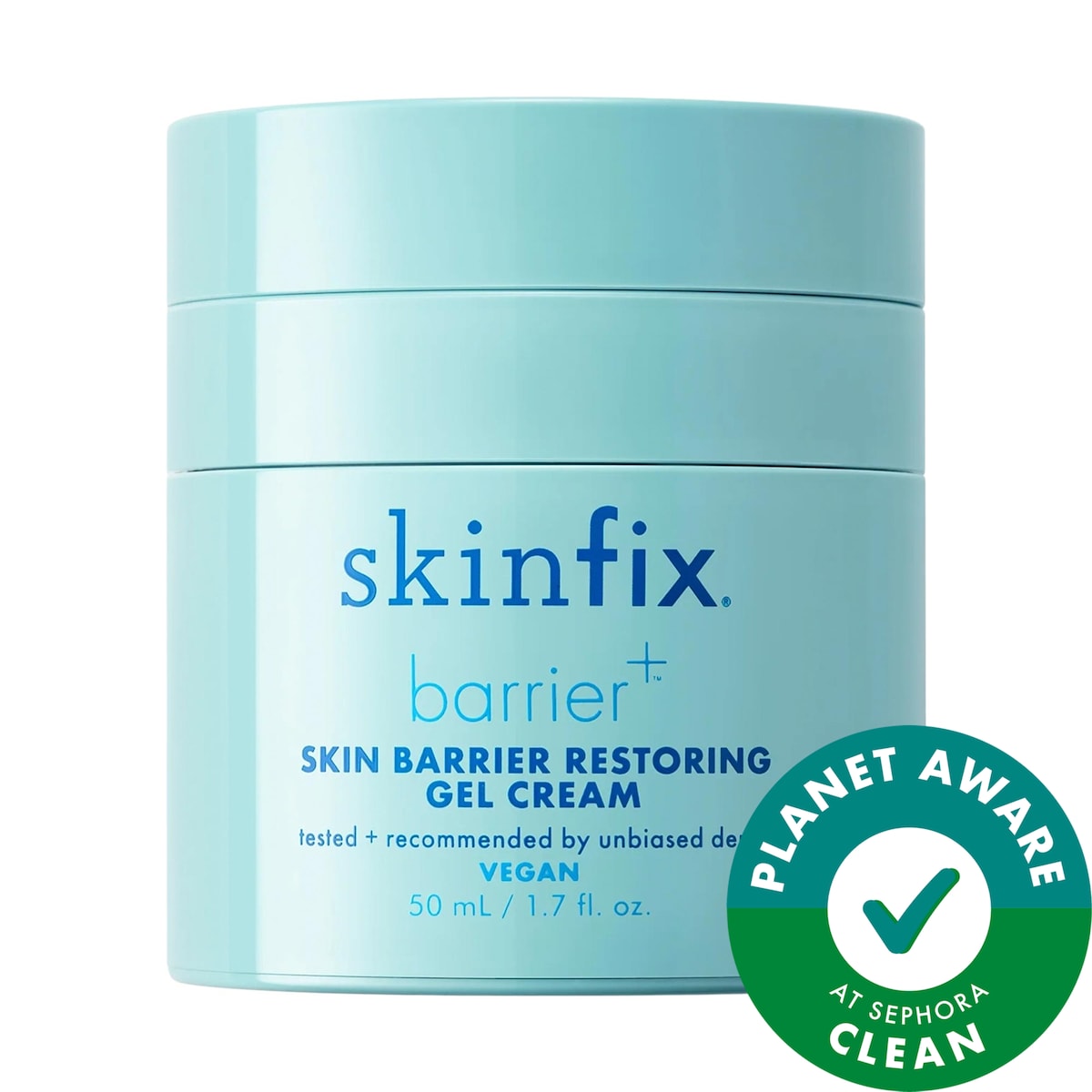
Skinfix makes the kind of moisturizer that sounds responsible.
Barrier. Gel cream. Niacinamide. Peptides. Refillable jar.
Those are all good signals. They are not a guarantee.
I wanted to know whether Skinfix Skin Barrier Restoring Gel Cream is actually the kind of moisturizer I would use every day, or the kind that looks perfect on a product page and then quietly gets abandoned because the texture, price, or ingredient mix does not fit real life.
The answer is specific. I would consider it for normal, combination, oily, or barrier-tired skin that wants hydration without a heavy cream finish. I would be more careful if your skin hates niacinamide, breaks out from richer esters, or needs a plain emergency barrier cream with almost no extras.
The short answer
As of May 2026, Skinfix Skin Barrier Restoring Gel Cream makes the most sense if you want a lightweight moisturizer that can sit between a watery serum and sunscreen without making the routine feel greasy. It is built around barrier lipids, saccharide isomerate, niacinamide, zinc PCA, humectants, squalane, and peptides, so it is more than a basic gel moisturizer.
I would use it as a daily moisturizer for combination or oily skin that still gets dehydrated. I would also consider it when actives make the skin feel tight but a heavy cream feels like too much.
I would not buy it expecting one jar to erase pores, replace a retinoid, heal a damaged barrier overnight, or act like a bland recovery ointment. It is still an active-feeling moisturizer. That is the part I would respect.
What it is trying to be
This is not a bare-bones drugstore gel.
Skinfix describes it as a lightweight gel cream for normal, combination, and oily skin, with concerns around pores, uneven texture, and oiliness. The ingredient story is built around a barrier lipid complex, saccharide isomerate for longer hydration, and 2% niacinamide for tone, oil, and the look of pores.
That combination tells me the product is trying to solve a familiar problem: skin that feels oily on the surface but still gets tight, reactive, or uneven when the routine gets too harsh.
That skin type is easy to mistreat. People keep stripping it because it looks shiny. Then the skin gets tight. Then they add more actives. Then the moisturizer feels either too light to help or too heavy to tolerate.
Skinfix is aiming for the middle: more cushion than a water gel, less weight than a thick cream.
The ingredient read
The ingredient list is doing several jobs at once.
| Ingredient lane | What it is doing | My read |
|---|---|---|
| Barrier lipids and emollients | Support comfort and reduce that tight post-cleanse feeling | Useful if gel moisturizers usually disappear too fast |
| Saccharide isomerate, glycerin, hyaluronic forms | Pull and hold water in the routine | Good for dehydration, especially under sunscreen |
| Niacinamide and zinc PCA | Help with oil balance, tone, and the look of pores | Promising, but not for people who know niacinamide irritates them |
| Squalane and squalene | Add slip and softness without a classic heavy cream feel | Usually elegant, but every clog-prone face has its own rules |
| Peptides and supporting extracts | Add a more treatment-like skin-support angle | Nice bonus, not the reason I would buy it first |
The product is fragrance-free according to Skinfix and Sephora's product information, which matters. A moisturizer meant for barrier-stressed skin should not make fragrance the whole experience.
The bigger question is not whether the ingredient list looks impressive. It does. The question is whether your skin wants this many "helpful" ingredients in the same step.
Some people love that. Some people do better with a quieter formula.
Who I think it fits best
I would put this moisturizer in the routine of someone who says:
- my skin gets oily but still feels dehydrated
- thick creams make me shiny or congested
- gel moisturizers feel too thin
- my pores look worse when my skin is dry and irritated
- my sunscreen sits badly over heavy moisturizers
- I use actives and need a daily buffer
That is the sweet spot.
It also makes sense for someone who wants a morning moisturizer that does not fight SPF or makeup. Skinfix says it can be used day and night, and the gel-cream format makes more sense for daytime than many richer barrier creams.
If you already use a strong retinoid, exfoliating acid, benzoyl peroxide, or vitamin C, I would not judge this only by the first night. Use it in a stable routine and watch whether it reduces tightness without creating new congestion.
Who should skip it
I would skip or sample first if your skin has a bad history with niacinamide. Some people tolerate niacinamide beautifully. Others flush, sting, burn, or develop a weird restless redness every time it shows up.
I would also be cautious if your skin is extremely reactive and you are currently in a true barrier emergency. When skin is burning from water, peeling hard, or reacting to everything, I usually want fewer variables, not a moisturizer with multiple performance claims.
Skip it if you want:
- an ultra-plain recovery balm
- a very rich winter cream
- a matte acne treatment
- a replacement for prescription acne care
- a moisturizer with no active-positioned ingredients
- the cheapest possible daily hydrator
This product is not trying to be minimal. That can be a strength or a problem depending on your skin.
The texture question
Gel cream is one of the most abused skincare phrases.
Sometimes it means watery and gone in thirty seconds. Sometimes it means a silicone-heavy blur cream. Sometimes it means a light cream that still leaves a tacky film.
For Skinfix, the product lane suggests a moisturizer that should feel hydrating and cushioned without sitting like a heavy night cream. That is why I would place it after serum and before sunscreen in the morning, or after treatment and before any optional richer seal at night.
If your skin is dry-dry, this may not be enough alone. You might like it under a richer cream, but then the value gets less obvious because you are paying for a full moisturizer that has become a middle layer.
If your skin is oily but dehydrated, the texture is the whole argument.
Price and refill logic
At Sephora, the product data I checked listed it around $46 to $54 depending on size or format. That is not casual moisturizer money.
The refillable packaging makes the purchase feel more reasonable if you already know you like the formula. I would not buy into the refill system before proving the product works on my skin. The first jar is the test. The refill is the commitment.
My rule is simple: do not let sustainability packaging talk you into a formula your face has not approved yet.
If you finish the jar, your skin stays calm, and the texture fits both morning and night, then the refill pod starts to make sense.
How I would use it
I would start with one pump or a thin layer after cleansing and serum. In the morning, I would follow with sunscreen. At night, I would use it after treatment or hydrating serum, then stop there unless the skin still feels dry.
I would not introduce it the same week as a new retinoid, peel pad, benzoyl peroxide wash, and vitamin C serum. That creates too much noise.
Use it like this for two weeks:
- Keep cleanser, treatment, and sunscreen the same.
- Add Skinfix as the moisturizer step.
- Track tightness, shine, clogged pores, stinging, and makeup behavior.
- Do not change the whole routine if one day looks different.
That is the boring way. It is also the way you actually learn something.
The pore-refining promise
I would be careful with the word pore-refining.
Niacinamide and zinc PCA can be useful in routines for oiliness and the look of pores. Hydration can also make pores look less harsh because dehydrated skin often exaggerates texture. But a moisturizer cannot permanently shrink pores. It can make the skin look smoother, calmer, and less oil-slicked when the formula fits.
That is still valuable. It is just not magic.
If your pores look large because the skin is oily, dehydrated, or irritated, this type of moisturizer may help the overall look. If the issue is sebaceous filaments, acne scarring, deep texture, or genetics, do not put the whole burden on one gel cream.
Barrier support without pretending it is medicine
Barrier support is one of those phrases that can mean everything and nothing.
A good barrier-supportive moisturizer should reduce tightness, help the skin feel more comfortable after cleansing, layer well with the rest of the routine, and avoid adding obvious irritation. Skinfix has credible pieces for that job: lipids, humectants, emollients, niacinamide, allantoin, and a fragrance-free positioning.
But if your skin is cracked, infected, severely inflamed, or reacting in a way that feels medical, moisturizer is not the whole answer. The American Academy of Dermatology's dry skin guidance still comes back to basics: gentle cleansing, moisturizing, and avoiding irritation triggers. If skin is not improving or symptoms are severe, that is a clinician conversation.
I would treat Skinfix as a smarter daily moisturizer, not a medical rescue plan.
What I would compare it against
If I were choosing at Sephora, I would compare it by role instead of brand hype.
| Image | Product | Better if you want |
|---|---|---|
 | Skinfix Barrier Gel Cream | A balanced gel cream with barrier support, niacinamide, and a refill option |
 | AESTURA ATOBARRIER365 Lightweight Face Lotion | A lotion-style barrier step that still feels lightweight |
 | Tower 28 SOS Barrier Recovery Cream | A simpler barrier-recovery cream feel for sensitive skin routines |
The Skinfix lane is the most interesting when you want oil-conscious barrier support. If you only want comfort, another moisturizer may be easier. If you want acne treatment, this is not the treatment step.
How it fits with actives
Skinfix says the moisturizer plays well with actives like exfoliating acids, retinoids, and brighteners. I would still introduce it carefully.
Actives make the skin less forgiving. A moisturizer can buffer that, but it can also become the product you blame when the real issue is that your routine is doing too much.
If you use retinol or acids, try this:
- active at night only if your skin already tolerates it
- Skinfix after the active if the product directions allow
- sunscreen every morning
- no extra scrub or peel while testing
- reduce active frequency if burning or flaking increases
If your active routine is already making your face sting, fix the intensity first. Do not ask a moisturizer to clean up a routine that keeps injuring the skin.
The acne-prone skin question
I would not call any moisturizer universally acne-safe.
This formula is clearly positioned toward normal, combination, and oily skin, and it includes ingredients that make sense for oil and pores. That does not mean every acne-prone person will tolerate it. Acne-prone skin is personal. One face loves squalane. Another face does not. One face loves niacinamide. Another turns red.
The better test is pattern-based.
Use it on a stable routine. Watch for new clogged bumps in the same zones, new sting, more shine, or smoother recovery after actives. If your skin gets calmer and no new congestion pattern appears, that is useful. If bumps appear exactly where you apply it and repeat over two to three weeks, respect the pattern.
Use Glass to log the product, track photos, and keep the routine readable. A moisturizer test should not depend on memory and bathroom lighting.
What I would ignore
I would ignore any promise that makes this sound like a pore eraser.
I would ignore the urge to buy the refill before knowing whether the first jar works.
I would ignore the idea that expensive barrier products are automatically better than simple ones.
I would ignore panic from one slightly shiny afternoon if the rest of the week looks better.
The only useful question is whether this moisturizer makes your actual routine easier to repeat.
My May 2026 verdict
I would buy Skinfix Skin Barrier Restoring Gel Cream if my skin needed a moisturizer that feels lighter than a cream but more supportive than a watery gel. I would be especially interested if my routine included sunscreen, makeup, or actives that make heavy moisturizers annoying.
I would sample first if my skin is very reactive, niacinamide-sensitive, or deep in a barrier flare. I would skip it if I needed the plainest possible recovery cream or the lowest-cost daily moisturizer.
The product makes sense. The refill system makes sense after the formula earns its place. The ingredient list is strong, but the routine fit matters more than the ingredient list.
That is the part I would not overcomplicate.
Useful references: Skinfix product details, Sephora product page, AAD dry skin care basics, and AAD moisturizer selection guidance.