Barrier repair sounds gentle.
Sometimes it is not.
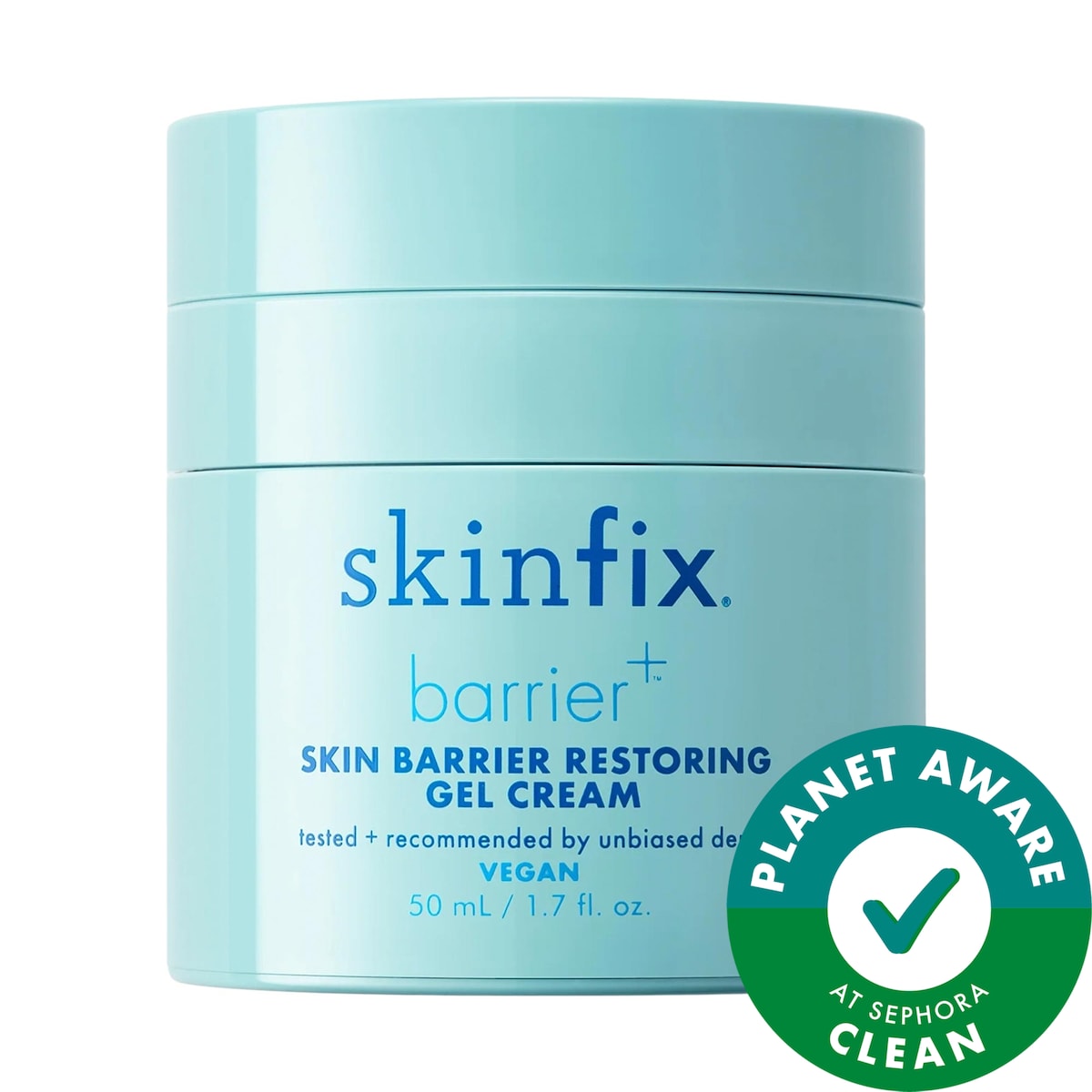
That is the first thing I would keep in mind with Skinfix Skin Barrier Restoring Gel Cream with Pore-Refining Niacinamide and Peptides. The name sounds like a calm moisturizer. The formula reads more like a targeted gel cream for skin that is oily, shiny, pore-conscious, and still barrier-tired.
That difference matters.
This is not a plain recovery cream. It has niacinamide, zinc PCA, squalane, saccharide isomerate, hyaluronic acid, peptides, and a barrier lipid complex. That makes it more interesting than a basic water cream. It also makes the decision less automatic for reactive skin.
As of May 2026, Sephora lists the Skinfix gel cream around the $46 to $54 lane, depending on size and format. That is not casual moisturizer money. For that price, the product has to do more than feel nice once on the back of your hand.
My short answer: I would consider Skinfix Skin Barrier Restoring Gel Cream if my skin was oily, combination, acne-prone, or barrier-tired but still hated rich creams. I would skip it if my skin was deeply dry, if niacinamide usually bothers me, or if I wanted a plain recovery moisturizer with the fewest possible variables.
The quick read
| Detail | My read |
|---|---|
| Product | Skinfix Skin Barrier Restoring Gel Cream with Pore-Refining Niacinamide and Peptides |
| Price signal in May 2026 | Around $46 to $54 at Sephora, depending on format |
| Texture lane | Lightweight gel cream |
| Best fit | Normal, combination, oily, pore-conscious, or acne-prone skin that still needs barrier support |
| Main ingredients I notice | 2% niacinamide, zinc PCA, squalane, glycerin, saccharide isomerate, hyaluronic acid, peptides, allantoin |
| What it is not | A prescription acne treatment, a rich dry-skin cream, or a guaranteed pore eraser |
| Biggest catch | It is active enough that reactive skin should test it slowly |
The appeal is clear. A lot of people with oily or acne-prone skin still need moisture. They just do not want a thick cream sitting on top of their face all day.
That is the hole Skinfix is trying to fill.
What the full name is really telling you
The full name is long for a reason: Skinfix Skin Barrier Restoring Gel Cream with Pore-Refining Niacinamide and Peptides is trying to sit between two shoppers who usually get separated.
One shopper wants barrier support. They are tired of tightness, stinging after cleansing, retinoid dryness, or that shiny-but-dehydrated feeling that makes every product feel slightly wrong.
The other shopper wants a lighter finish. They do not want a rich cream. They do not want to look greasy under sunscreen. They do not want a moisturizer that makes pores look louder by lunch.
Skinfix is trying to hold both needs in one jar. That is the interesting part. It is also the risk.
When a moisturizer promises barrier support and pore refinement at the same time, I do not read that as "everyone should buy it." I read it as "make sure you actually live in this middle lane." If your skin is just dry, go richer. If your skin is just oily and comfortable, go simpler. If your skin is oily, tight, reactive from actives, and hard to moisturize without feeling coated, this starts to make more sense.
Why this moisturizer caught my attention
Most barrier creams are built for dry-skin panic.
They are thick. They are comforting. They make the face feel wrapped. That can be perfect when skin is flaky, cold-weather dry, or irritated from too many actives. It can also be too much if your forehead gets shiny by noon or your cheeks clog when a moisturizer feels too rich.
Skinfix Barrier Gel Cream is interesting because it takes the barrier-repair idea and puts it into a lighter, pore-conscious format. The product is not saying, "Use this if your skin wants a heavy blanket." It is saying, "Use this if your skin needs support but still behaves like oily or combination skin."
That is a real skincare problem.
I see it most often in routines built around acne treatments, retinoids, salicylic acid cleansers, benzoyl peroxide, exfoliating toners, or too much cleansing. The face gets stripped, then shiny, then tight, then bumpy. The person buys a richer moisturizer to fix the tightness, then worries the richer moisturizer is making the bumps worse.
Skinfix is aimed at that exact middle lane: moisture without the heavy-cream anxiety.
The ingredient story in plain English
The formula has a few different jobs happening at once.
The hydration side comes from glycerin, propanediol, saccharide isomerate, hydrolyzed hyaluronic acid, sodium hyaluronate, and related water-binding ingredients. That matters because oily skin can still be dehydrated. Shine does not prove the skin has enough water.
The barrier-support side comes from squalane, squalene, jojoba/macadamia esters, triheptanoin, phytosterols, and Skinfix's lipid-complex positioning. Those ingredients are why this does not read like a thin gel that vanishes after ten minutes.
The oil and pore-conscious side comes from 2% niacinamide and zinc PCA. I would not treat those like magic, but they make sense in a moisturizer designed for oily, combination, or congested-looking skin. Niacinamide can support a more even-looking tone and barrier behavior. Zinc PCA often shows up in formulas aimed at oilier skin.
The calming side comes from allantoin, green tea, and a few skin-conditioning ingredients. Again, this does not make it irritation-proof. It just tells me the product is trying to be supportive, not harsh.
That mix is the whole point. It is not the plainest moisturizer. It is not the richest moisturizer. It is a targeted gel cream for skin that needs support and restraint at the same time.
The pore-refining promise needs a calmer standard
I would be careful with the phrase "pore-refining."
It is easy to hear that and expect the product to make pores disappear. That is not how I would judge it. Pores are normal skin structure. A moisturizer can make skin look smoother when the surface is hydrated, less irritated, and less greasy-looking, but it cannot delete pores like a filter.
The better question is whether Skinfix makes the skin look less chaotic.
Does the forehead look calmer by midday? Does sunscreen sit more evenly? Does the skin feel less tight after actives? Do the cheeks stop overreacting while the T-zone stays manageable? Those are realistic wins.
If you want actual pore congestion help, the routine may need a separate lane: a tolerated BHA, a retinoid plan, better cleansing, or fewer heavy layers. Skinfix can support that routine. It should not be asked to replace the whole thing.
The review signal I would actually trust
Sephora shows Skinfix Barrier Gel Cream with a strong review base, and the product page data I checked showed more than 800 reviews and an average a little above 4 stars.
That is useful, but I do not buy skincare from the star number alone.
I care more about whether the reviews line up with the product's promised lane. For this kind of moisturizer, the pattern I would want to see is simple:
- people with oily or combination skin can use it consistently
- acne-prone people do not feel smothered
- skin feels less tight after active nights
- sunscreen layers cleanly over it
- the finish does not turn greasy by lunch
- people who need a richer cream understand that this may not be enough
The last point is important. A good gel cream can still disappoint dry skin. That does not make the product bad. It means the texture is doing what it was built to do.
Who I think Skinfix Barrier Gel Cream is for
I would put this in front of someone who says:
- my skin gets oily but still feels tight
- rich creams clog me or make me nervous
- acne treatments make my face uncomfortable
- I want barrier support without a greasy finish
- I use sunscreen every morning and need moisturizer to behave under it
- I want niacinamide, but not in another separate serum
- I need a moisturizer that works in a real routine, not only at night
That person has a clear reason to look at Skinfix.
The strongest fit is probably combination or oily skin that has been overworked. Not ruined. Not medically alarming. Just pushed too hard by cleanser, acids, retinoids, acne products, weather, or inconsistency.
If your face is both shiny and tight, this kind of product makes more sense than skipping moisturizer completely.
Who I would be more careful with
I would slow down with this product if my skin was redness-prone, rosacea-prone, or already suspicious of niacinamide.
That does not mean Skinfix is automatically wrong for sensitive skin. It means I would not treat it like a blank moisturizer. A formula can be supportive and still be too busy for a face that is reacting to everything.
I would also be careful if my routine already has niacinamide in multiple places. It can show up in serums, sunscreens, toners, moisturizers, and acne products. One niacinamide product might be useful. Four niacinamide products can make it harder to know why the skin suddenly feels flushed or prickly.
This is where people misread "barrier" as "risk-free." Barrier-support products still need fit.
Who should skip it
I would skip Skinfix Barrier Gel Cream if your skin is very dry and wants real cushion.
Gel creams can be elegant, but elegance is not always enough. If your skin flakes, cracks, drinks moisturizer immediately, or feels dry again thirty minutes after application, you may need a richer cream, a balmier night layer, or a different routine structure.
I would also skip it if niacinamide tends to make your skin flush, itch, or break out. Some people love niacinamide. Some people do not. A 2% level is not extreme, but it is still enough that sensitive people should pay attention.
I would pause if your skin is actively burning, swollen, rashy, or reacting to everything. That is not the best moment to test a moisturizer with multiple active support ingredients. Use the plainest routine you tolerate and get professional help if symptoms are intense, spreading, or persistent.
And I would skip it if you want a product to "fix pores" by itself.
Pores do not disappear because a moisturizer says pore-refining. The better expectation is smoother-looking skin, less tightness, less greasy panic, and a finish that makes the routine easier to repeat.
Skinfix versus a rich barrier cream
This is the cleanest comparison.
| If your skin feels like this | Better lane |
|---|---|
| Oily by lunch but tight after washing | Skinfix Barrier Gel Cream |
| Dry, flaky, and under-cushioned | Richer barrier cream |
| Acne-prone and scared of heavy layers | Skinfix Barrier Gel Cream |
| Retinoid-dry and visibly peeling | Richer cream or layered recovery routine |
| Combination, with oily T-zone and dry cheeks | Skinfix on oily zones, richer cream only where needed |
| Comfortable but wants a smoother base | Skinfix if you like gel creams; richer cream if you want softness |
This is where people make skincare harder than it needs to be. You do not have to use one moisturizer everywhere, forever, in the same amount.
Combination skin can use Skinfix on the T-zone and a richer cream on the cheeks. Retinoid users can use Skinfix most mornings and a heavier recovery cream on selected nights. Oily skin can use a thinner layer in summer and a slightly fuller layer in winter.
The face is not one climate.
Skinfix versus the newer Skinfix Barrier Balancing Water Cream
Skinfix also has a lighter-looking water cream lane now, and I would not confuse the two.
| Product | Image | Best fit | My caution |
|---|---|---|---|
| Skinfix Skin Barrier Restoring Gel Cream |  | Oily or combination skin that feels barrier-tired, tight, or active-stressed | More treatment-like; check niacinamide overlap |
| Skinfix Barrier Balancing Water Cream | 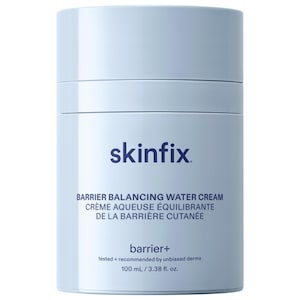 | Oily or combination skin that wants a lighter water-cream direction | May be the better pick if you want less formula intensity |
If I wanted the more direct Skinfix barrier gel story, I would stay with Skin Barrier Restoring Gel Cream. If I wanted the lighter daily moisturizer lane and did not need as much pore-and-active support language, I would look at the water cream.
This is not about which one sounds newer. It is about how much support your skin is actually asking for.
Skinfix versus Sofie Pavitt Skin Jelly
I would compare Skinfix with Sofie Pavitt Face Skin Jelly if my skin was acne-prone and I wanted a lightweight moisturizer.
They are not the same.
Skin Jelly reads more directly acne-prone and oil-free. It feels like the choice for someone who wants hydration with the least heavy feeling possible and does not want a richer barrier story getting in the way.
Skinfix reads more barrier-supportive and ingredient-dense. It has squalane, lipid support, niacinamide, zinc PCA, hyaluronic acid, peptides, and a refillable jar format. It feels like the choice for someone who wants a gel cream, but not a disappearing gel.
If I wanted the lighter acne-prone lane, I would look at Skin Jelly first. If I wanted the more repair-minded gel cream lane, I would look at Skinfix first.
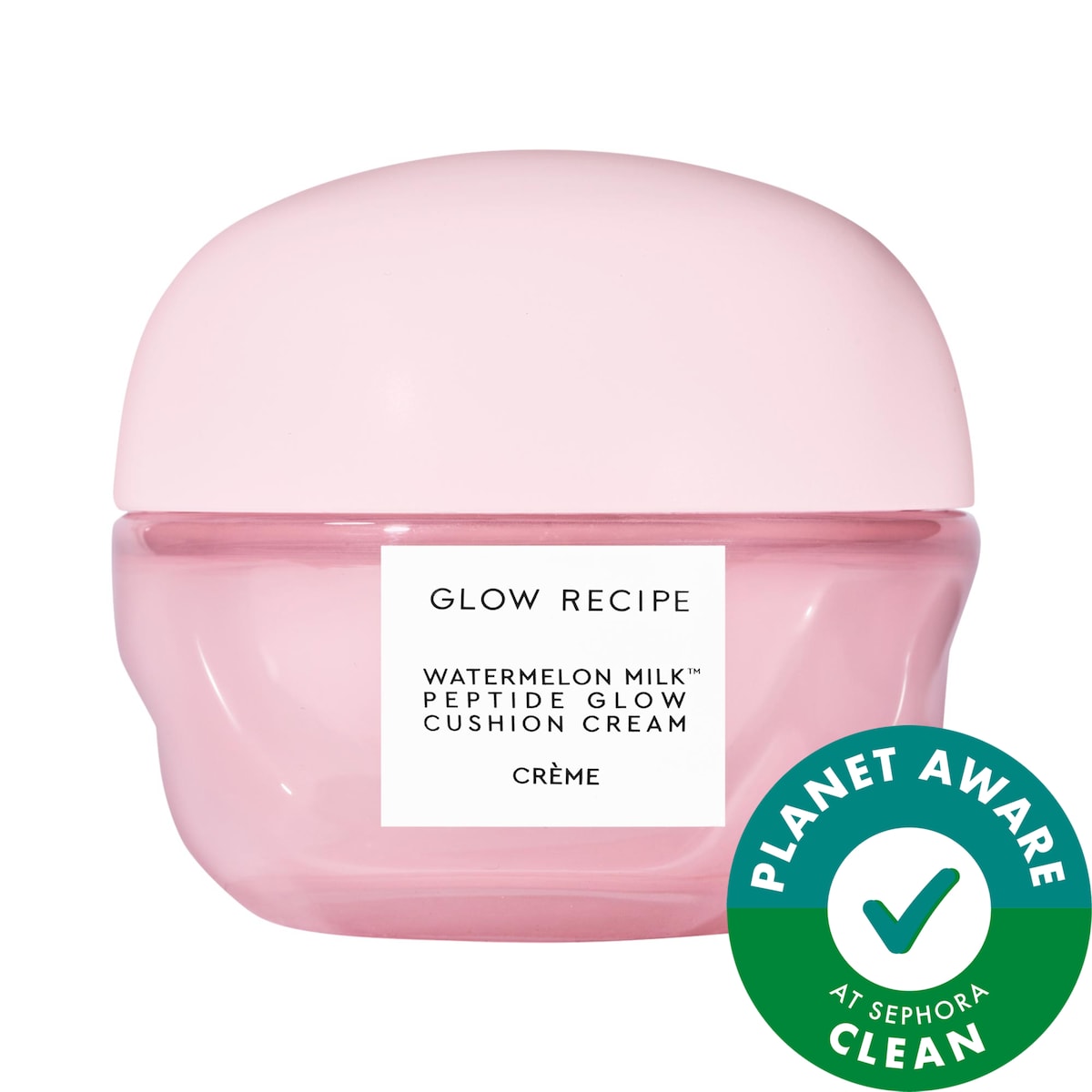
Skinfix versus Glow Recipe Cushion Cream
I already compared Glow Recipe Cushion Cream and Skinfix Barrier Gel Cream, and the split still feels useful.
Glow Recipe is the more cushiony, dry-skin-friendly, soft-finish option. It makes more sense if the face feels flat, dull, and under-moisturized.
Skinfix is the more controlled option. It makes more sense if the face feels oily, crowded, or reactive to richer creams.
If sunscreen usually makes your skin feel dry, Glow Recipe may be the better daytime prep. If sunscreen usually makes your skin feel greasy, Skinfix may be the cleaner base.
That one question cuts through a lot of product-page noise.
How I would use it if my barrier feels overworked
If my skin felt overworked, I would not make Skinfix compete with three other active steps.
I would give it a quiet routine around it:
| Routine slot | What I would do |
|---|---|
| Morning | Rinse or gentle cleanse, Skinfix, sunscreen |
| Active night | Cleanse, one treatment if already tolerated, Skinfix |
| Recovery night | Cleanse, Skinfix, richer cream only where tight |
| Irritated day | Skip new actives, keep the routine boring, watch for stinging |
The mistake is using a barrier gel cream as permission to keep overdoing the rest of the routine. If exfoliation is too frequent, if the cleanser is too harsh, or if the retinoid schedule is too aggressive, no moisturizer gets a fair chance.
I would want Skinfix to make a sane routine easier. I would not ask it to rescue a chaotic one.
How I would test it for two weeks
I would test Skinfix like a moisturizer, not like a miracle.
For the first three nights, I would use it after cleansing with no new actives added. If I already had a retinoid or acne treatment my skin tolerated, I would keep the schedule stable. The point is to see whether Skinfix changes comfort, shine, tightness, or congestion without turning the whole routine into a guessing game.
Then I would move it into the morning.
Use a controlled amount. Let it settle. Apply sunscreen. Watch the sides of the nose, chin, forehead, and jawline. Those areas usually tell the truth first.
| Day | What I would watch |
|---|---|
| Days 1-3 | Stinging, redness, tightness relief, immediate finish |
| Days 4-7 | Sunscreen layering, midday shine, new bumps |
| Week 2 | Whether the routine feels easier to repeat |
| End of test | Whether it solved a real problem or just felt interesting |
Do not test it the same week you change cleanser, SPF, foundation, exfoliant, and retinoid frequency. That gives you bad data.
One new product at a time is boring. Boring is how you learn.
How I would place it in a routine
The simple routine is enough.
Morning:
- Gentle cleanse or rinse.
- Lightweight serum only if it has a clear job.
- Skinfix Barrier Gel Cream.
- Sunscreen.
- Makeup if you wear it.
Night:
- Cleanse thoroughly.
- Treatment on planned nights.
- Skinfix Barrier Gel Cream.
- Richer cream only on dry patches if needed.
If you use retinoids or exfoliating acids, do not judge Skinfix only on the nights your skin is already irritated. A moisturizer can support an active routine, but it cannot make overuse smart.
If your skin stings when you apply almost anything, simplify first. Cleanser, moisturizer, sunscreen. Fewer variables. Then decide whether Skinfix has a place.
The sunscreen test is the real daytime test
I care about how this sits under sunscreen more than how it feels alone.
A moisturizer can feel beautiful at night and still fail the morning routine. It can pill under SPF. It can make a sunscreen slide. It can look hydrated for thirty minutes, then turn shiny around the nose. It can make makeup sit better on the cheeks but separate on the forehead.
That is why I would test Skinfix with the sunscreen I already wear.
Use a moderate amount of Skinfix. Give it a minute. Apply sunscreen in thin layers. Then watch the areas that usually tell the truth first: sides of the nose, between the brows, chin, jawline, and the tops of the cheeks.
If it passes that test, it becomes much more useful. If it only works on bare skin, it is probably not the right daily moisturizer.
The price question
At $46 to $54, Skinfix has to be more than pleasant.
The value case is strongest if it replaces multiple products. If you are using a niacinamide serum, a lightweight moisturizer, and a separate recovery step because none of them quite work together, Skinfix might simplify the routine. It gives you a gel-cream moisturizer with oil-conscious and barrier-support language in one step.
The value case is weaker if you already have a cheaper moisturizer that behaves perfectly.
That is not a moral failure. It is good skincare judgment. If your current moisturizer keeps your skin comfortable, does not clog you, layers under sunscreen, and fits your budget, you do not need to upgrade just because a product sounds more clinical.
I would pay more only if Skinfix solves a specific problem:
- my moisturizer is too greasy
- my gel cream is not comforting enough
- my active routine makes my skin tight
- my sunscreen pills over richer creams
- my combination skin needs a middle option
Without a specific problem, it is just another expensive jar.
The cheapest way to know if it is not for you
The cheapest mistake is the one you catch early.
I would not force Skinfix for a month if the warning signs are obvious in week one. Stinging that keeps happening, new clusters of bumps in your usual clog zones, more shine than your previous moisturizer, or a weird tight film after application are all reasons to pause.
But I would also avoid overreacting to one imperfect application. Amount matters. Layering matters. Sunscreen pairing matters. If I used too much and it pilled, I would test a smaller amount before deciding the product failed.
The decision rule is simple: adjust technique once, maybe twice. Do not spend weeks trying to make the wrong moisturizer become the right one.
What I would not expect from it
I would not expect Skinfix to clear acne by itself.
The American Academy of Dermatology is clear on the bigger principle: acne-prone skin often still needs moisturizer, especially because acne treatments can dry the skin. That does not turn moisturizer into the treatment. It means moisturizer helps the treatment routine stay tolerable.
I would not expect it to erase pores.
Pore appearance can soften when skin is hydrated, less irritated, and less shiny. Niacinamide can help some people with the look of uneven tone and oiliness. But actual pore size is not something a cream simply deletes.
I would not expect it to fix a damaged routine.
If you are cleansing too hard, exfoliating too often, sleeping in makeup, skipping sunscreen, or changing products every three days, Skinfix may help comfort, but it will not make chaos look consistent.
Where Glass fits
This is exactly the kind of product I would track in Glass.
Not because skincare needs to become complicated. Because moisturizer reactions are easy to misremember.
Add Skinfix to your routine. Note the start date, routine slot, amount, sunscreen pairing, active nights, tightness, shine, and new bumps. Take a progress photo once or twice a week in the same light. Do not inspect your face ten times a day. That makes product testing noisy.
If your main issue is routine consistency, start with best skincare routine tracker. If you are trying to separate active nights from recovery nights, morning and night skincare routine order will help more than another product comparison.
The goal is simple: know whether Skinfix made your routine easier, not whether it sounded impressive.

My verdict
Skinfix Skin Barrier Restoring Gel Cream is one of the more interesting moisturizers in the oily-but-barrier-tired lane.
I like the idea of it most for combination, oily, acne-prone, or pore-conscious skin that still needs real comfort. The formula is not just a watery gel. It has a barrier-support backbone, 2% niacinamide, zinc PCA, humectants, squalane, peptides, and calming support ingredients. That makes it feel more useful than a basic lightweight moisturizer.
The catch is that it is not plain, not cheap, and not rich.
That is fine if those are exactly the constraints you need. It is less fine if your skin wants the simplest possible recovery cream or a deeply cushioning dry-skin moisturizer.
I would buy it if rich creams make me congested but thin gels leave me tight.
I would wait if my skin is actively reactive, if niacinamide has failed me before, or if I already own a moisturizer that makes sunscreen and active nights easy.
That is the cleanest read: smart product, specific lane, worth it only when the lane matches your face.
FAQ
Is Skinfix Skin Barrier Restoring Gel Cream good for oily skin?
It is one of the more logical Skinfix options for oily or combination skin because it uses a gel-cream texture and includes 2% niacinamide plus zinc PCA. I would still test it slowly if your skin clogs easily or already reacts to niacinamide.
Is Skinfix Skin Barrier Restoring Gel Cream good for acne-prone skin?
It can make sense for acne-prone skin that needs lightweight barrier support, especially if acne treatments make the skin tight. It is not an acne medication, and it should not replace a dermatologist's treatment plan.
Can Skinfix Barrier Gel Cream replace a niacinamide serum?
Maybe. If you only use niacinamide for general balance, tone, and oil support, this moisturizer may cover that role. If you use a separate niacinamide product for a specific reason and tolerate it well, compare results before changing both at once.
Is Skinfix Barrier Gel Cream enough for dry skin?
For very dry skin, probably not as a first pick. It may work for dry-but-clog-prone skin or as a daytime layer, but deeply dry skin usually needs more cushion than a gel cream provides.
Does Skinfix Barrier Gel Cream pill under sunscreen?
Any moisturizer can pill if you use too much, layer too quickly, or pair it with an incompatible sunscreen. I would apply a moderate amount, let it settle, then apply sunscreen in thin layers before judging it.
Is Skinfix Skin Barrier Restoring Gel Cream worth the price?
It is worth considering if it solves a specific problem: oily skin that feels tight, active-product dryness, rich creams that feel too heavy, or sunscreen layering that needs a lighter barrier-support step. If you only need a simple gel moisturizer, start cheaper.
Useful references: Skinfix Barrier Gel Cream, Sephora Skinfix Barrier Gel Cream, AAD on moisturizing acne-prone skin, and Journal of Drugs in Dermatology on a barrier-restoring cream gel for acne-treatment irritation.