Some moisturizers make acne-prone people nervous.
I get it. A cream can look perfect on the shelf, feel comfortable for two nights, then leave you wondering if the new closed comedones came from the moisturizer, the sunscreen, the weather, your cycle, or the retinoid you restarted too quickly.
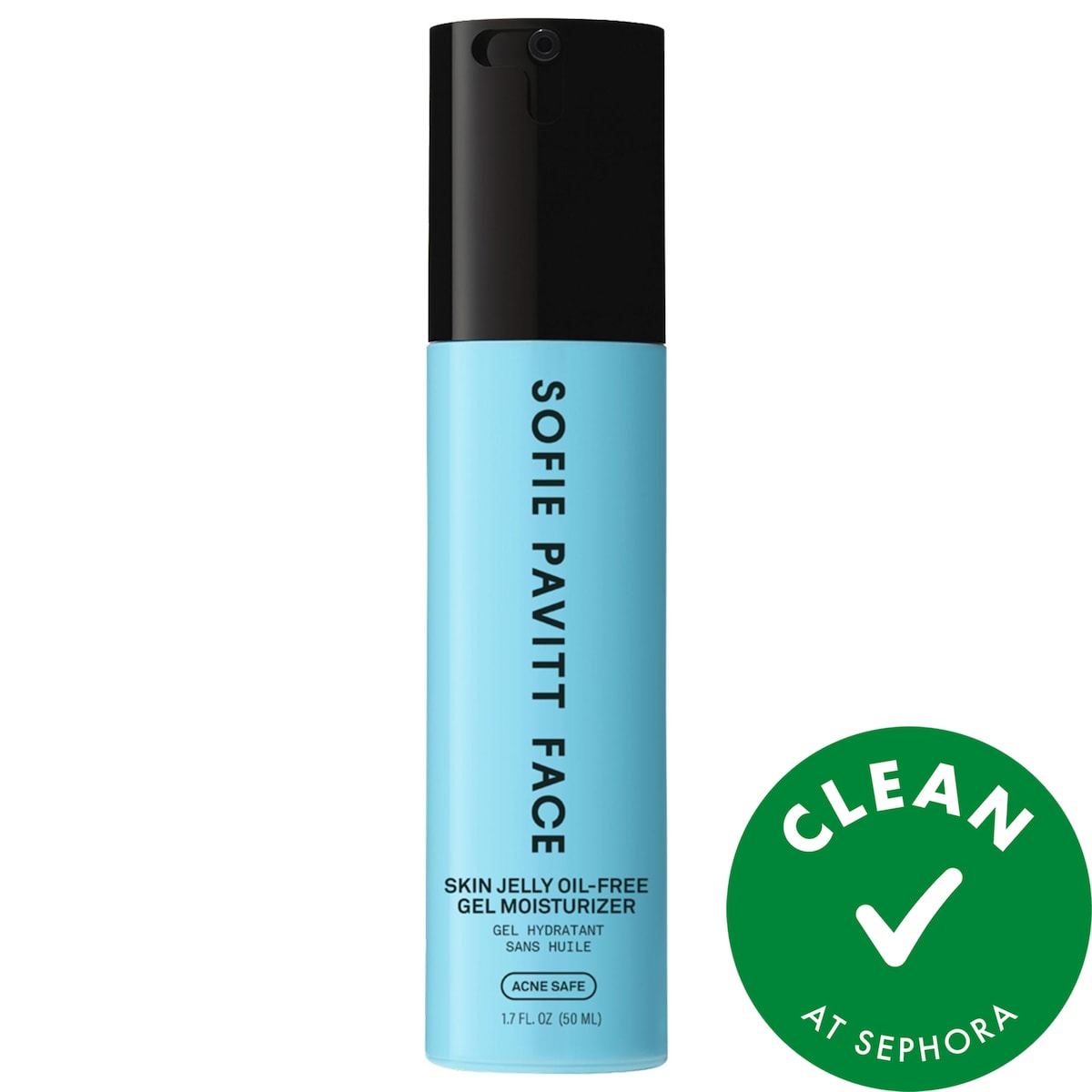
That is why SOFIE PAVITT FACE Skin Jelly Oil-Free Gel Moisturizer is interesting. It is not trying to be a rich recovery cream. It is built for the person who wants moisture without the heavy, occlusive, pore-anxiety feeling that makes a routine harder to repeat.
As of May 2026, the brand lists Skin Jelly at $54. It is positioned as a lightweight, oil-free moisturizer for acne-prone and oily skin, with sodium PCA, zinc PCA, copper PCA, beta glucan, allantoin, and zinc as the ingredients doing the most obvious work in the story.
That does not automatically make it right for everyone. It makes it worth placing carefully.
The short answer
SOFIE PAVITT FACE Skin Jelly makes the most sense for oily, combination, acne-prone, and clog-prone skin that still needs daily hydration. I would look at it when your skin hates heavy creams but also gets tight, shiny, or irritated when you skip moisturizer completely.
I would not make it my first pick for very dry skin, eczema-prone skin, winter barrier repair, or anyone who wants a plush night cream. It is a gel moisturizer with an oil-free, breathable lane. That is the appeal. It is also the limitation.
The most honest way to use it is this:
| If your skin feels like... | Skin Jelly makes sense? | Why |
|---|---|---|
| Oily by lunch but tight after cleansing | Yes | It gives hydration without a rich cream feel |
| Acne-prone and scared of pore-clogging moisturizers | Yes | The oil-free positioning fits that anxiety |
| Dry, flaky, and barrier-damaged | Maybe not alone | You may need more cushion or lipids |
| Sensitive and visibly red after actives | Maybe | Beta glucan and allantoin are promising, but patch test |
| Normal skin that wants a luxury gel texture | Yes, if the price feels fine | It is more specific than a basic gel cream |
What Skin Jelly is actually trying to do
Skin Jelly is a moisturizer for people who usually compromise.
They want hydration, but not shine. They want softness, but not a film. They want something calming, but they do not want a rich barrier cream that feels like it is trapping heat over active breakouts.
That is a real gap. A lot of moisturizers for acne-prone skin swing too far in one direction. Some are so matte and thin that they feel like almost nothing after an hour. Others claim to be non-pore-clogging but still feel too creamy for someone who breaks out easily around the chin, cheeks, or hairline.
Skin Jelly sits in the middle. The brand describes it as lightweight hydration for oily skin. Sephora places it in the oil-free gel moisturizer lane. The real question is whether that lane solves your specific routine problem.
The ingredient story in plain English
The formula is not built around one dramatic active. That is a good thing for this category.
The most important ingredients to understand are:
| Ingredient or group | What it suggests in the routine |
|---|---|
| Sodium PCA | Hydration support without a heavy cream feel |
| Zinc PCA and copper PCA | A more balanced, less oily-looking finish |
| Beta glucan | Calming, comfort, and visible redness support |
| Allantoin | A soothing signal for irritated or overworked skin |
| Zinc | Blemish-prone skin support and oil-control positioning |
That combination makes sense for someone who wants their moisturizer to behave quietly. It does not read like a treatment step that should replace acne medication, exfoliation, or prescription care. It reads like the moisturizer you use so the rest of the routine stops feeling so punishing.
That distinction matters. Acne-prone skin still needs moisture. The American Academy of Dermatology has long pushed people with oily skin toward gentle cleansing, oil-free non-comedogenic moisturizer, and sunscreen instead of drying the face out until it rebels. Skin Jelly fits that philosophy better than another harsh oil-control step.
The texture is the whole point
If you are considering Skin Jelly, you are probably considering it because of texture.
The name is useful. A jelly moisturizer should feel lighter and springier than a cream, with less drag and less residue. That matters if you wear sunscreen every day, live somewhere humid, use makeup, or get that midday film where your face feels both oily and dehydrated.
The best use case is morning. I would place it after a light hydrating serum, acne serum, or calming step, then follow with sunscreen. If the sunscreen is already moisturizing, Skin Jelly may be enough. If the sunscreen is matte or drying, you may need a slightly more generous layer.
At night, I would use it when the routine is simple and the skin is not actively cracked or peeling. If you are using adapalene, tretinoin, benzoyl peroxide, or acids and your cheeks are flaking, this may need a richer cream on top or a different moisturizer on recovery nights.
Where it beats a basic gel cream
Skin Jelly is not cheap. That means it has to justify itself against the normal gel moisturizers people already know.
The stronger argument for it is focus. It is not just "lightweight." It is specifically aimed at oily, acne-prone, redness-prone skin that wants breathable moisture. That makes it more useful than a generic gel cream if you are the kind of person who checks every moisturizer for oiliness, comedogenic anxiety, fragrance, and how it behaves under SPF.
I would consider it over a basic gel cream if:
- moisturizers often make your skin look greasy fast
- rich creams trigger closed-comedone anxiety for you
- your acne routine dries you out, but heavy creams feel wrong
- you want a moisturizer that layers under sunscreen and makeup
- you prefer a satin finish over a dewy or glassy cream finish
That last point is important. Glassy skin and greasy skin are not the same. If you are oily, the prettier finish is often controlled hydration, not more shine.
Where it may disappoint
The same things that make Skin Jelly appealing can make it underwhelming for the wrong person.
If your skin is dry in a deeper way, a gel moisturizer may not give enough comfort. If your barrier is damaged, your face may need more lipids, more occlusion, and fewer actives for a while. If you live in cold, dry air, a breathable gel can feel elegant at first and not protective enough by morning.
I would be cautious if:
- your cheeks feel rough, papery, or flaky
- your skin burns after plain moisturizer
- you are recovering from over-exfoliation
- you use prescription acne treatment and peel easily
- you want one cream to replace both moisturizer and recovery balm
For that situation, I would compare it against a more cushiony option first. The SOFIE PAVITT FACE Omega Rich Moisturizer guide is the more logical sibling read if your skin needs comfort instead of weightless hydration.
Skin Jelly vs Omega Rich
This is the cleanest split in the SOFIE PAVITT FACE moisturizer lineup.
| Product | Better for | Skip if |
|---|---|---|
| Skin Jelly Oil-Free Gel Moisturizer | Oily, acne-prone, combination, moisturizer-avoidant skin | You need a rich night cream |
| Omega Rich Moisturizer | Normal, dry, dry-combination skin that wants more cushion | You hate creams or get clogged easily from richer textures |
I would not buy both at the same time unless you already know your skin changes dramatically by season or treatment schedule. Most people should start with the texture they are most likely to finish.
Skin Jelly is the morning-friendly, oil-free, lighter lane. Omega Rich is the comfort lane. If you get that difference right, the decision becomes much easier.
How I would use it in a routine
I would keep the first week boring.
Morning:
- Gentle cleanser or water rinse.
- Optional light serum if your skin already tolerates it.
- Skin Jelly.
- Sunscreen.
Night:
- Cleanser.
- Treatment if it is already part of your routine.
- Skin Jelly.
- Richer cream only if your skin still feels tight.
Do not introduce it on the same night as a new exfoliant, retinoid, vitamin C, acne serum, and sunscreen. That is how people end up blaming the wrong product.
Give it a clean test. Use the same cleanser, the same sunscreen, and the same treatment schedule for several days. Watch the actual signals: tightness, shine, pilling, new clogged areas, redness, and whether you still want to use it when you are tired.
That last signal sounds soft, but it matters. A moisturizer only works if you keep using it.
The acne-prone skin question
No moisturizer can honestly promise that it will never break anyone out.
That is the annoying truth. "Non-pore-clogging" and "oil-free" are helpful signals, not a legal guarantee that every face will react perfectly. Acne is too individual for that. Your sunscreen, cleanser, hair products, hormones, medications, climate, and current barrier state can all change how a moisturizer behaves.
Still, Skin Jelly is aimed at the right worry. It is not asking acne-prone skin to tolerate a dense cream for the sake of hydration. It is trying to give moisture in a format that feels less risky for people who clog easily.
That is why I would judge it less like a miracle acne moisturizer and more like a routine stabilizer. If it helps you stop skipping moisturizer, stop over-drying your skin, and keep sunscreen more comfortable, it can improve the routine even if it is not treating acne directly.
Who should buy it first
The best Skin Jelly buyer is someone whose skin has a narrow comfort zone.
You probably know the feeling. Creams are too heavy. Matte moisturizers are too drying. Hydrating serums are not enough. You want the skin to feel calmer, but every "barrier repair" product seems to come in a richer texture than you actually enjoy.
That person should look at Skin Jelly first.
It is especially worth considering if your routine already includes:
- a gentle gel cleanser
- a leave-on acne treatment
- daily sunscreen
- a lightweight hydrating serum
- an oilier T-zone
- occasional redness from overdoing actives
The product fits a modern acne-prone routine where the goal is not to strip the skin into submission. The goal is to keep the skin comfortable enough to stay consistent.
Who should skip it
Skip Skin Jelly if you already know gel moisturizers never give you enough comfort.
Also skip it if you are looking for a budget moisturizer. At $54, it is not an impulse basic. You should want the specific mix of oil-free texture, acne-prone positioning, and satin finish.
I would also skip it during a full barrier emergency. When your face is hot, stinging, peeling, or reacting to everything, the answer is usually not a stylish new gel. It is a smaller routine, fewer actives, and a plain comfort product until your skin stops panicking. The skin barrier repair routine is the better read for that moment.
Better alternatives by skin mood
If Skin Jelly feels close but not perfect, I would compare by skin mood instead of chasing the longest ingredient list.
| If you want... | Look at |
|---|---|
| Similar oil-free moisturizer logic | Sephora oil-free gel moisturizers |
| More barrier cushion | Skinfix Barrier Restoring Gel Cream |
| A richer SOFIE PAVITT FACE option | Omega Rich Moisturizer |
| A routine for oily skin that still wants glow | Glass skin for oily skin |
| A simpler routine framework | How to build a skincare routine you will actually follow |
The mistake is comparing every moisturizer against every other moisturizer. Compare the job. Morning oil control, night recovery, acne-treatment support, and makeup prep are different jobs.
My practical verdict
I would treat SOFIE PAVITT FACE Skin Jelly as a strong fit for oily, combination, and acne-prone skin that wants hydration without a rich finish. It is most compelling when your routine already has enough treatment and you need a moisturizer that will not make the whole stack feel heavier.
The product is less compelling if you are very dry, very sensitive, or looking for the most affordable daily moisturizer. It is specific. That is not a weakness, as long as your skin is asking for that specific thing.
If I were buying it, I would use it in the morning first. I would test it under sunscreen. I would avoid adding new actives during the same week. Then I would judge it by the boring signs that actually matter: less tightness, less midday grease, fewer skipped moisturizer nights, and no new pattern of clogged areas.
That is the standard I trust. Not whether a moisturizer sounds impressive. Whether it makes the routine easier to repeat.
FAQ
Is SOFIE PAVITT FACE Skin Jelly good for acne-prone skin?
It is designed for acne-prone and oily skin, and the oil-free, lightweight texture makes sense for people who dislike heavy creams. It should still be patch tested because acne-prone skin is individual, and no moisturizer is guaranteed to work for every person.
Is Skin Jelly enough for dry skin?
It may not be enough if your skin is truly dry, flaky, or barrier-damaged. It is better suited to oily, combination, or dehydrated-but-oily skin. Dry skin may need a richer cream, especially at night.
Can I use it with retinol or acne treatments?
Yes, but introduce it carefully. If your retinoid, benzoyl peroxide, or exfoliant already makes your skin peel, Skin Jelly may need to be paired with a richer recovery layer or used on calmer nights first.
Does it replace sunscreen?
No. It is a moisturizer. Use sunscreen as the last step in the morning.
Is it worth $54?
It is worth considering if you specifically want an oil-free, acne-prone, satin-finish gel moisturizer and cheaper gels have felt too drying, too shiny, or too generic. If you only need basic hydration, the price is harder to justify.
Useful references: SOFIE PAVITT FACE Skin Jelly product details, Sephora Skin Jelly product page, AAD oily skin routine advice, and Allure on gel moisturizers.