Milky toner is not moisturizer.
It can feel like one.
That is where people get messy.
You add a soft, cloudy toner after cleansing. Your skin feels less tight. The bottle says hydrating. The texture feels richer than water. Then you start wondering if the cream step is overkill, especially if your face gets shiny by noon or your sunscreen already feels heavy.
I would not answer that with a rule. I would answer it with what your skin does two hours later.
If your skin feels comfortable after milky toner and sunscreen, you may not need a separate moisturizer every morning. If your skin feels tight, flaky, hot, or papery by lunch, the toner is probably only the hydration layer. You still need something to seal and cushion the skin barrier.
That distinction matters more than the product name.
The short answer
A milky toner is usually a lightweight hydration and comfort step. A moisturizer is usually the step that gives the routine more lasting cushion and reduces water loss. You can use both, but you do not always need both in every routine.
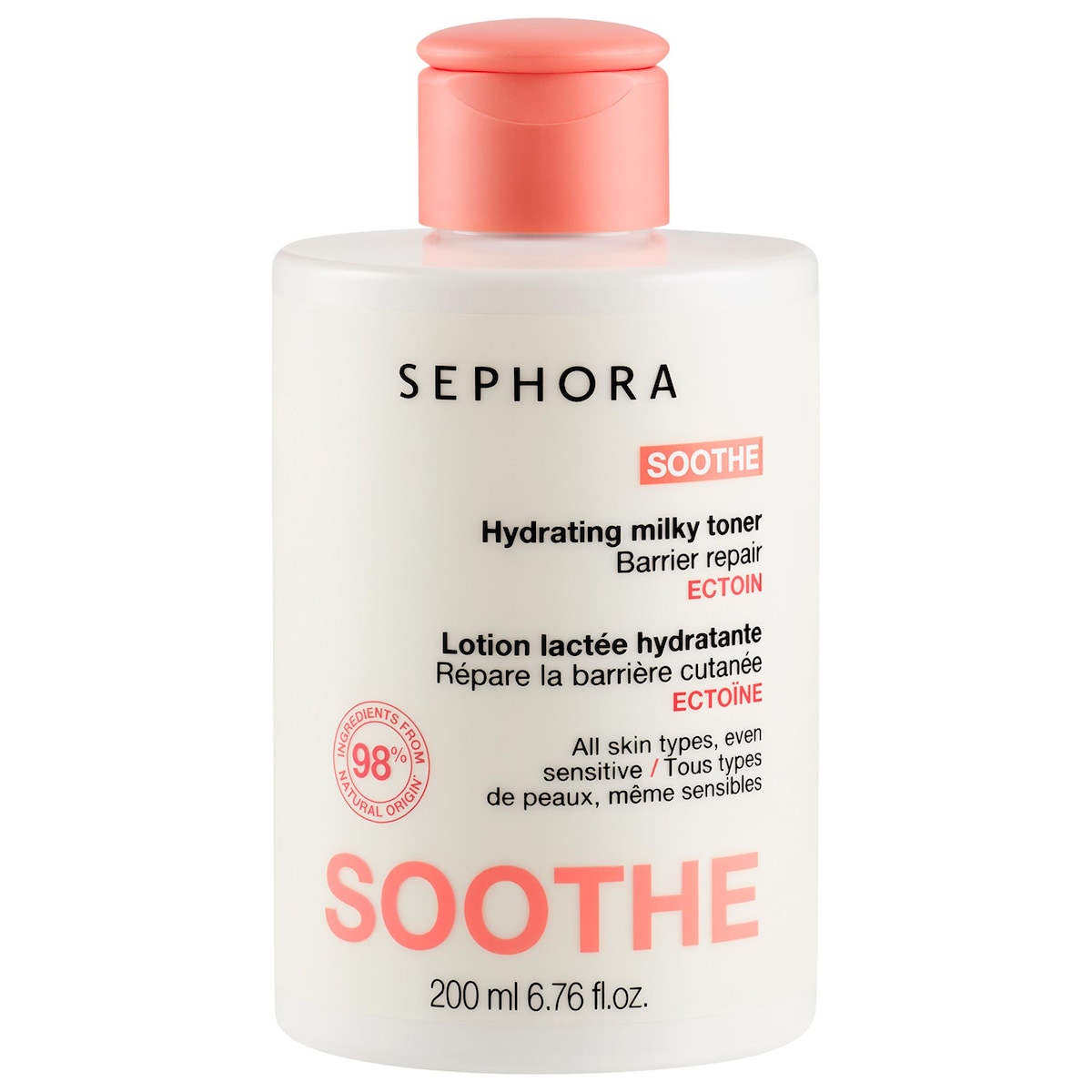
As of May 2026, I would treat Sephora Collection Hydrating Milky Toner like a soft layer after cleansing, not a full cream replacement for dry or retinoid-stressed skin. I would treat Sephora Collection Soothing Moisturizer with Hyaluronic Acid, Skinfix Barrier Restoring Gel Cream, or Sofie Pavitt Face Skin Jelly as the product that decides how much weight your routine actually has.
The mistake is asking a toner to do cream work, then blaming your cleanser, sunscreen, or actives when your face still feels tight.
What a milky toner is trying to do
A milky toner sits between a watery toner and a lightweight lotion. It usually has humectants, soothing ingredients, and a soft emulsion texture that leaves the skin less bare after cleansing.
That is useful.
It is especially useful if your cleanser makes your face feel clean but slightly stripped, your serum stings on totally bare skin, or your moisturizer spreads better when the skin is already damp and comfortable.
What it usually does not do well is replace every sealing ingredient in a routine. Many milky toners are elegant because they are thin. That thinness is the point. It lets them layer. It also means they may not be enough when the skin barrier is already dry, over-exfoliated, wind-chapped, or irritated from retinoids.
I think of the step like a damp towel before a blanket. Sometimes the damp towel is enough because the room is warm. Sometimes you still need the blanket.
What moisturizer is doing differently
Moisturizer is less glamorous because it is obvious.
It gives the skin a more substantial layer of comfort. Depending on the formula, it may include humectants, emollients, barrier-supporting lipids, silicones, oils, peptides, niacinamide, or occlusive ingredients that help the routine last longer.
The American Academy of Dermatology recommends applying moisturizer after washing while skin is still damp, especially when dryness is an issue. That advice is boring because it works. Hydration feels better when it is captured before the skin dries down completely.
Milky toner can make that damp-skin window feel nicer. Moisturizer is often what keeps it from disappearing.
The routine order I would use
Do not overthink the order.
Use the thinnest water-like steps first, then thicker products, then sunscreen in the morning.
For most people, that means:
- Cleanser or rinse
- Milky toner
- Serum, if you use one
- Moisturizer
- Sunscreen in the morning
At night, replace sunscreen with your final moisturizer or cream step. If you use a prescription, retinoid, acid, benzoyl peroxide, or acne treatment, follow the directions from your clinician or the product label. The active step may move depending on the formula and your tolerance.
If your routine pills, stings, or feels coated, reduce steps before buying more.
When milky toner can be enough
Milky toner might be enough in the morning if your skin is oily, your sunscreen is moisturizing, and your face feels comfortable for hours without a separate cream.
This is common in humid weather, on combination skin, or with sunscreen formulas that already have a lotion-like finish. A full moisturizer underneath can make the routine slide around, break up makeup, or leave the T-zone looking greasy.
The test is simple.
Skip moisturizer on one calm morning. Use milky toner, let it settle, then apply sunscreen. Track how your skin feels at one hour, four hours, and bedtime.
If your skin stays calm, your makeup wears better, and there is no tightness, you learned something. If your cheeks feel dry while your forehead looks shiny, you may need a split routine: moisturizer only where you dry out.
That is allowed. Your face is not one uniform surface.
When skipping moisturizer backfires
Skipping moisturizer backfires when your skin is already asking for support.
I would not rely on milky toner alone if you are dealing with:
- peeling from retinoids
- benzoyl peroxide dryness
- acid overuse
- a damaged skin barrier
- winter dryness or desert air
- flaky cheeks
- stinging after cleansing
- tightness that returns quickly
- makeup clinging to dry patches
In those cases, a toner can make the first five minutes feel better while the next five hours still go badly. That is not failure. It just means the product is playing the wrong role.
The skin barrier needs water and lipids. A thin hydrating layer can help with the water side. A good moisturizer usually carries more of the comfort and sealing side.
The product split
Here is the cleanest way I would separate the products that kept showing up in this decision.
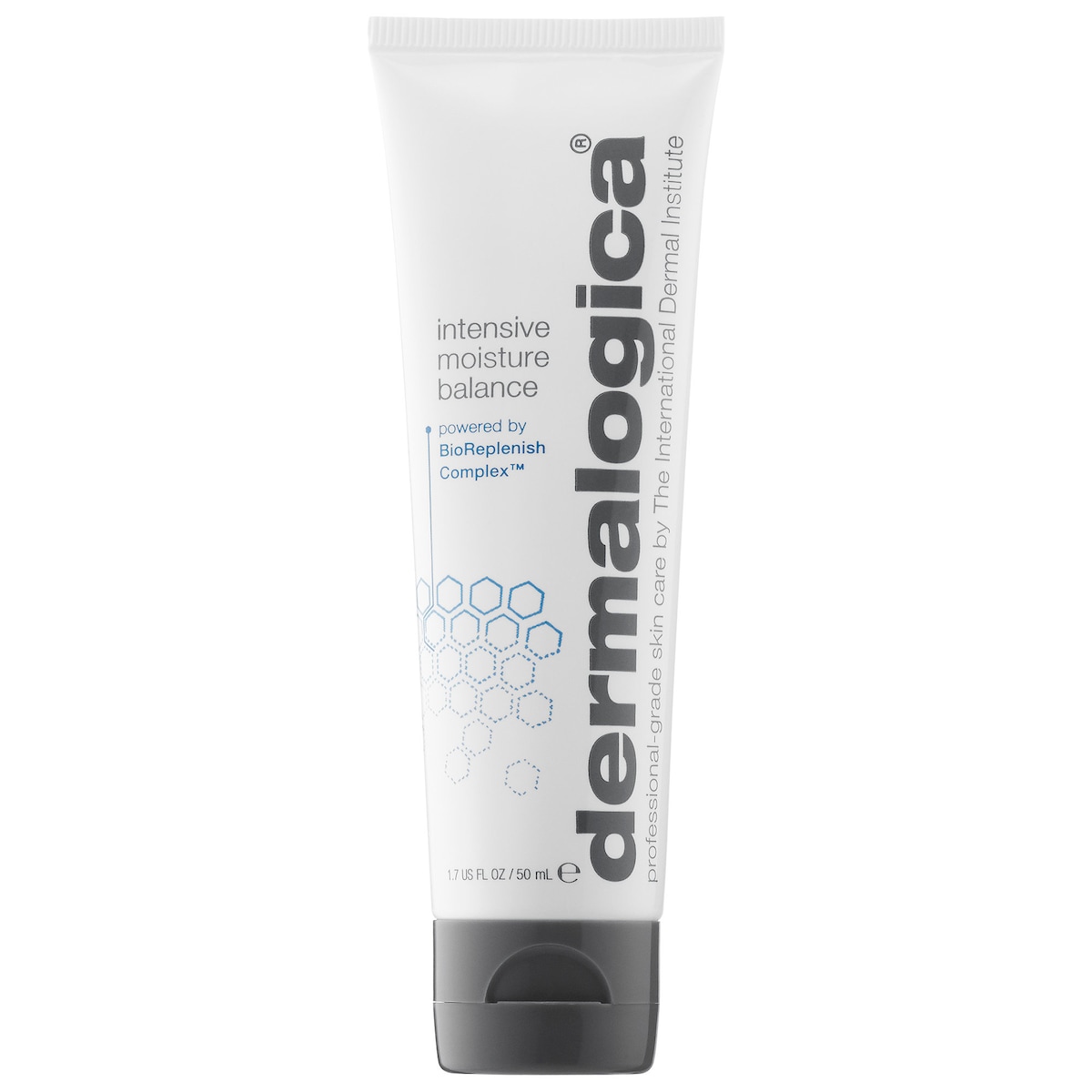
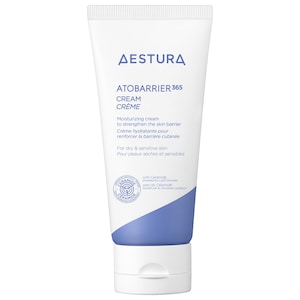
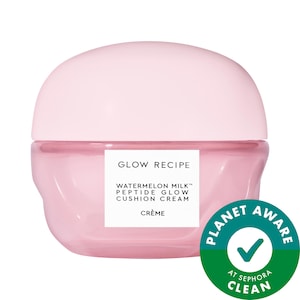
| Image | Product | Best role | I would skip if |
|---|---|---|---|
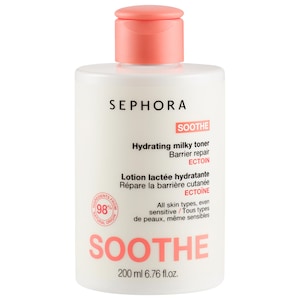 | Sephora Collection Hydrating Milky Toner | Soft hydration after cleansing, especially before moisturizer or sunscreen | You need one product to replace a true cream |
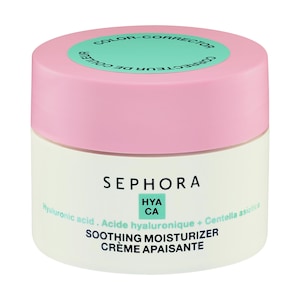 | Sephora Collection Soothing Moisturizer | Simple daily cream when the toner alone fades too fast | You need a richer barrier cream or dislike basic textures |
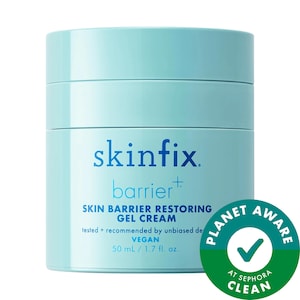 | Skinfix Barrier Restoring Gel Cream | Oily or combination skin that still needs barrier support | You react to niacinamide or want the plainest recovery cream |
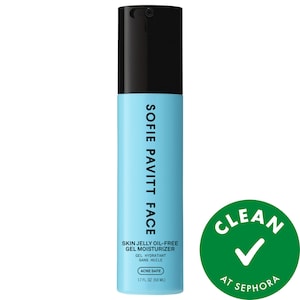 | Sofie Pavitt Face Skin Jelly | Acne-prone skin that wants light moisture without creamy weight | Your skin is flaky, cracked, or clearly lipid-starved |
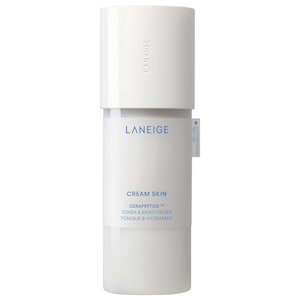 | Laneige Cream Skin Milky Toner | A richer toner lane when you want the milky step to feel more comforting | You prefer very weightless, fast-dry layers |
The point is not to crown one product. The point is to stop buying overlapping comfort layers that all promise the same emotional result.
If your skin is oily
Oily skin still gets dehydrated.
That line gets repeated so often that it starts to sound empty, but it is useful when you are choosing between toner and moisturizer. Oily skin can produce plenty of sebum and still feel tight after cleansing. It can look shiny and still peel around the mouth. It can break out more when you attack it with drying products and then refuse to moisturize.
For oily skin, I would start light:
Morning: cleanser or rinse, milky toner, sunscreen.
Night: cleanser, treatment if tolerated, lightweight moisturizer.
If your face feels great with no morning moisturizer, keep it simple. If the cheeks feel tight, add moisturizer only there. If your skin is oily but irritated, do not keep removing comfort steps just because shine bothers you. Fix the irritation first, then tune the finish.
If your skin is acne-prone
Acne-prone skin makes this decision more emotional because every extra layer can feel risky.
I would not automatically avoid milky toner. I would avoid testing five new soothing products at the same time. Acne-prone routines need readable patterns. If you add milky toner, keep the cleanser, treatment, moisturizer, and sunscreen stable for at least a couple of weeks unless your skin reacts badly.
Watch for location patterns.
New forehead bumps after adding a richer toner may mean the layer is too much under hair products or sunscreen. New cheek congestion may mean the moisturizer is too heavy there. Burning, redness, and tightness may mean the active routine is too aggressive, not that the toner is bad.
Glass is useful here because product memory is unreliable. Log the toner, moisturizer, sunscreen, and active frequency. Then compare photos in the same lighting instead of trying to judge your skin under a bathroom bulb at midnight.
If your skin is dry
Dry skin is where milky toner can feel magical and still be incomplete.
The first application can make the face feel softer right away. That does not mean the routine is finished. Dry skin usually needs a real moisturizer after the toner, especially at night. If you use only a milky toner and wake up tight, flaky, or dull, the answer is not always more toner. It may be a better cream, less cleansing, or fewer exfoliating steps.
For dry skin, I would try:
Morning: gentle cleanse or rinse, milky toner, moisturizer, sunscreen.
Night: cleanser, milky toner, moisturizer, richer cream only where needed.
If that feels like too many layers, remove the least useful one. Do not remove the one that keeps your face from feeling tight all day.
If your skin is sensitive
Sensitive skin does not need a more complicated routine. It needs fewer surprises.
Milky toner can help because it softens the post-cleanse feeling. It can also hurt if the formula includes fragrance, irritating extracts, or a texture your skin does not tolerate. The same is true for moisturizer. "Soothing" on the front of the bottle does not guarantee soothing on your face.
Patch test when your skin has a history of reacting. Introduce one product at a time. Avoid adding acids, retinoids, vitamin C, new sunscreen, and a milky toner in the same week. If something burns, do not keep layering more products over it and call that barrier repair.
Calm skin usually comes from fewer variables.
The under-makeup problem
This is where people quietly decide whether a product stays.
A milky toner can make makeup sit beautifully because the skin is less tight and foundation has a smoother base. It can also make makeup pill if you apply too much, do not let it settle, or stack it under a moisturizer and sunscreen that already form a film.
If makeup is the issue, test one change at a time:
- use less toner
- press it in instead of rubbing
- wait before sunscreen
- use moisturizer only on dry zones
- skip serum that morning
- let sunscreen set before foundation
Most pilling problems are not solved by buying a new toner. They are solved by reducing the number of slippery layers fighting each other.
How I would test it for one week
I would not test milky toner by changing the whole routine.
Use this instead:
Day 1 and 2: milky toner under your normal moisturizer at night.
Day 3 and 4: milky toner under sunscreen in the morning, no moisturizer unless dry zones need it.
Day 5 and 6: milky toner plus moisturizer only where you feel tight.
Day 7: compare comfort, shine, makeup wear, flaking, and breakouts.
Do not judge only the glow in the first ten minutes. Judge the full day. The best routine is the one your skin still likes after the pretty finish fades.
The signs you need both
Use both milky toner and moisturizer if your skin feels better with the toner but still needs more lasting comfort.
The signs are plain:
- skin feels good at first, then tight later
- moisturizer spreads better after toner
- sunscreen stings less when skin is prepped
- flaking improves with the pair, not either one alone
- your active nights are easier to tolerate
- cheeks need comfort but heavy cream everywhere feels too much
This is where layering makes sense. You are not adding steps for the sake of it. You are giving each product a job.
The signs you are over-layering
Over-layering has a different feel.
Your skin looks shiny but not hydrated. Sunscreen slides. Makeup separates. Tiny bumps appear in repeat zones. Your face feels coated, yet still somehow tight underneath. You start washing harder at night because the routine feels heavy, then you need more products the next morning because the cleanser stripped you.
That loop is common.
If it happens, simplify for a week. Cleanser, one hydrating layer, one moisturizer if needed, sunscreen. No extra essence, no second serum, no sleeping mask unless your skin is truly dry. Let your face tell you which layer it missed.
My May 2026 verdict
I would buy a milky toner if my skin feels tight after cleansing, my moisturizer spreads poorly on bare skin, or I want a lighter comfort layer under sunscreen. I would buy a moisturizer if my skin needs lasting cushion, barrier support, or relief from active-related dryness.
I would use both when the toner makes the routine feel better but cannot carry the whole day by itself.
I would use only the toner in the morning if my sunscreen already behaves like moisturizer and my skin stays comfortable.
I would use only moisturizer if my routine is already crowded and the toner is just another pretty bottle.
The answer is not toner or moisturizer. The answer is role clarity. One product should hydrate. One product should seal. Sometimes one formula can do enough of both. Most of the time, your skin will tell you where the gap is.
Useful references: AAD dry skin care basics, Sephora Collection Hydrating Milky Toner, Sephora Collection Soothing Moisturizer, and Laneige on cream skin toner vs milky toner.