Oily-combination skin can be difficult in the most annoying way.
It can feel greasy and tight.
It can shine through sunscreen but still flake around the mouth.
It can hate rich creams and still need a moisturizer that does more than vanish.
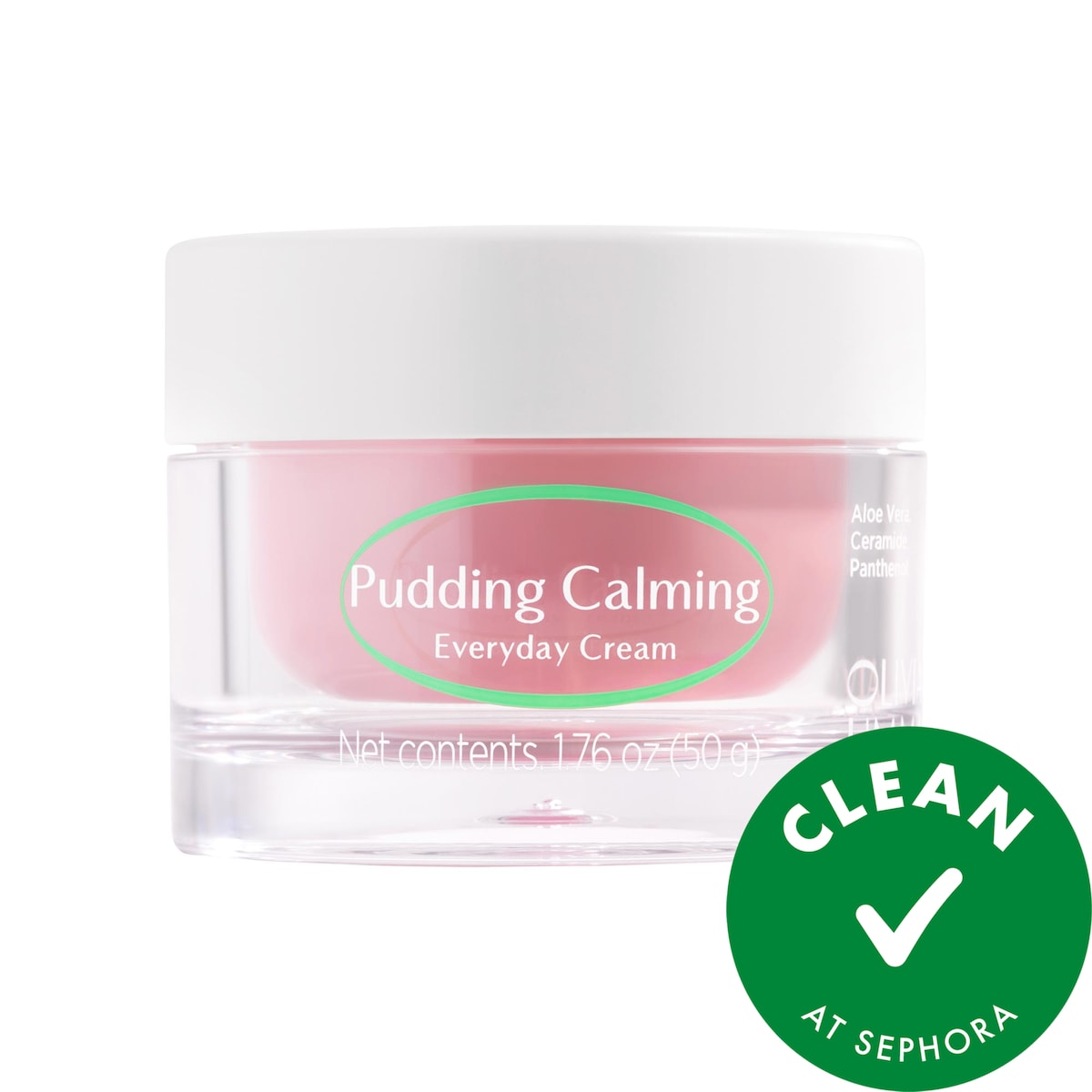
That is why a product like OLIVIAUMMA Pudding Calming Everyday Cream is interesting. It is not trying to be a matte acne gel. It is not trying to be a dense repair balm. It is a pink pudding-textured gel cream with ceramides, panthenol, aloe, centella, glycerin, and sodium hyaluronate in the formula story.
In May 2026, I would look at it as a comfort step for oily-combination skin that keeps getting treated like it only needs oil control.
Oil control is not always the missing piece.
Sometimes the missing piece is a moisturizer that calms the routine down without feeling like a blanket.
The quick way I would use it
For oily-combination skin, I would not start with a thick full-face layer.
I would start small.
| Routine slot | How I would use it | Why |
|---|---|---|
| Morning | Thin layer after serum or on bare damp skin | Tests sunscreen fit without overloading the face |
| Night | Normal layer as the last step | Gives the cream a fair comfort test |
| Dry zones | Extra half-layer on cheeks or mouth area | Lets the T-zone stay lighter |
| Active nights | Use it after treatment only if skin tolerates the active | Keeps the routine from getting too harsh |
| Irritated days | Use with fewer other products | Lets you see whether the cream itself agrees |
That is the basic strategy: use the cream where the skin needs comfort, not automatically where the brand photo looks pretty.
Why oily-combination skin still needs moisture
I would never build an oily-combination routine around drying the face out.
That backfires too often. The T-zone may look better for a few hours, but the cheeks get tight, makeup catches, sunscreen stings, and then the skin looks shiny and uncomfortable at the same time.
The better goal is balance.
For oily-combination skin, moisturizer should do three things:
- Reduce the tight feeling after cleansing.
- Make sunscreen easier to wear.
- Support the barrier without adding unnecessary heaviness.
That is where a pudding gel cream can make sense. It gives more cushion than a water gel but still reads lighter than a rich cream.
If the face is already angry, I would also look at the three-night sensitive-skin routine before adding more products. A moisturizer helps most when the routine around it is not fighting it.
Morning: keep the layer thin
Morning is where I would be strict.
Use less than you think.
A thin layer is enough for the first test. Apply it after cleansing or after a light serum, then wait before sunscreen. The cream should make sunscreen feel smoother, not heavier.
My morning test:
- Gentle cleanse or water rinse.
- Optional hydrating serum if skin feels tight.
- Thin layer of OLIVIAUMMA Pudding Calming Cream.
- Sunscreen.
- Makeup only after sunscreen settles.
If the T-zone gets shiny fast, I would use the cream mainly on cheeks and the mouth area. There is no rule that every moisturizer has to be applied evenly everywhere.
Combination skin often needs zone logic. Cheeks and jaw may need comfort. Nose and forehead may need restraint.
Night: use it as the last step
At night, I would let the cream be the last step.
That is the intended use: face and neck, morning and night, as the final moisturizer. I would not layer it under another cream at first because then I would not know what it is doing.
Night routine:
| Step | Product type |
|---|---|
| Cleanse | Gentle cleanser |
| Treat | Optional, only one active lane |
| Moisturize | OLIVIAUMMA Pudding Calming Cream |
If the skin still feels tight after that, the problem may not be the cream alone. It could be the cleanser, dry indoor air, too much exfoliation, or a hydrating step that is missing before moisturizer.
The tight-skin guide is useful here because it separates hydration, moisture, and sealing instead of asking one cream to do everything.
When skin feels irritated but still oily
This is the exact situation where people make bad purchases.
Skin feels irritated, so they buy the richest cream they can find. Then the cream feels heavy, clogs them, or makes sunscreen miserable. Then they go back to drying products. The face never gets a steady middle ground.
For irritated oily-combination skin, I would look for:
- a gentle cleanser
- one moisturizer that does not sting
- sunscreen that does not burn
- fewer actives for a few days
- no scrubby texture
- no new exfoliating toner
OLIVIAUMMA can fit that middle ground if the fragrance and texture agree with your skin. The ceramide and panthenol lane is helpful. The centella and aloe lane makes sense. The gel-cream texture is the reason I would consider it over a richer balm.
But I would still patch test if my face is already reactive. "Calming" on a product name does not override your skin's history.
The fragrance decision
This cream contains fragrance.
That matters more when the product is being considered for irritated skin.
I do not think fragrance automatically ruins a product. Plenty of people use fragranced moisturizers comfortably. But if I am shopping because my skin is stressed, I would be extra honest about how my face usually responds.
I would be cautious if:
- scented moisturizers have burned before
- sunscreen often stings
- my cheeks flush easily
- my eyes water around scented skincare
- my skin is recovering from too many actives
In those cases, a fragrance-free gel cream may be the calmer first move. AESTURA A-CICA365 Soothing Repair Gel Cream is one related lane I would compare before buying.
How it fits around acne treatments
If oily-combination skin is also acne-prone, the moisturizer has to make treatment easier, not harder.
That means I would not add this cream on the same week as a new retinoid, new benzoyl peroxide, new salicylic acid, and new sunscreen. That turns one purchase into five variables.
A better approach:
- Keep the acne treatment steady.
- Add the cream at night first.
- Watch for stinging and new bumps.
- Try morning use only after night use behaves.
- Use less on the chin if that area clogs easily.
If acne treatment makes your face tight, a gel cream with humectants and barrier-support ingredients can be useful. If the cream creates new congestion, stop forcing it. The right moisturizer should make the treatment routine easier to tolerate.
How it fits under sunscreen
Sunscreen decides whether this is a good morning product.
I would test it with your real sunscreen, not a theoretical better one. Apply the cream, wait a bit, then apply SPF. Watch the edges of the face, the nose, and the brow area.
Signs the pairing works:
- sunscreen spreads evenly
- no pilling around the brows
- no greasy layer by lunch
- cheeks do not feel tight
- makeup sits normally
Signs the pairing is wrong:
- SPF balls up
- foundation separates
- nose looks oily fast
- face feels coated
- cream stings under sunscreen
If the sunscreen pairing fails, I would not immediately throw the cream out. I would move it to night or use it only on dry zones.
How much to use
For oily-combination skin, amount matters as much as product choice.
Start with a small amount. Warm it between fingers. Press it onto cheeks first. Then use whatever is left on the forehead and chin.
That order keeps the richer-feeling parts of the face from getting overloaded.
I would use more at night if the cheeks feel tight. I would use less in the morning if sunscreen already gives some cushion. I would avoid a second layer on the nose unless the nose genuinely feels dry.
The goal is not to use the "correct" amount from a social video. The goal is to use the amount your face can wear for a whole day.
When to choose a different gel cream
I would choose a different gel cream if the main issue is not comfort.
If the main issue is shine, pick a more matte or oil-control lane.
If the main issue is redness and fragrance sensitivity, pick a fragrance-free calming lane.
If the main issue is heavy acne treatment dryness, pick the moisturizer your face tolerates most consistently, even if it is less exciting.
This is where the Sephora gel moisturizer comparison helps. Gel creams are not interchangeable. Some are dewy. Some are matte. Some are acne-focused. Some are barrier-focused. OLIVIAUMMA sits in the soft, cushiony, calming everyday lane.
A one-week plan
I would test it like this:
| Day | Move | What to watch |
|---|---|---|
| 1 | Night only | Stinging, warmth, morning comfort |
| 2 | Night only | New bumps, cheek tightness |
| 3 | Morning on cheeks only | Sunscreen behavior |
| 4 | Full-face morning thin layer | Shine and makeup |
| 5 | Skip morning use | Compare oil and tightness |
| 6 | Use after a normal serum | Pilling or heaviness |
| 7 | Decide where it belongs | Full face, cheeks only, night only, or skip |
The skip day is important. It tells you whether the product is actually improving comfort or just making the routine feel more fun.
Where Glass fits
In Glass, I would log OLIVIAUMMA Pudding Calming Cream as a moisturizer and add notes for zones.
For example:
- cheeks only
- full face
- night only
- under SPF
- after retinoid
- new bumps on chin
- shiny by lunch
- calmer by morning
That turns a texture decision into a pattern. Oily-combination skin often needs that. The mirror can make a product look great on day one and confusing by day five.
FAQ
Can oily-combination skin use OLIVIAUMMA Pudding Calming Cream every day?
Possibly. I would start once daily, then increase if the skin stays comfortable and the T-zone does not get too shiny.
Should I use it before or after serum?
Use it after serum as the moisturizer step. In the morning, sunscreen goes after it.
Is it enough for night?
For oily-combination skin, it may be. Very dry areas may need more cushion, but I would test the cream alone first.
Can I use it with retinol?
You can if your skin tolerates the pairing, but I would not start both at the same time. Keep the retinol schedule steady and add the cream slowly.
What is the main drawback?
Fragrance. If scented leave-on products bother your skin, I would be careful.
Bottom line
I would use OLIVIAUMMA Pudding Calming Everyday Cream as a controlled comfort step for oily-combination skin.
Thin layer in the morning. Normal layer at night. Extra on cheeks if needed. Less on the T-zone if shine builds fast.
The cream is most interesting when your skin wants barrier-minded softness but hates heavy moisturizers. It is less interesting if you need fragrance-free recovery or a matte oil-control product.