My skin does not need a lecture at night.
It needs calm.
That sounds simple until your face starts reacting to everything. Cleanser feels sharp. Moisturizer tingles. The serum that used to make you glow now makes your cheeks feel hot. You start wondering if your skin is sensitive, damaged, allergic, dry, oily, dehydrated, purging, or just tired of you.
That is when I stop building a better routine.
I build a quieter one.
The night skincare routine for sensitive skin that makes the most sense to me in May 2026 is not a ten-step recovery ceremony. It is a three-night rhythm: one reset night, one repair night, and one careful treatment night. Then you repeat only if your skin stays calm.
That rhythm gives you structure without forcing your skin into a schedule it cannot handle.
It also answers the question people rarely say out loud: _what do I do tonight when my skin feels too reactive for my normal routine, but I still want to take care of it?_
The short version
If your skin is sensitive, irritated, or easily overwhelmed at night, use this three-night routine:
| Night | What to do | What to skip |
|---|---|---|
| Night 1: Reset | Gentle cleanse, plain moisturizer, optional balm on dry patches | Retinoids, exfoliating acids, strong vitamin C, masks |
| Night 2: Repair | Gentle cleanse, hydrating layer if tolerated, barrier moisturizer | Scrubs, peels, new products, fragrance-heavy formulas |
| Night 3: Treat carefully | Gentle cleanse, one mild active if your skin is calm, moisturizer | Multiple actives, aggressive layering, trying something new |
Then check the next morning.
If your skin wakes up calmer, repeat the rhythm. If it wakes up hot, tight, shiny-but-dry, flaky, or stingy, do not push to the treatment night. Go back to reset and repair.
That is the part that changed how I think about sensitive skin. The routine should respond to your face, not your calendar.
Why three nights works better than a perfect nightly routine
Sensitive skin gets worse when every night becomes a decision tree.
Should you exfoliate?
Should you use retinol?
Should you try the calming serum?
Should you slug?
Should you double cleanse?
Should you stop everything?
The three-night rhythm removes most of that noise. You are not asking your skin to tolerate everything at once. You are giving it a pattern that separates the jobs.
Reset night removes friction. Repair night gives the barrier more support. Treatment night is optional and earned.
That word matters.
Earned.
Sensitive skin does not owe you an active every third night. If your skin still feels tender, the treatment night becomes another repair night. That is not failing the routine. That is the routine working.
Dermatology guidance keeps coming back to the same boring truths for reactive skin: keep the routine simple, use gentle products, avoid obvious irritants, and introduce new products slowly. The American Academy of Dermatology’s dry-skin guidance points people toward gentle, fragrance-free products, and Cleveland Clinic’s routine-order guidance warns that too many products can increase the chance of side effects.
That lines up with what I trust most in a real bathroom: fewer variables, slower changes, and a routine that does not punish you for being consistent.
Night 1: Reset
Reset night is for the nights when your skin feels annoyed before you even start.
Maybe moisturizer burned last night. Maybe your cheeks flushed after cleansing. Maybe you used an acid two nights in a row and now your face feels smoother but weirdly tight. Maybe your skin looks shiny but not hydrated, which is one of the most confusing sensitive-skin signals because it tricks you into thinking you need oil control when you may actually need recovery.
On reset night, I want the routine to be almost boring.
- Remove makeup or sunscreen gently if you wore it.
- Cleanse once with lukewarm water and a gentle cleanser.
- Apply one moisturizer your skin already knows.
- Add a balm only on dry, cracked, windburned, or irritated patches.
That is enough.
Not forever. For tonight.
The mistake is trying to make reset night feel productive. Sensitive skin recovery often looks like doing less than your anxious brain wants to do. You may feel like you should add a centella toner, a snail essence, a peptide serum, a barrier serum, a sleeping mask, and an ointment because every one of those things sounds soothing.
But soothing ingredients can still become too many layers.
On a true reset night, I care more about the total number of products than the personality of each product. A calm three-product routine usually beats an impressive eight-product routine when the skin is already irritated.
Night 2: Repair
Repair night is where you give the skin more comfort without turning the routine into a chemistry project.
This is the night I would add one hydrating or barrier-supporting layer if the skin handled reset night well. Not three. One.
That layer could be a hydrating serum, a milky essence, or a redness-focused serum. The job is not to chase a dramatic glow. The job is to make moisturizer feel more comfortable and help the whole routine sit better.
The most useful ingredients in this lane are usually the quiet ones:
- glycerin
- panthenol
- ceramides
- cholesterol and fatty acids
- centella asiatica
- colloidal oatmeal
- squalane
- niacinamide, if your skin tolerates it
I do not treat niacinamide as automatically safe just because it is popular. Some sensitive skin loves it. Some skin gets cranky when it appears in every cleanser, serum, moisturizer, and sunscreen. If your face stings easily, the dose and the total stack matter.
Repair night should leave your skin feeling less tight by the time you go to bed. If it leaves you sticky, hot, itchy, or more aware of your face, simplify again.
That is the practical test I trust:
_Does this product make my skin easier to ignore?_
If yes, it can stay.
If no, it has to earn its place later.
Night 3: Treat carefully
Treatment night is where sensitive-skin routines usually fall apart.
Not because actives are bad.
Because people treat active ingredients like proof that they are serious.
A sensitive-skin treatment night should have one job. Texture, breakouts, dark marks, clogged pores, fine lines, dullness. Pick one. The more jobs you assign to the night, the more likely you are to wake up trying to figure out which product caused the problem.
If your skin is calm, the treatment night might include:
- a low-strength retinoid
- a gentle exfoliating acid
- an acne treatment used only where needed
- a pigment-support serum
But I would not combine those in the same night if sensitivity is the concern.
I also would not introduce a brand-new active on a week when your barrier is already loud. That is how you end up blaming a product you never gave a fair test. A good active can feel terrible on a damaged barrier. A gentle formula can still sting if the timing is wrong.
The cleanest treatment night looks like this:
- Gentle cleanse.
- Wait until the skin is dry if your active tends to sting.
- Apply one active.
- Moisturize.
- Stop.
If you are using a retinoid and your skin is easily irritated, buffering can help. That means moisturizer first, retinoid second, or moisturizer on both sides of the retinoid. It may feel less “powerful,” but sensitive skin usually rewards consistency more than intensity.
The best treatment is the one you can repeat without needing three emergency recovery nights afterward.
The product lanes I would actually consider
I would not buy all of these.
That would defeat the point.
I would choose one cleanser, one moisturizer, and maybe one recovery or treatment support product based on the role my routine is missing.
| Product | Image | Best role | Best for | Skip if |
|---|---|---|---|---|
| AESTURA ATOBARRIER365 Gentle pH-Balancing Foaming Cleanser | 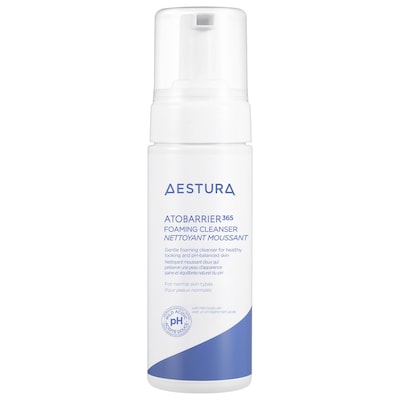 | Reset-night cleanse | Sensitive skin that still likes a soft foam | Foam usually leaves you tight |
| LANEIGE Water Bank Gentle Gel Cleanser |  | Easy daily cleanse | Dehydrated skin that wants a gel texture | You need a creamier, non-foaming wash |
| Tower 28 SOS Daily Skin Barrier Redness Recovery Moisturizer | 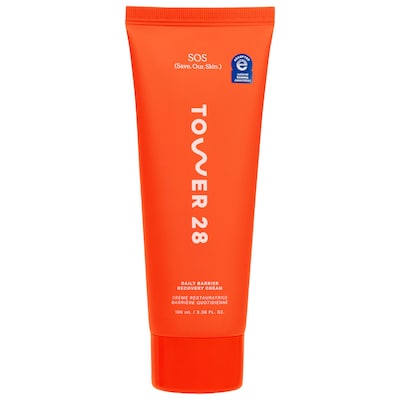 | Repair-night moisturizer | Redness-prone skin that wants a straightforward cream | Very dry skin needs more weight |
| AESTURA ATOBARRIER365 Cream Moisturizer | 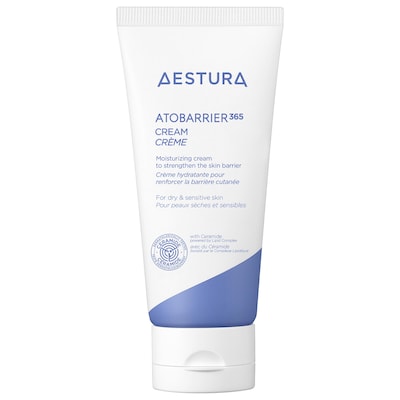 | Barrier comfort | Dry, tight, or over-cleansed skin | Rich creams break you out easily |
| AESTURA A-CICA365 Soothing Repair Gel Cream |  | Lightweight repair | Oily or combination sensitive skin | You need a heavier seal |
| Topicals Like Butter Moisturizer | 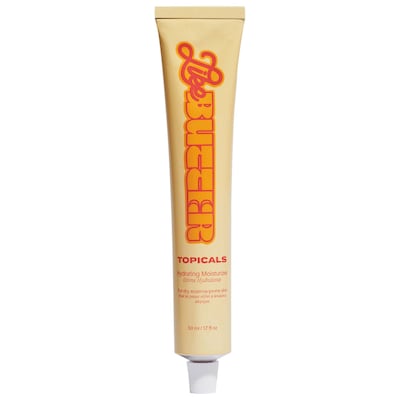 | Dry sensitive comfort | Flaky, rough, or eczema-prone-feeling skin | You hate richer finishes |
| Experiment Buffer Jelly Facial Oil-Gel | 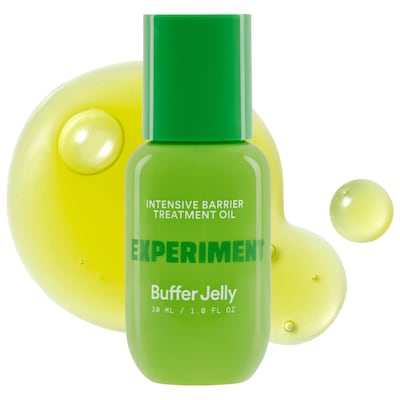 | Final patch seal | Dry patches and recovery nights | Occlusive textures clog you easily |
The buying rule is simple: choose by the night you fail most often.
If cleansing makes your skin angry, buy a better cleanser before you buy another serum.
If you wake up tight, fix the moisturizer lane.
If your skin stays calm until you use actives, your treatment night needs to slow down.
What I would not do with sensitive skin at night
I would not exfoliate because my skin looks dull for one day.
Dullness can be dead skin. It can also be dehydration, irritation, poor sleep, cold weather, over-cleansing, too much retinoid, or a moisturizer that is not sealing well enough. If you exfoliate every time skin looks flat, you may keep treating the symptom while worsening the cause.
I would not use a scrub on reactive cheeks.
Some skin can tolerate physical exfoliation. Sensitive skin usually gives you fewer chances. If your face already burns with moisturizer, texture from a scrub is not the next experiment I would choose.
I would not assume “natural” means safer.
Essential oils, fragrant plant extracts, and botanical-heavy formulas can still bother reactive skin. The word natural does not tell you whether your face will tolerate it.
I would not keep testing products during a flare.
When skin is irritated, every new product enters a messy trial. You are not testing the product on stable skin. You are testing it on skin that is already easier to upset.
I would not keep a product just because it was expensive.
This one hurts, but it matters. A product that makes your face burn is not a better product because it cost more. It is just an expensive mismatch.
How to tell if your barrier is asking for repair, not more treatment
Sensitive skin can be naturally reactive, but it can also become sensitized after too much cleansing, exfoliating, retinoid use, acne treatment, weather exposure, or product switching.
I start thinking “barrier” when I notice a cluster of these signs:
- moisturizer suddenly stings
- skin feels tight soon after cleansing
- cheeks look shiny but feel dry
- makeup catches on rough patches
- water feels irritating
- products that used to be fine now feel spicy
- redness lasts longer than usual
- every active seems to “not work anymore”
That does not mean you need to diagnose yourself. It means the next routine move should be conservative.
For me, that means two calm weeks before judging anything ambitious. Gentle cleanse. Moisturizer. Sunscreen in the morning. No exfoliating acids. No strong retinoid push. No new mask every Sunday because the skin “needs help.”
If things are painful, spreading, cracking, oozing, or persistent, that is not a content problem. That is a reason to talk to a dermatologist or clinician.
How to bring actives back without starting the whole cycle again
The reintroduction phase is where people ruin good recovery.
Your skin finally calms down, so you celebrate by restarting retinol, exfoliating toner, vitamin C, spot treatment, and a brightening serum in the same week.
Then the burning comes back.
I prefer a slower test:
- Keep the cleanser and moisturizer the same.
- Add one active on one night.
- Wait two or three nights.
- Watch the next-morning skin, not just the same-night feel.
- Increase only if the skin stays calm.
The next morning matters because irritation does not always announce itself while you are applying the product. Sometimes the face feels fine at night and wakes up tight, pink, flaky, or unusually oily.
That is useful data.
Glass is built around that kind of pattern recognition. A routine tracker or skin scan history cannot make your skin tolerate a product, but it can help you notice whether a “good” night actually leads to a better morning. That is where people get more honest about what works.
If you want a broader setup for tracking this, I would pair this rhythm with how to know if your skincare routine is working, skin barrier repair routine, and best skincare routine tracker.
A simple month-long plan
If your skin is reactive right now, I would not try to transform it in a week.
I would make May boring on purpose.
Week 1: Reset the routine
Use only the products you already know your skin tolerates. Gentle cleanser at night, moisturizer, sunscreen in the morning. If even that stings, strip the routine back further and consider getting professional help.
The point of week one is not visible glow. It is less irritation.
Week 2: Strengthen the comfort layer
If your skin is calmer, add one repair-support layer if you need it. This could be a hydrating serum, a barrier cream, or a patch-only balm. Do not add all three just because week one went well.
The point of week two is stability.
Week 3: Test one active
Choose the active that solves your main concern. Not your top five concerns. One.
If texture is the issue, maybe that is a gentle exfoliant. If fine lines or long-term smoothing is the issue, maybe that is retinoid. If breakouts are the issue, maybe that is a targeted acne step. Use it once, then wait.
The point of week three is information.
Week 4: Decide what earned a place
By week four, you should know which products make your skin easier to live with and which products create noise.
Keep the boring winners. Remove the dramatic maybes. Sensitive skin usually improves when the routine becomes easier to repeat.
The point of week four is trust.
Not trust in a trend.
Trust in your own pattern.
The routine I would use if my skin burned tonight
If my face burned tonight, I would not do the full three-night rhythm.
I would do this:
- rinse or cleanse gently, only if needed
- apply a plain moisturizer
- add a thin balm on the most irritated areas
- stop
No toner. No exfoliant. No retinoid. No vitamin C. No peel pad. No mask. No “calming” product I have never used before.
Then I would make the next morning equally quiet: rinse if needed, moisturize, use sunscreen if I am going outside, and keep my hands off my face.
That may feel too simple if you are used to solving skin problems by adding things.
But sensitive skin often gets better when you stop asking it to process so much.
FAQ
Is a night skincare routine for sensitive skin supposed to include retinol?
Not automatically. Retinol can be useful, but sensitive skin has to earn its way there. If your face burns, flakes, or feels hot after basic products, make retinol a later step. Repair first, then test slowly.
Should I double cleanse if I have sensitive skin?
Only if you need it. Heavy sunscreen and makeup may need a first cleanse, but double cleansing should not mean double stripping. If your skin feels tight after cleansing, the method or cleanser is too aggressive.
What should I do if moisturizer burns?
Stop actives first. Use a simpler moisturizer your skin has tolerated before, avoid fragrance-heavy products, and give the skin a quiet stretch. If burning continues or the skin looks inflamed, cracked, swollen, or painful, get medical guidance.
How long does sensitive skin take to calm down?
It depends on the trigger. A mild product reaction may settle quickly once you remove the irritant. A stressed barrier can take weeks of boring consistency. The mistake is changing the routine every two nights before the skin has time to respond.
What is the best night routine order for sensitive skin?
The safest order is cleanser, optional hydrating layer, moisturizer, and optional balm on dry patches. Actives belong after cleansing and before moisturizer only when your skin is calm enough to tolerate them.
The bottom line
The best sensitive-skin night routine is not the one with the most calming labels.
It is the one your face can repeat.
Reset when your skin is loud. Repair when it needs comfort. Treat only when it has earned the extra step. That rhythm is slower than chasing a new product every time your skin changes, but it gives you something better than a crowded shelf.
It gives you a face that feels less unpredictable.