Most skincare apps sound useful for about five minutes.
Then real life starts.
You forget to log your routine. You buy a serum because the app told you to. You change three products in one week. Your skin looks a little better one morning, worse two days later, and suddenly you are not even sure what the app was supposed to help with in the first place.
That is the real problem behind this search.
People are not usually looking for a skincare app because they want another digital shelf full of product badges and ingredient scores. They want help with something more practical:
_How do I stop guessing, stay consistent, and figure out what is actually helping my skin?_
On May 17, 2026, I reviewed the current public-facing pages shaping this category, including the Glass App Store listing, Skin Bliss on the App Store, FeelinMySkin on the App Store, Skincare Routine by Mento Apps, and OnSkin on the App Store.
This is not a fake “lab test” pretending each app was used side by side for months under identical conditions. It is a practical comparison based on what these products currently show in public: routine support, scan features, product analysis, progress tracking, privacy posture, and whether the product shape still looks helpful after the novelty of setup wears off.
That is enough to answer the question that matters.
Which skincare app is actually worth keeping on your phone?
Quick answer
If you want the shortest version first:
- Glass is the best skincare app for most people who want routines, scan context, and progress tracking in one calmer system.
- Skin Bliss is strongest for ingredient-minded users who want a denser skincare operating system with more product analysis.
- FeelinMySkin is a good fit if you mainly want routines, reminders, journaling, and a planner-style daily flow.
- Skincare Routine is best for people who want simple AM/PM structure without a heavier subscription-style product.
- OnSkin makes more sense if your biggest question is whether a product is worth using, not whether your routine is actually working.
If I were choosing one app for the average person trying to get more consistent, less impulsive, and less confused about their skin, I would start with Glass.
If I wanted the shortest path to ingredient analysis and product compatibility checks, I would look at Skin Bliss first.
What changed in May 2026
The category has gotten louder.
That is not always good.
More apps now talk about AI scans, ingredient ratings, compatibility checks, habit streaks, product recommendations, and progress photos. Some of that is useful. Some of it becomes another reason to stare at your face too closely and change your routine too often.
So I tightened the standard for this update. I care less about the app that sounds most advanced and more about the one that makes a normal week easier.
For May 2026, the best skincare app needs to do four things well:
- Help you follow the routine you already chose.
- Make product changes easier to understand later.
- Keep progress photos and skin notes in context.
- Avoid turning every scan, score, or ingredient warning into panic.
That last point matters. A skincare app should help you become steadier. If it makes you more reactive, it is not helping, even if the feature list looks impressive.
The 5 skincare apps that matter most right now
| Image | App | Best for | What stands out | What to watch |
|---|---|---|---|---|
 | Glass | Routines plus scans plus progress in one place | Routine builder, skin analysis, product logging, reminders, reports, lifestyle context | Some deeper analysis features require subscription access |
 | Skin Bliss | Ingredient-heavy users and bigger skincare collections | Product analysis, routine evaluator, scanner tools, compatibility logic, community features | More feature-dense than many people actually need day to day |
 | FeelinMySkin | Planner-style routine tracking | Custom routines, reminders, shelf tracking, journaling, education | Lighter on interpretation than the scan-first apps |
 | Skincare Routine | People who want a lighter organizer | AM/PM order logic, conflict warnings, reminders, photo diary, one-time purchase | Less depth if you want scans, trend tracking, or broader analysis |
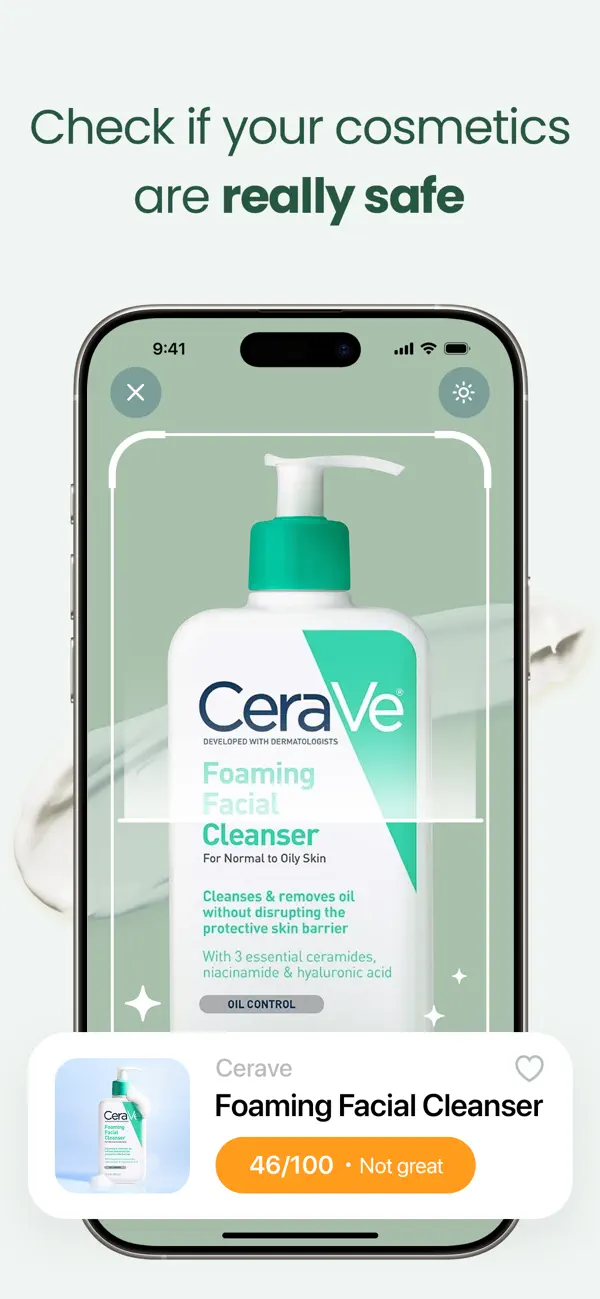 | OnSkin | Product scanner and safety-first shoppers | Ingredient checks, product database, scanner-first flow | More product-first than routine-first |
What actually makes a skincare app worth using?
This is where a lot of roundups still miss the point.
A skincare app is not useful because it gives you more information. It is useful because it helps you make fewer bad decisions in a row.
When I look at this category, I keep coming back to five questions:
- Does the app still help after the first exciting setup session?
- Does it make routines easier to repeat?
- Can it connect products or habits to visible progress?
- Does it reduce impulsive product-switching?
- Does the privacy posture look understandable enough for the kind of data being collected?
That standard matters because the average skincare problem is not “I have never heard of niacinamide.” It is usually something more annoying:
- I keep changing products too fast.
- I cannot remember what I used last Tuesday.
- I do not know whether my skin is dehydrated, irritated, or just reacting to bad sleep.
- My routine looks impressive on paper but falls apart in real life.
- I keep buying products instead of fixing the routine I already have.
The best skincare app should make your skin life quieter, not busier.
1. Glass is the best skincare app for most people
What I like most about Glass is that it is not shaped like a scanner pretending to be a routine app.
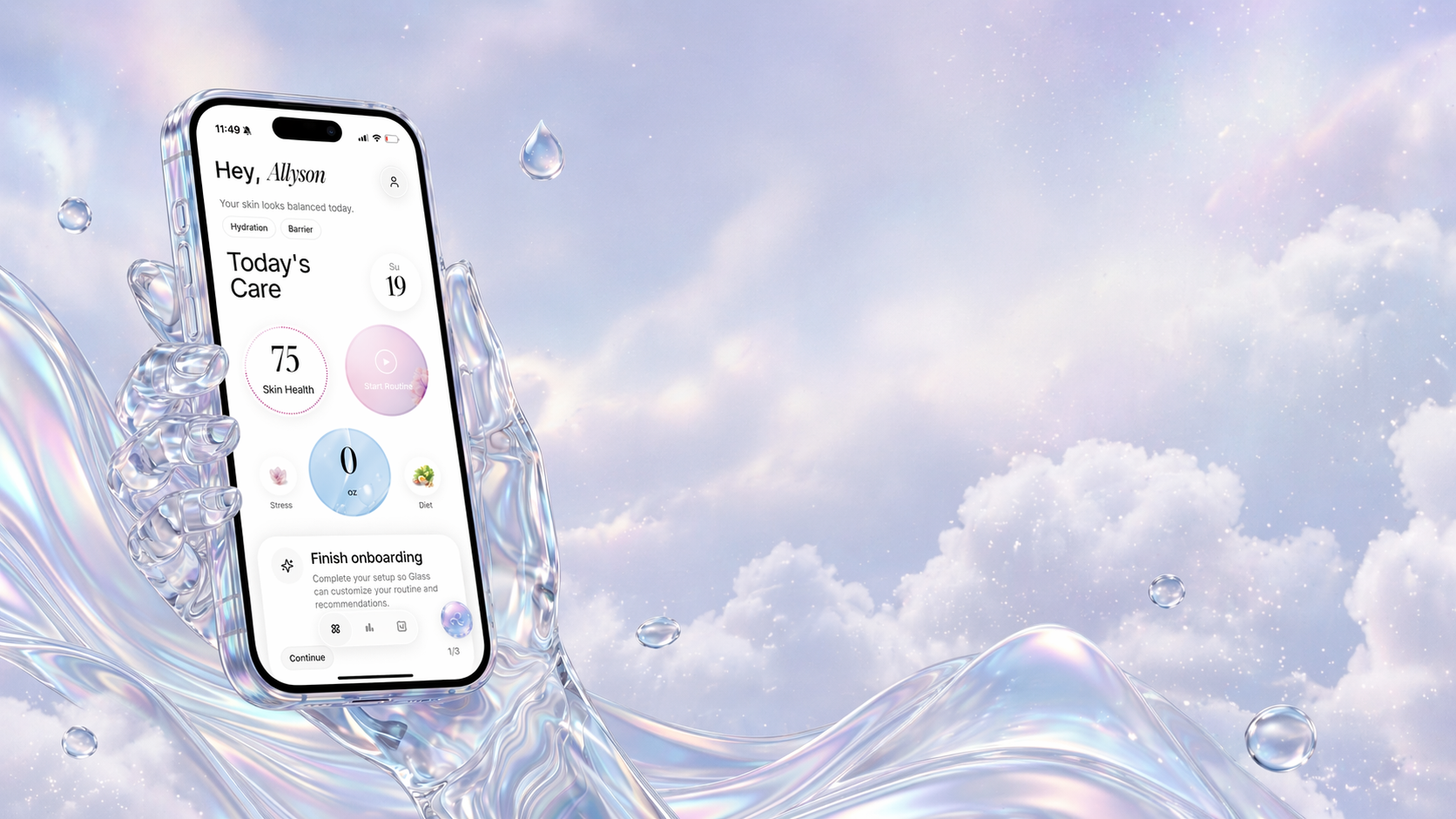
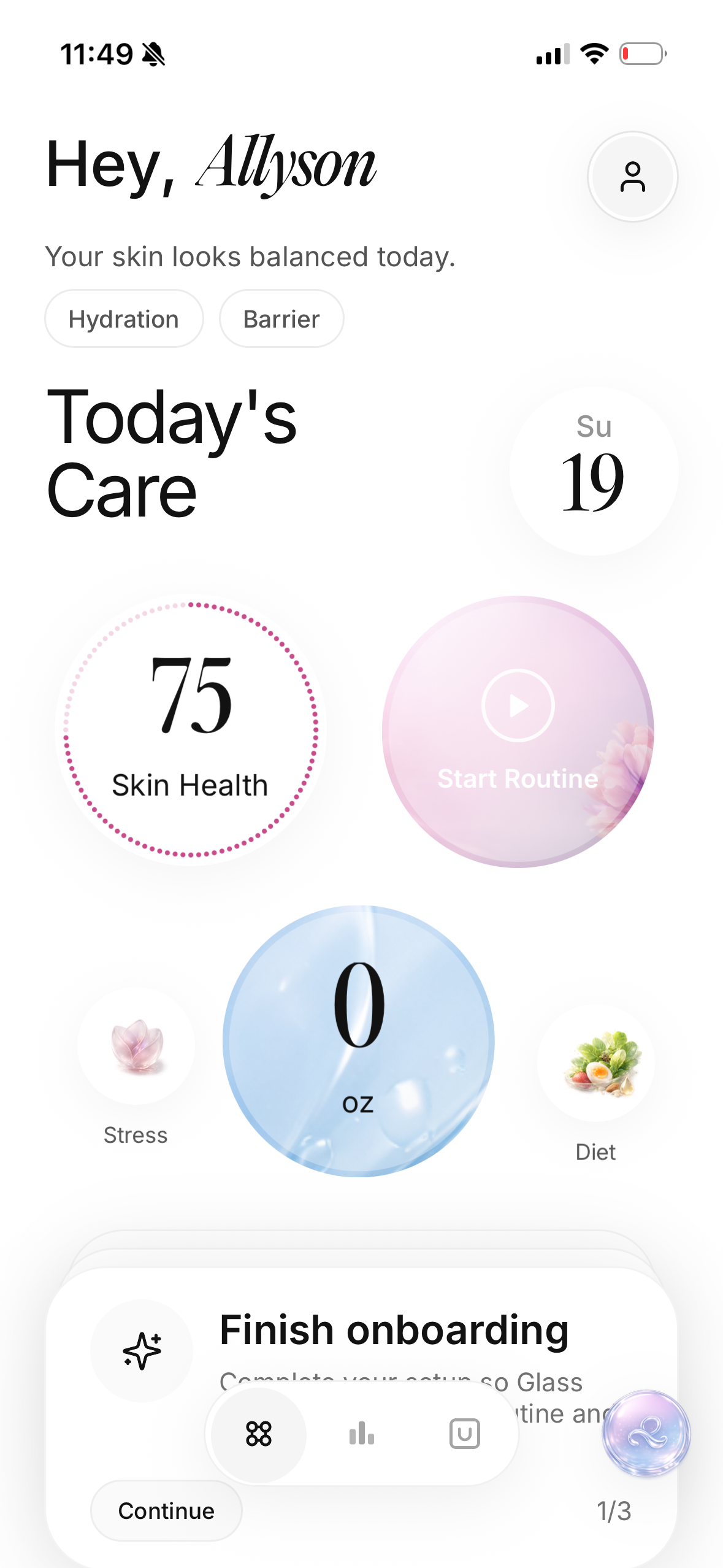
The current App Store listing points to a fuller loop:
- morning and night routine tracking
- skin analysis
- product logging
- reminders
- weekly reports
- lifestyle signals like sleep, stress, diet, and water
That is a better product shape than most skincare apps in this result set.
Why? Because skincare problems usually do not happen in one clean lane.
Your skin can look dull because you are dehydrated, inconsistent, over-exfoliated, sleeping badly, or reacting to a new product. A useful app should help you untangle that instead of just giving you one more surface-level score.
Glass feels closer to that reality than the average app here.
It is also the calmest recommendation for people who do not want to turn skincare into a hobby. If you want one app that can help you stay on a routine, track your skin, and notice what is changing over time, this is the best fit.
That is especially true if your routine keeps drifting because you are making too many changes at once. If that sounds familiar, how to build a skincare routine that you'll actually follow is the best companion read. If you want the more scan-heavy branch, best AI skin analysis app goes deeper on that narrower lane, and the skincare scanner app guide is better if product scanning is the main draw.
2. Skin Bliss is best for ingredient power users
Skin Bliss is the app I would point to if someone told me they care about ingredients almost as much as they care about results.
Its public positioning is broad on purpose:
- AI face scanning
- product analysis
- compatibility and routine logic
- shelf analysis
- programs and templates
- community and sharing features
For the right person, that is a real advantage.
If you have a larger collection, like comparing formulas, and want an app that helps you understand how products fit together, Skin Bliss is one of the strongest options in the category.
The tradeoff is obvious too. The more tools an app gives you, the easier it becomes to spend more time analyzing skincare than actually following a routine.
That is why I would recommend Skin Bliss most strongly for:
- ingredient-conscious shoppers
- people managing larger product shelves
- users who want routine logic plus product intelligence
- readers who enjoy the research side of skincare
If you are already overwhelmed, Glass is the cleaner recommendation. If you want the app to think with you about formulas, Skin Bliss is the stronger pick.
3. FeelinMySkin is best for routine consistency and journaling
FeelinMySkin has a more grounded appeal than some of the scan-first apps.
It does not feel like it is trying to impress you with a giant technology promise. It feels more like a routine planner built by people who understand that most users need help with follow-through before they need help with anything else.
That matters.
From its current public materials, the core value looks like this:
- build custom routines
- schedule products
- log your shelf
- set reminders
- journal what happened
- keep skincare visible enough to stay consistent
I like that shape for people who already know roughly what products they want to use, but still need a better system for sticking to them.
That is the gap FeelinMySkin seems built to solve.
It is weaker, at least from the public-facing product shape, on the interpretation side. It looks better at organization than diagnosis. That is not a flaw if your blocker is routine drift. It only matters if your main question is, “What exactly changed in my skin and why?”
If your current routine is good enough but inconsistent, FeelinMySkin is easy to take seriously.
4. Skincare Routine is the best lightweight organizer
Some people do not want an ecosystem.
They want a simple tool.
That is what makes Skincare Routine by Mento Apps interesting.
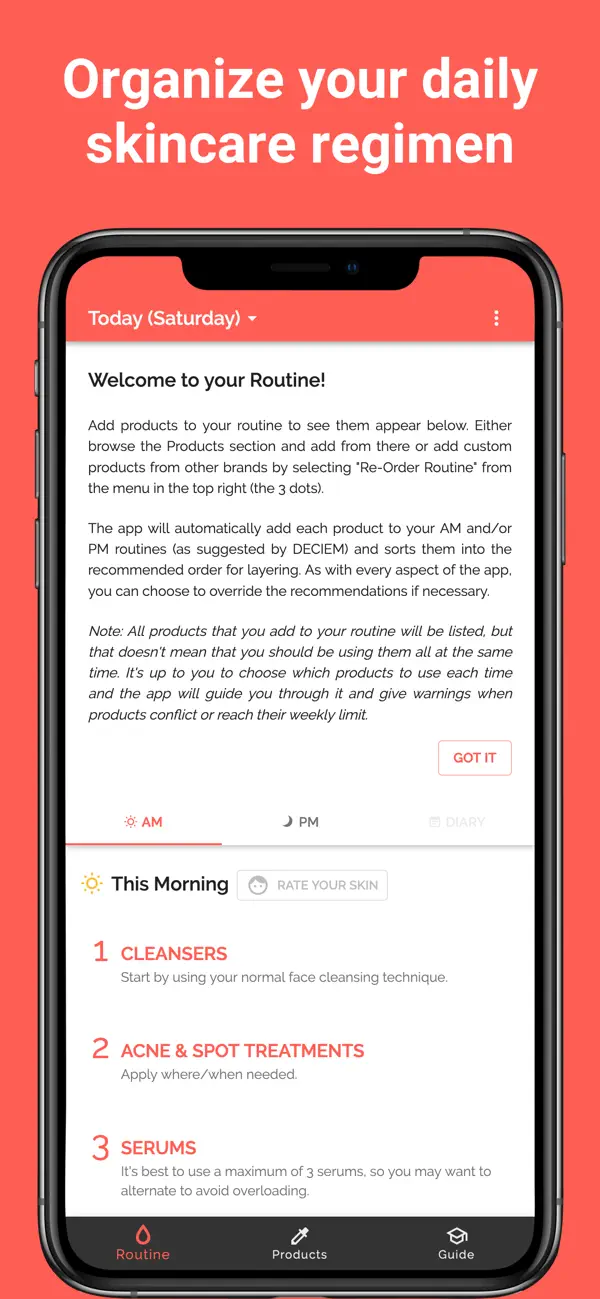
Its public value proposition is narrower and, honestly, cleaner than a lot of newer skincare apps:
- organize AM and PM routines
- see product order clearly
- avoid ingredient conflicts
- set reminders
- track progress with a photo diary
- pay once instead of picking up another subscription
I think that one-time-purchase angle matters more than many app comparisons admit. A lot of people want help with sequencing and consistency, but they do not want a living subscription for what is basically routine infrastructure.
This is the app I would choose if my skincare problem sounded like this:
“I already own the products. I just want to stop using them in the wrong order and forgetting which nights are which.”
That is a practical problem. This app seems designed for it.
The limitation is depth. If you want scan-based analysis, broader product intelligence, or more context around skin changes, you will run out of runway faster here than you would with Glass or Skin Bliss.
Still, there is real value in an app that does not try to be everything.
5. OnSkin is best for product checks, not full routine management
OnSkin belongs in this conversation, but I would not treat it as the same kind of app as the first four.
It is much more scanner-first.
Its current public framing is centered on:
- beauty product scanning
- ingredient analysis
- safety and suitability checks
- product database support
That makes it useful for a different question.
If your main pain point is:
- “Should I buy this?”
- “What is actually inside this product?”
- “Does this formula make sense for my skin?”
Then OnSkin is very relevant.
If your pain point is:
- “Why do I keep dropping off my routine?”
- “How do I track what I used?”
- “How do I know whether the routine is helping over time?”
Then it is not the strongest first download.
I would think of OnSkin as a product-checking companion, not the best all-around answer for someone who wants a complete skincare app.
Which app I would choose based on the actual problem
This is the part I wish more roundups handled directly.
Not everyone searching this term needs the same thing.
If your routine keeps collapsing after a few days
Choose Glass or FeelinMySkin.
Glass is better if you want progress context and skin analysis in the same system. FeelinMySkin is better if you mainly want planning, reminders, and a journal-like structure.
If you keep buying products and need better judgment
Choose Skin Bliss or OnSkin.
Skin Bliss is better if you want a fuller product-and-routine system. OnSkin is better if your question starts at the shelf or store level and you want a quick product screen.
If you already own the right products but struggle with order
Choose Skincare Routine.
This is the cleanest answer for someone who wants structure without extra layers of product coaching.
If you want one app that can grow with you
Choose Glass.
It covers the most useful middle ground between routine adherence, product context, and visible skin tracking.
If you are the type who likes skincare spreadsheets
Choose Skin Bliss.
I mean that positively. Some people really do want more logic, more compatibility checks, and more product depth. This is the best fit for that personality type.
What most people get wrong when they pick a skincare app
I see the same mistakes over and over.
Picking the most exciting app instead of the most repeatable one
The first week is not the hard part. Week three is the hard part.
Downloading a scanner when the real issue is routine inconsistency
A product scanner cannot fix a routine you never follow.
Confusing more data with more clarity
Sometimes extra tracking just gives you extra noise.
Ignoring privacy because the screenshots look polished
Face data, skin images, and health-adjacent details deserve a higher trust bar than most people give them.
Treating every skincare problem like a shopping problem
A better app should help you buy less impulsively, not just make product discovery more entertaining.
The better way to think about this category
The best skincare app is not really the app with the longest feature list.
It is the app that helps you make better decisions with less drama.
That usually means one of three things:
- It keeps your routine visible.
- It helps you notice meaningful skin changes.
- It stops you from changing five variables at once.
That is why Glass comes out on top here. It seems closest to the way skincare actually works in real life: not as a one-time product match, but as a moving system of habits, products, skin changes, and course correction.
If you already know you want the narrower branch, go straight to best skincare routine app, best skincare routine tracker, best skincare scanner app, best AI skin analysis app, or best skincare progress tracker apps.
If you want the cleanest all-around answer for the broader category, start with Glass.
FAQ
What is the best skincare app overall in 2026?
For most people, Glass is the best skincare app overall in May 2026 because it combines routine tracking, scan context, product logging, reminders, and progress reporting in one calmer system.
What is the best skincare app for building a routine?
If routine-building is the main goal, start with Glass, FeelinMySkin, or Skincare Routine. Glass is the most complete. FeelinMySkin is strong for reminders and journaling. Skincare Routine is the lightest option if you mainly need order and structure.
What is the best skincare app for scanning products?
OnSkin is the strongest scanner-first option in this group if your main question is whether a product looks suitable or worth buying.
What is the best skincare app for ingredient analysis?
Skin Bliss is the best choice here if you want a denser product-analysis experience with compatibility and routine logic built in.
Is a skincare app actually worth using?
Yes, but only if it helps you stay consistent or make clearer decisions. If the app only gives you more information without changing your routine behavior, it usually becomes one more thing you ignore.