Most AI skin analysis apps look good for five minutes.
You take a selfie. You get a score. You see a few skin concerns called out on your face.
Then the harder question starts.
_What do I do with this information tomorrow, next week, and a month from now?_
That is the real difference between an app that feels clever and one that actually helps.
Most people are not looking for one more app that gives them a flashy score and then disappears into the same old cycle of buying products, guessing what changed, and quitting two weeks later. They want something more practical:
_Which AI skin analysis app actually helps me understand my skin, build a routine I will keep, and tell whether anything is improving over time?_
I rechecked the category again in late May 2026 with one standard: what would I keep on my phone after the novelty wears off?
That changed the ranking. A fast scan is not enough anymore. The better apps connect the scan to routine behavior, product decisions, privacy, and progress you can actually understand.
If you want the Glass-specific path, start with Glass and use this comparison to decide whether you need a tracker, a scanner, a routine app, or a full skincare system. If you are deciding between adjacent categories, I would also read best skincare scanner app and skin analyzer app features I trust before downloading three apps that all solve slightly different problems.
Quick answer
If you want the short version first:
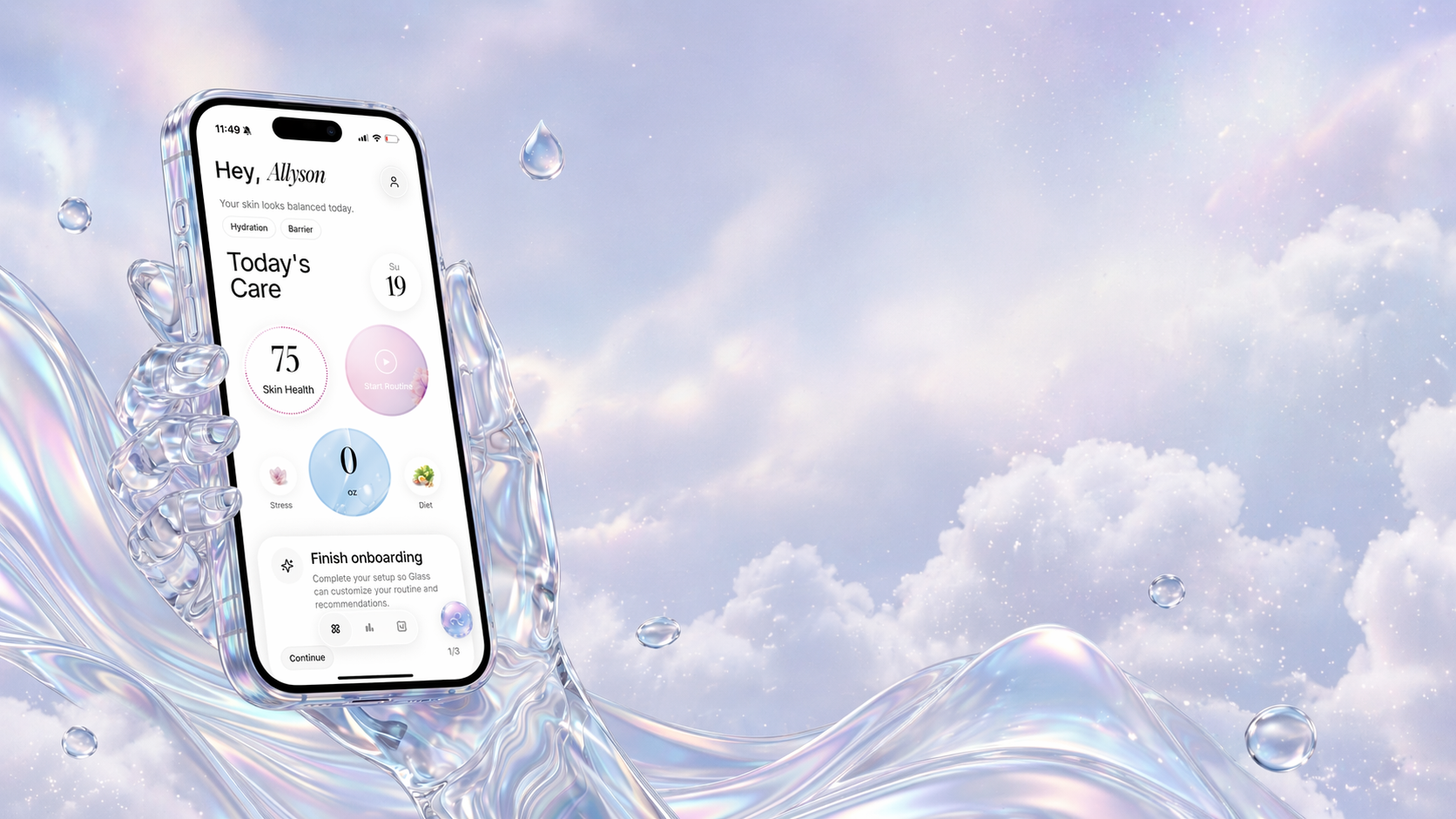
- Glass is the best fit if you want scan context, routine tracking, and habit context in one calmer system.
- Skin Bliss is the strongest broad alternative if you want face scanning, ingredient intelligence, shelf checks, and routine logic in one science-heavy app.
- SkinPal AI looks strongest if your main goal is frequent scan-based tracking and trend visibility.
- Lume Skin is a strong option if you want scanning, product checking, chat, and reminders in one feature-heavy app.
- Derm AI looks better for people who want product recommendations and ingredient analysis tied closely to App Store-style onboarding.
- SkinCircle is the most interesting newer pick if you care about score trends and product correlations more than shopping.
- GlowAI makes sense if you want a clean, fast overview with aging simulation built in.
- Radien, Skintelligent, and SkininsideAI are worth watching if you want newer routines-and-tracking products, but I would not put them ahead of the more complete options yet.
If your bigger frustration is not “Which app scans my face?” but “How do I build a routine that I can actually stick to after the scan?”, Glass is the strongest starting point.
The apps that stand out in late May 2026
| App | Preview | Best for | What stands out | What to watch |
|---|---|---|---|---|
| Glass | 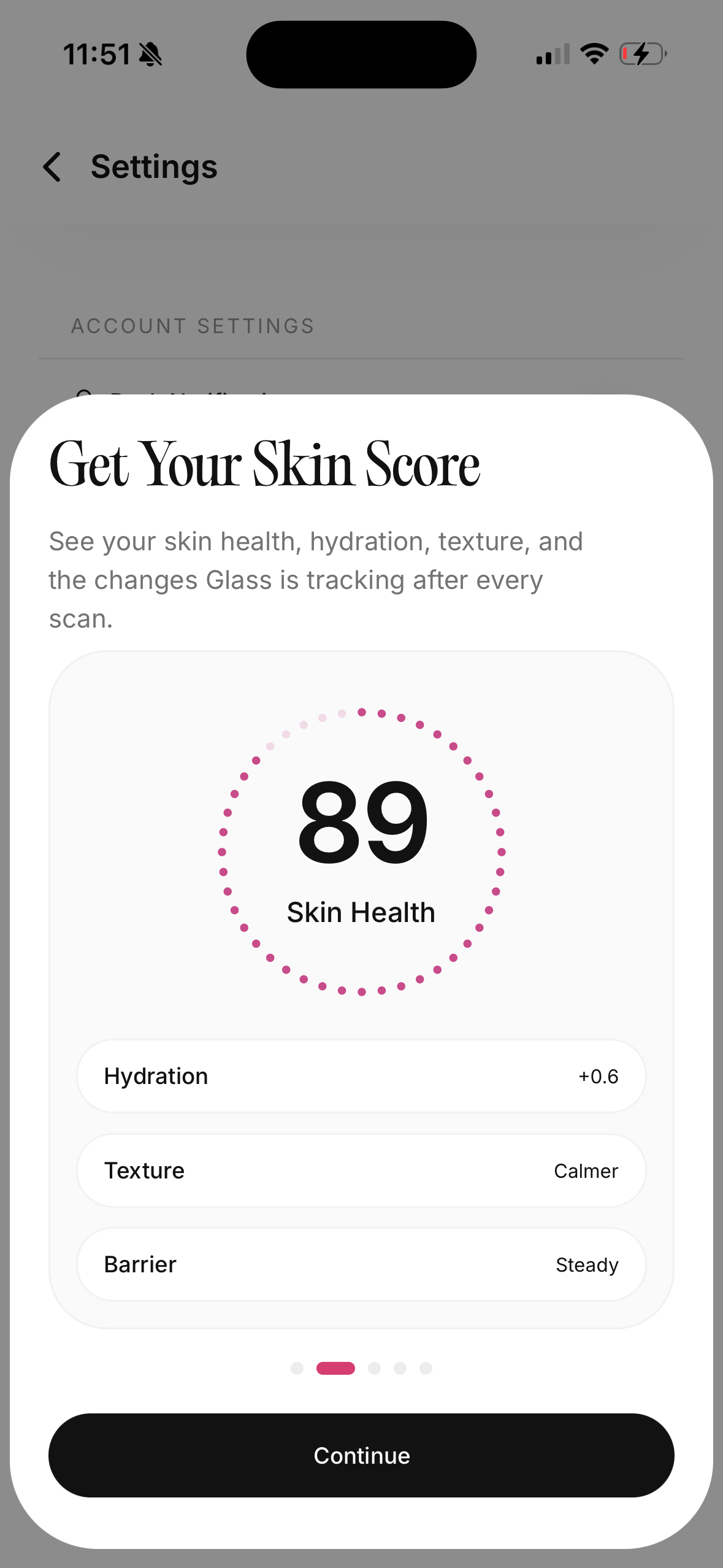 | People who want scans tied to routines and progress | Scan analysis, morning/night routine tracking, lifestyle context, AI skincare help, progress reports | Scan analysis requires subscription access |
| Skin Bliss | 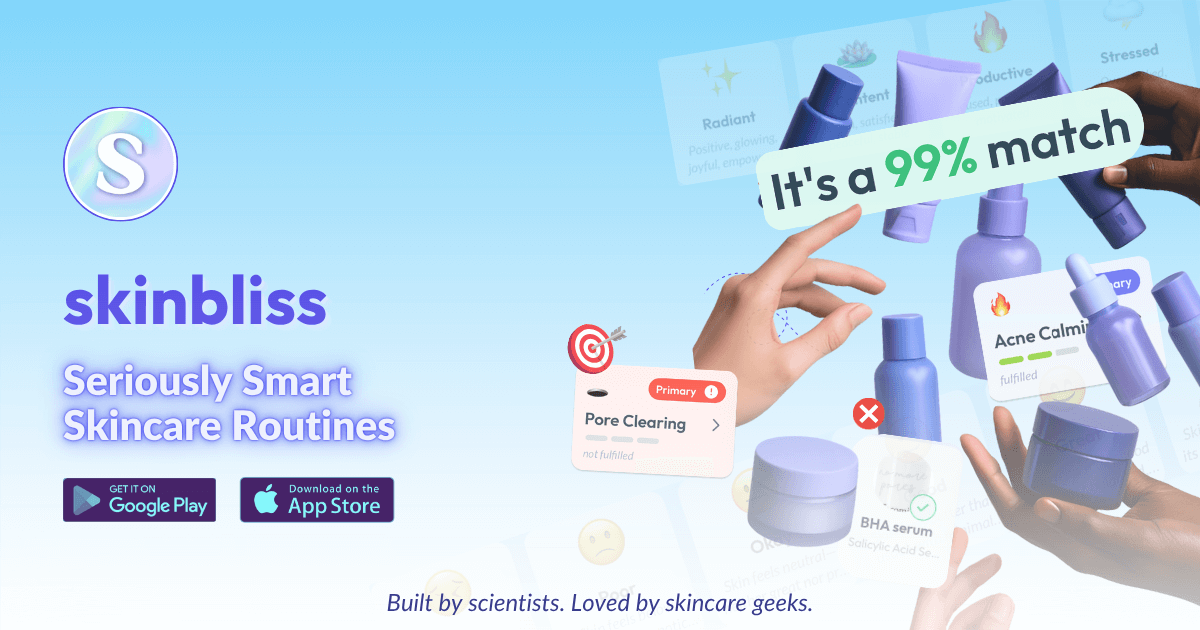 | Ingredient-minded users who still want routine help | Face scanning, product shelf checks, ingredient matching, routine templates, progress tracking | Feature depth may feel heavy if you only want a simple daily tracker |
| SkinPal AI | Readers who want high-frequency tracking | Daily scans, six tracked metrics, zone-by-zone analysis, privacy-forward language | The product leans heavily on tracking language, so the experience may feel more data-first than routine-first | |
| Lume Skin | 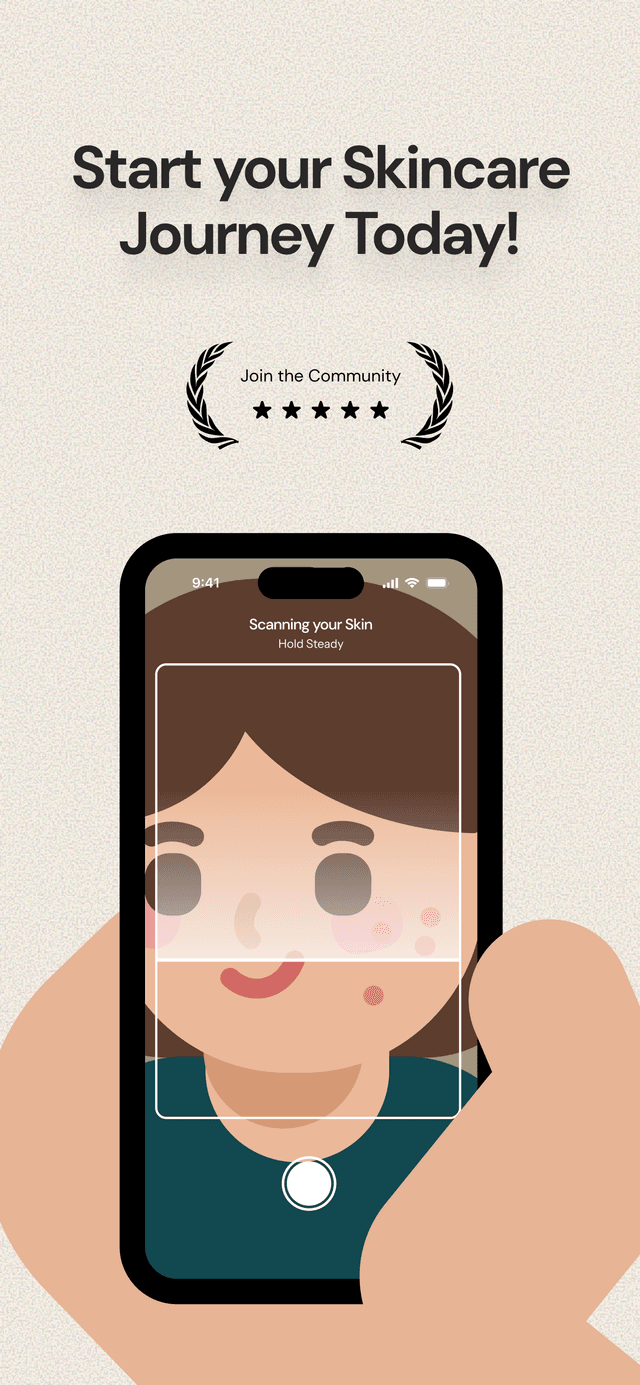 | People who want the widest feature list | Skin scanner, ingredient scanner, AI chat, reminders, progress tracking | The promise set is broad enough that some users may want more proof before trusting every layer |
| SkinCircle | 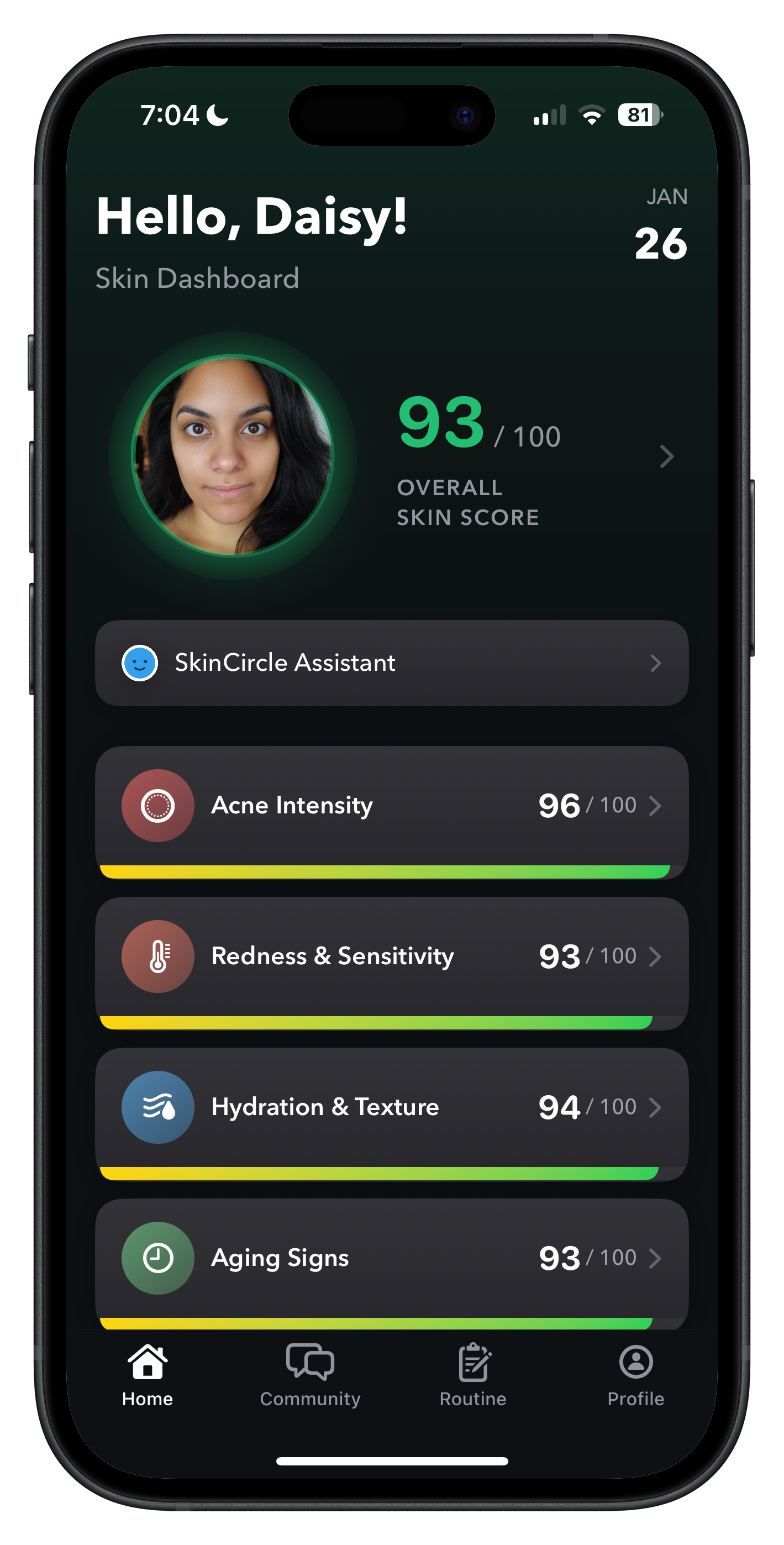 | People who want objective tracking and product correlation | Eight skin metrics, five analysis pillars, daily routine logging, correlation analytics | More tracking-tool than shopping assistant |
| Radien |  | People who want scan guidance with expert-connect language | AI skin analysis, routine recommendations, dermatologist-connect positioning | I would want more long-term routine proof before ranking it higher |
| Skintelligent | 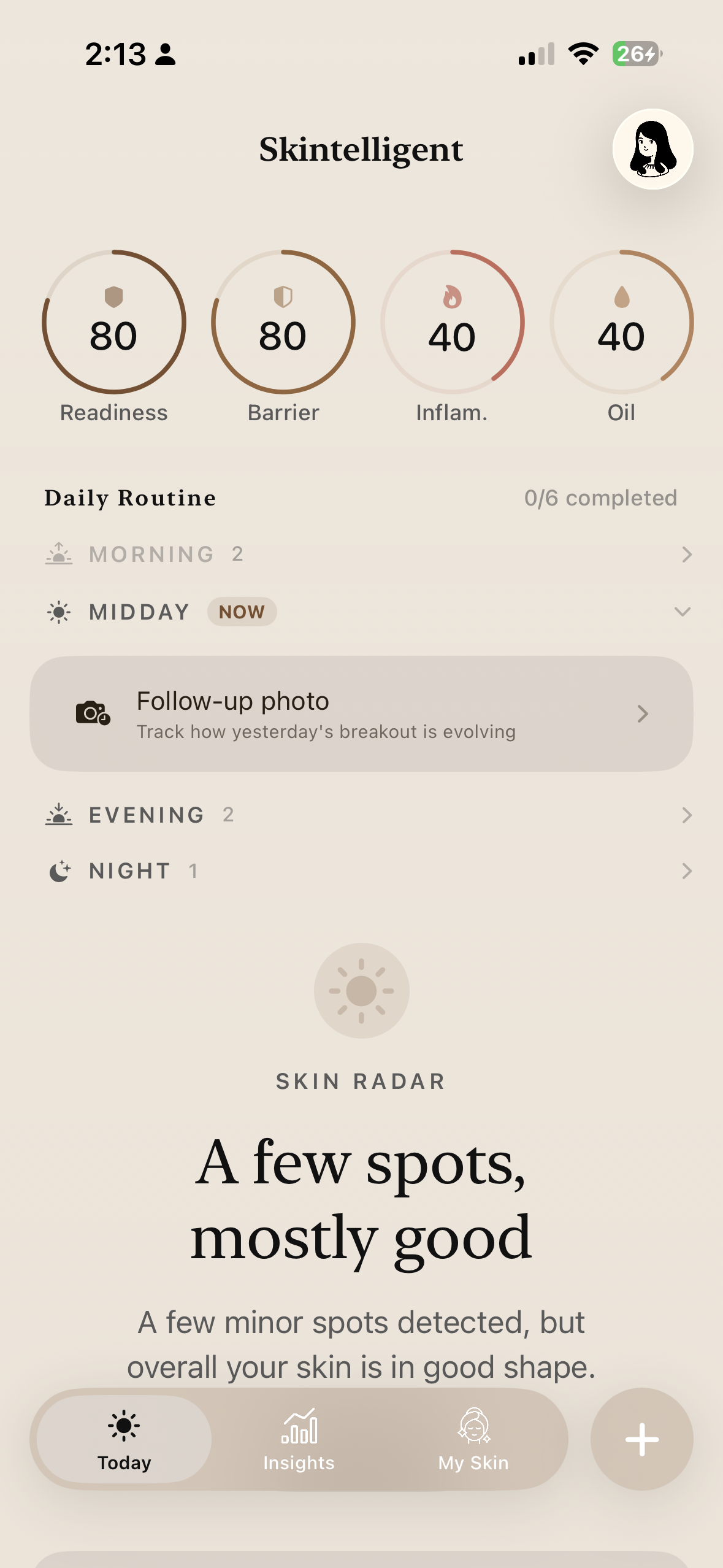 | People who want context-heavy tracking | Skin scores tied to sleep, stress, weather, products, and trend analysis | The idea is strong, but it may be more tracking than a beginner wants |
| SkininsideAI | 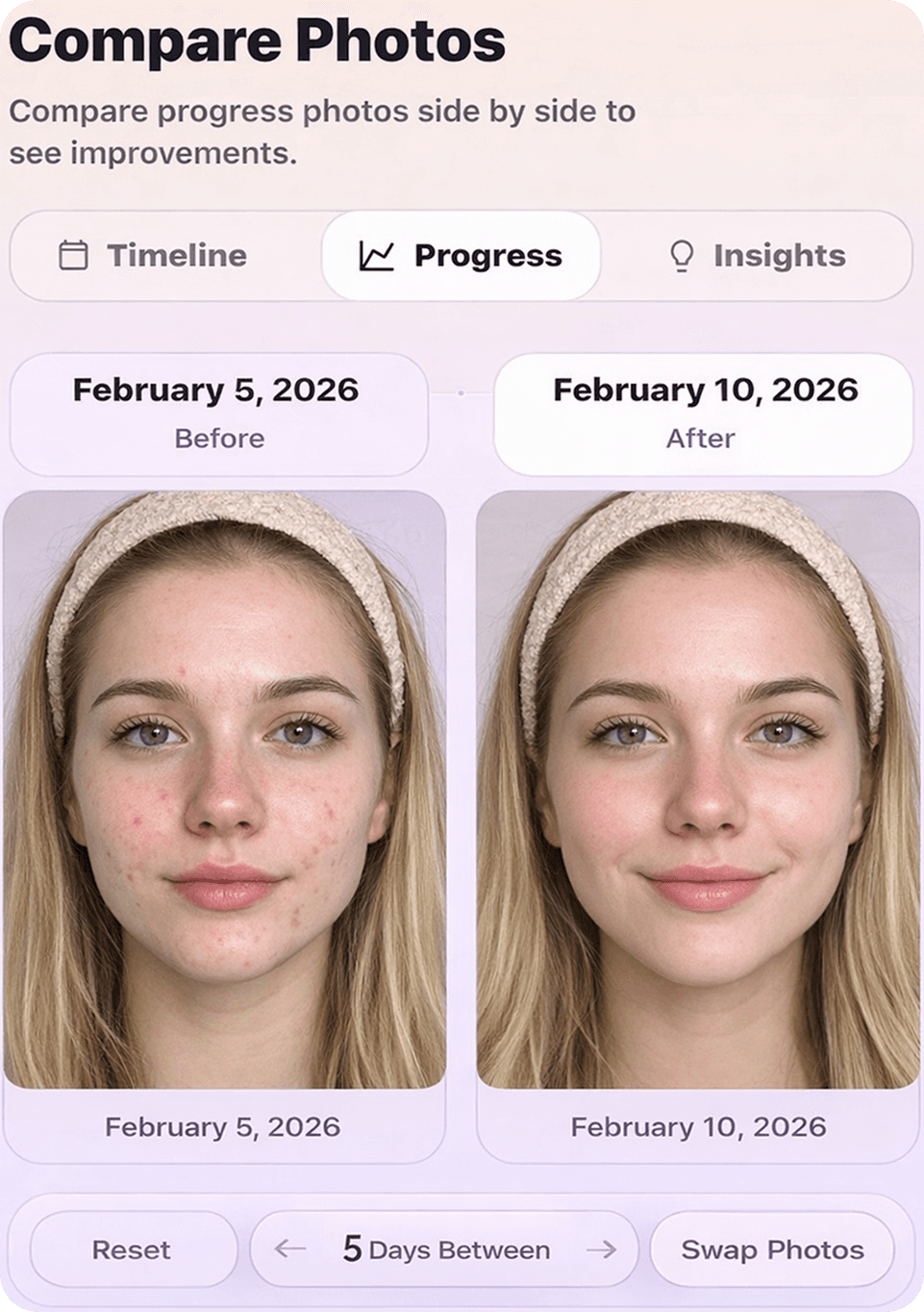 | People who want a lighter scan and routine-tracking product | Skin analysis, routine tracking, progress photos, product context | Public proof is still thinner than the bigger category players |
| GlowAI | Quick-start app | People who want quick scans and aging simulation | 12 metrics, fast scan claims, AM/PM routines, ingredient scanner, pricing clarity | Feels more demo-polished than depth-proven for long-term routine change |
What changed in late May 2026
The category is getting more crowded, but not always more useful.
The old version of this decision was simple: find the app with the best scan. That is too narrow now. The stronger products are trying to connect four things that used to be separate:
- what your face scan says
- what products you already use
- whether your routine is consistent
- whether your skin is actually changing over time
That is the right direction. It is also where a lot of apps start to overpromise.
I would be careful with any app that makes the scan feel like a medical answer, pushes a product list too quickly, or gives you a dramatic score without explaining what to do next. A useful skin analysis app should lower your anxiety. It should not turn your face into another dashboard you feel behind on.
The newer pattern I noticed this month is the shift from "scan my face" to "explain my pattern." That is a better promise. It also raises the bar. If an app claims it can connect your skin to stress, sleep, weather, products, and routine behavior, I want the interface to make that relationship understandable instead of hiding behind one big score.
That is the line I would use before paying for anything in this category:
| If the app mostly does this | I would treat it as |
|---|---|
| One selfie, one score, one generic routine | A novelty trial |
| Repeated photos with consistent framing | A progress tracker |
| Scan plus product and ingredient checks | A shopping decision tool |
| Scan plus routine logging and reminders | A habit system |
| Scan plus routine, products, lifestyle context, and trend history | A serious long-term skincare app |
The best AI skin analysis app for most people: Glass
The biggest problem with this category is that many apps are built around the first moment, not the repeatable loop.
They are great at the pitch:
- take a selfie
- get a score
- see your concerns
- buy something
That is not enough.
The better question is whether the app helps you do something useful on day 4, day 12, and week 6.
That is where Glass stands out.
Glass is built around a broader loop:
- skin analysis
- morning and night routine tracking
- product logging
- lifestyle context like water, stress, diet, and sleep
- AI guidance tied to your routine instead of generic skincare trivia
That matters because skin rarely changes for one reason. If your skin looks more irritated, drier, clearer, or smoother this week, the reason is often not just “the serum worked” or “the scan said hydration was low.” It is usually the combination of consistency, product fit, and daily friction.
Glass seems more honest about that reality than the average AI skin analysis app.
It also handles a common user frustration better: wanting guidance without turning skincare into a full-time hobby. That is especially useful if you are trying to build a glass skin routine, fix dullness, or stop cycling through products too fast. If that sounds like you, glass skin care routine and how to build a skincare routine that you'll actually follow are the cleanest companion reads.
What matters most in this decision
The same five patterns show up across the category:
- They all promise some version of instant analysis.
- Most of them say they personalize routines.
- Several now mention privacy directly because face data is an obvious trust barrier.
- Almost all of them talk about tracking.
- Very few make it clear how the app helps you change fewer things, not just measure more things.
That last point is where the category still feels weak.
The best AI skin analysis app is usually not the one that gives the most dramatic face score. It is the one that helps you answer these questions:
- Is my skin actually getting better, or am I reacting to a good lighting day?
- Did this new product help, or did I just sleep better this week?
- Is my routine too complicated to keep up with?
- Am I dehydrated, irritated, congested, or just overdoing actives?
- Do I need a new product, or do I need to stop changing everything?
That is why routine context matters just as much as computer vision.
1. Glass is best if you want more than a one-time scan
The strongest part of Glass is that it appears to connect the scan to the actual routine.
That should not be a rare thing in this category, but it still is.
The App Store listing points to:
- skin scores for clarity, hydration, evenness, and smoothness
- custom morning and night routine tracking
- product tracking
- reminders
- lifestyle inputs
- an in-app AI skincare assistant
That adds up to a better kind of usefulness. Instead of saying “your skin is dry,” the product can potentially help explain whether dryness is lining up with skipped moisturizer, poor sleep, inconsistent routine completion, or a product mismatch.
If your main goal is habit change, not just face analysis, that is a better product shape.
2. SkinPal AI looks strongest for daily tracking people
SkinPal is built around a very clear promise: scan often, track what changes, and stop guessing.
That is a strong angle because a lot of skincare frustration comes from bad memory. People think a product “isn’t working” after nine days, or assume something is helping because one morning looked better.
SkinPal leans hard into:
- daily scanning
- six ongoing skin metrics
- zone-by-zone face mapping
- before-and-after trend logic
- export and delete privacy language
If your main problem is inconsistency, SkinPal’s tracking-first framing makes sense. If your main problem is building a routine from the products you already own, Glass still feels better aligned.
3. Skin Bliss is best for ingredient-minded routine builders
Skin Bliss deserves a higher spot than most casual app lists give it because it is not only a face scanner.
Its current product story is built around the messy middle of skincare:
- scanning your face
- checking the products you already own
- spotting ingredient clashes
- building a routine with better structure
- tracking progress with photos
That makes it a strong fit for someone who wants the app to think across the whole routine, not just the selfie.
The reason I still put Glass ahead for most readers is focus. Skin Bliss has a lot of power, but that can also mean more surfaces to manage. If you love ingredient logic, shelf organization, and detailed product matching, Skin Bliss may be exactly your kind of app. If you want a calmer daily loop, Glass is easier to keep.
4. Lume Skin is the broadest all-in-one alternative
Lume is the kind of product that tries to answer every “what if?” in one place.
Lume currently highlights:
- AI skin scanning
- product safety scanning
- progress tracking
- AI chat
- custom routines
- reminders
- privacy language about encryption and on-device processing when possible
That is a compelling package for users who want breadth.
The tradeoff is that feature-heavy skincare apps can sometimes feel stronger at selling capability than clarifying what matters first. If your skin is reactive, overwhelmed, or you tend to bounce between too many steps, more features are not automatically better.
Still, Lume is clearly one of the stronger public-facing options in this category.
5. Derm AI looks strong for recommendation-led users
The current Derm AI App Store listing is more recommendation-forward than some of the homepage-first competitors.
It emphasizes:
- severity scores
- product matching across many categories
- ingredient analysis
- routine builder logic
- progress tracking
That makes Derm AI a decent fit if your main question is, “What should I buy and why?”
The more cautious point is trust. The App Store privacy section lists multiple data categories linked to identity, including health-related data, user content, identifiers, and other categories tied to personalization and functionality. That does not automatically make the app unsafe, but it does mean privacy-conscious readers should look carefully before uploading facial images to any platform in this lane.
That is true for the whole category, not just Derm AI.
6. SkinCircle is the most interesting tracking-first newer pick
SkinCircle is not trying to sound like a beauty shopping assistant.
It is much more direct: measure skin, log products, and see whether the numbers move.
That makes it interesting because a lot of people do not need another product recommendation. They need help answering a more frustrating question:
_Did this routine actually help, or am I just guessing from memory?_
SkinCircle leans into:
- eight skin metrics
- five analysis pillars
- daily routine logging
- product-to-score correlation
- export and control language around data
That is useful if you are the kind of person who wants evidence before changing products again. It may be less useful if you want an app to help you choose products, understand ingredients, or build a routine from scratch.
For progress tracking, it is one of the cleaner ideas in the category.
7. Radien is worth watching if you want expert-connect language
Radien looks like one of the newer apps trying to make the category feel less like a toy.
The positioning is direct:
- AI skin analysis
- personalized routine recommendations
- progress tracking
- dermatologist-connect language
- a polished onboarding story
That last piece matters. A lot of people do not trust a skin app because they worry it will overstep. An app that clearly separates cosmetic guidance from professional care is moving in the right direction.
I would still keep Radien in the "watch closely" lane for now. The public story is compelling, but I would want to see how it behaves after a few weeks of routine logging. Does it help you make fewer changes, or does it keep adding new recommendations because the scan found something new?
That is the difference between helpful and noisy.
8. Skintelligent is interesting if lifestyle context matters to you
Skintelligent is one of the more interesting ideas because it does not stop at the face scan.
Its public positioning connects skin scores to context like:
- sleep
- stress
- weather
- products
- longer-term trends
That is exactly where skincare tracking should go. Most people blame a product too fast because they do not remember the rest of the week. If an app can keep the full pattern visible, it can prevent bad decisions.
The tradeoff is complexity. If you are already overwhelmed, a context-heavy app may feel like homework. If you like data and want to understand why your skin changes, it may be much more useful than a simple scanner.
9. SkininsideAI is the cleaner lightweight tracker to keep an eye on
SkininsideAI feels closer to a focused skincare tracker than a giant beauty platform.
The useful parts are straightforward:
- skin analysis
- routine tracking
- progress photos
- product context
- comparison-style progress views
That can be enough. Not every person needs a huge ingredient database or a shopping assistant. Some people need a calmer place to see whether the routine is working.
I would not rank it above Glass, Skin Bliss, or SkinCircle yet because those options have clearer category positioning. But I like the direction. If it keeps the product simple and makes progress easy to understand, it could become a strong pick for people who hate bloated skincare apps.
10. GlowAI has one of the cleaner quick-start value props
GlowAI is polished, simple, and easy to understand fast.
Its current pitch is built around:
- 12 skin metrics
- sub-30-second analysis
- AM/PM smart routines
- ingredient scanning
- aging simulation
- visible free and paid tiers
That clarity is useful. A lot of skincare apps make the onboarding promise fuzzy. GlowAI does a good job telling you what it wants to be.
What I would still want before trusting it more is proof around the day-14 and day-30 experience. A strong first scan is useful, but it does not prove that the app will help you keep a calmer routine over time.
What actually makes an AI skin analysis app worth using?
A lot of app roundups keep talking about analysis quality, but most users should care just as much about these five things:
1. Does it help after the first selfie?
A one-time scan is novelty. A useful app creates a repeatable loop.
2. Does it make routines simpler or more cluttered?
If the output of the app is “buy five more products,” that is not automatically intelligence.
3. Can it show change over time clearly?
Progress is the point. If the app cannot make trends visible, it is not solving much.
4. Does it explain privacy in plain language?
Face data is high-trust data. If the privacy posture feels vague, that matters.
5. Does it reduce trial and error?
The best apps should help you switch products less often, not faster.
That is also why I would still put Glass first for most readers in this category. Its structure is closer to how skincare progress actually works in real life: scans plus routine plus context.
The biggest mistakes people make when choosing a skin analysis app
These are the traps I would avoid:
- Picking the app with the flashiest score instead of the clearest routine help.
- Confusing “more tracked metrics” with “more useful guidance.”
- Ignoring privacy because the screenshots look polished.
- Expecting AI analysis to replace a dermatologist for medical concerns.
- Downloading an app before asking whether you will realistically use it more than three times.
If your routine is already overwhelmed, a better app should make you calmer, not busier.
Which app should you choose?
Choose Glass if you want:
- scan results tied to routine behavior
- a calmer system for morning and night consistency
- progress that makes sense in context
- skincare help that connects to what you are already doing
Choose SkinPal AI if you want:
- daily scan momentum
- trend lines and zone-by-zone analysis
- a tracking-first product
Choose Skin Bliss if you want:
- face scanning plus product-shelf context
- ingredient matching and clash checks
- a more detailed routine-building system
Choose Lume Skin if you want:
- the broadest feature stack
- skin scanning plus ingredient scanning plus chat
- a more expansive “all-in-one” feel
Choose Derm AI if you want:
- recommendation-heavy guidance
- ingredient analysis plus product matching
- an App Store-native consumer experience
Choose SkinCircle if you want:
- skin metrics over time
- product-to-score correlation
- less shopping and more tracking
Choose Radien if you want:
- scan guidance with expert-connect language
- a polished routine recommendation flow
- a newer app to watch before committing long term
Choose Skintelligent if you want:
- lifestyle context tied to skin scores
- sleep, stress, weather, product, and routine patterns
- a more data-heavy tracking experience
Choose SkininsideAI if you want:
- a lighter progress tracker
- scan history and routine context
- a simpler product than the larger all-in-one apps
Choose GlowAI if you want:
- fast setup
- clear pricing tiers
- aging simulation alongside basic skin analysis
FAQ
What is the best AI skin analysis app in May 2026?
For most readers, Glass is the best AI skin analysis app in May 2026 because it connects skin scans, routine tracking, product use, and daily habit context instead of stopping at a single score. If your main priority is ingredient intelligence, Skin Bliss is the strongest broad alternative. If you mainly want pure scan frequency and trend tracking, SkinPal AI and SkinCircle are the closest alternatives.
Are AI skin analysis apps actually accurate?
They can be useful for spotting visible patterns, tracking changes, and helping you stay consistent, but they are not medical diagnosis tools. Treat them as habit and observation tools, not substitutes for professional care.
Is an AI skin analysis app safe for privacy?
That depends on the app. Read the privacy page or App Store privacy section before uploading facial photos. In this category, privacy clarity should be treated as a product feature, not a footnote.
What should I look for besides the scan?
Look for progress tracking, routine support, privacy clarity, and a system that helps you change fewer things at once. The scan matters, but the ongoing loop matters more.
What if my skin barrier feels damaged or everything stings?
Do not use an app score as a reason to pile on more actives. Start with skin barrier repair routine, then rebuild from a calmer baseline.
Final take
The category sells a similar dream: take a selfie, get insight, fix your skin faster.
The better question is whether the app helps you behave differently after that moment.
That is why the best option right now is the one that makes the whole routine easier to understand and easier to keep.
In May 2026, that is Glass.
If your next step is less about choosing an app and more about fixing the actual skincare flow, read are AI skin analysis apps accurate?, morning and night skincare routine, glass skin care routine, and how to get glass skin naturally next.