I almost dismissed this one.
Then the price made me slow down.
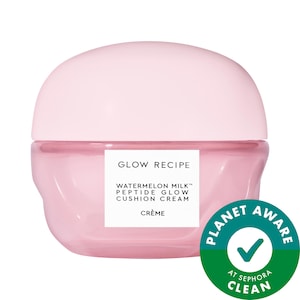
At $40 for the full jar, Glow Recipe Watermelon Milk Peptide Cushion Cream has to be more than cute packaging. It has to solve a real dry-skin problem.
Watermelon. Milk. Peptides. Cushion cream. It sounds like a product name built to be pretty first and useful second.
Then I looked at the actual formula and the way people are reacting to it. Glow Recipe Watermelon Milk Peptide Cushion Cream is not just another shiny pink jar trying to sell "glow" to dry skin. It is a cushiony, fragrance-free moisturizer built around squalane, glycerin, panthenol, ceramide NP, ectoin, beta-glucan, sodium hyaluronate, and a long peptide blend. That makes it more serious than the name suggests.
That makes the buying question pretty specific. This is not the moisturizer I would open first if my skin already feels oily by noon or if I only want a weightless gel. I would open it if my skin gets tight after cleansing, if makeup starts looking flat over dry patches, or if I want one cream that can sit between a hydrating serum and sunscreen without feeling like a sleeping mask.
Glass has the full product breakdown here: Glow Recipe Watermelon Milk Peptide Cushion Cream.

Quick Verdict
This moisturizer makes the most sense for dry, normal-dry, and sensitive skin that wants cushion without fragrance. The strongest lane is everyday barrier support. The weakest lane is very oily skin, especially if you prefer a gel-cream that disappears immediately.
The texture is the main reason this product is interesting. It is not a traditional heavy cream, but it also does not behave like Glow Recipe's lighter watermelon products. It has more grip, more plushness, and more of that soft sealed-in feeling people usually want from a night cream, while still being reasonable for morning use if the amount is controlled.
The price is the part I would judge hardest. The refill pod sits below the full jar price, which helps if you already know you like the texture, but I would not buy the refill first unless the jar has already earned a repeat spot.
The part I would not buy into too hard is the extreme hydration language. Big hour-count claims make skincare feel more dramatic than it needs to be. What I care about is simpler: does the cream keep dry skin from feeling tight by lunch, and does it make the routine easier to repeat? That is the standard I would use here.
Price, Refill, And Value
The full-size jar is listed at $40, and Sephora has shown a $34 to $40 price range depending on the size or refill option. That puts it in the middle of prestige moisturizer territory: not shocking for Glow Recipe, but expensive enough that it should not be an impulse buy if your current cream is already working.
The refillable packaging makes the most sense after the first jar. I would buy the full jar only if I needed the actual container and wanted to test the texture. I would think about a refill only after finishing enough of the product to know it works under sunscreen, makeup, and your real evening routine.
The value is strongest for someone replacing two mediocre moisturizers: a morning cream that disappears too fast and a night cream that feels too heavy. If this becomes the single comfortable cream you use twice a day, the price is easier to defend. If it becomes one more pretty jar you reach for occasionally, it is not a smart $40.

The Feeling I Think People Are Actually Chasing
Most people looking at this cream are not really asking, "Do I need another peptide moisturizer?" They are asking something more personal.
Why does my skin still feel thirsty after moisturizer?
Why does my base makeup look older than my skin actually is?
Why do gel creams feel nice for ten minutes and useless after that?
That is where this product has a real lane. I would not treat it like a miracle anti-aging cream. I would treat it like a cushion layer for skin that needs more comfort than a water cream gives but does not want a heavy, greasy repair balm every morning.
What It Is Supposed To Do
The product page positions it as a fragrance-free, peptide-powered moisturizer for dry and sensitive skin. The promise is long-lasting hydration without heaviness. The practical version of that claim is simpler: it is supposed to make skin feel softer, calmer, and less thirsty for longer than a basic water cream.
That is why the formula matters. Glycerin and sodium hyaluronate pull water into the surface layers. Squalane, fatty emollients, and ceramide NP help reduce the feeling that water is vanishing the second the cream absorbs. Panthenol, beta-glucan, allantoin, ectoin, and phytosterols make the formula feel more barrier-minded than a moisturizer that only chases a glossy finish.
Best For
This is the lane where it fits cleanly:
- Dry skin that needs more cushion than a gel moisturizer gives
- Sensitive skin looking for a fragrance-free Glow Recipe option
- Morning routines where moisturizer needs to sit under SPF
- Night routines where the cream should feel comforting but not greasy
- Dull or tight skin that looks better when the surface is well-hydrated
It is also a smart product to consider when you want peptides in a moisturizer instead of adding a separate peptide serum. Peptides are not magic on their own, but putting them in a moisturizing base makes more sense than buying a peptide step that leaves the rest of the routine under-moisturized.
Who Should Skip It
Skip it if your moisturizer problem is shine, not dryness. This cream can feel elegant on the right skin type, but it is still built for comfort. If your face already feels coated by midday, the cushion texture may be more than you want.
I would also skip it if you are currently breaking out from rich creams and you do not know which ingredient family is causing the issue. The formula is not designed as a harsh or risky product, but it does include several emollients and texture agents. Acne-prone skin can still use rich moisturizers, but it helps to test one variable at a time.
Texture And Finish
The phrase "cushion cream" is doing real work here. The texture is not thin. It has a soft density when you scoop it, then spreads into a smoother layer than the jar makes you expect. The finish is not matte, but it is not an oily balm finish either. It leaves skin looking hydrated and softly reflective.
That makes it useful for people who hate the feeling of a thick occlusive cream but still need more than a water gel. The best amount is smaller than you think. A dime-size amount is enough for most faces, especially in the morning. At night, dry skin can use a little more around the cheeks and mouth.
This is also where I think the product can disappoint the wrong person. If you bought it because you heard "Watermelon" and expected the bouncy, watery feel of older Glow Recipe products, this will feel richer. If you bought it because you wanted a plush cream that still looks polished under sunscreen, the texture makes more sense.
Ingredient Read
The formula is strongest when you look at the whole support system rather than one hero ingredient.
Glycerin, propanediol, butylene glycol, sodium hyaluronate, saccharide isomerate, and beta-glucan cover the hydration side. Squalane, caprylic/capric triglyceride, dicaprylyl carbonate, ceramide NP, phytosterols, and hydrogenated lecithin make it feel more replenishing. Panthenol, allantoin, ectoin, and beta-glucan are the calming pieces. The peptide network adds a firming and smoothing angle, but I would treat that as a bonus, not the only reason to buy it.
The absence of fragrance is important. Glow Recipe has a fruit-forward identity, so a fragrance-free watermelon product is not what everyone expects. For sensitive skin shoppers, that makes this cream easier to justify than a formula where the scent is part of the experience.
Barrier Support
Barrier support is where this cream has the cleanest reason to exist. A lot of moisturizers say "barrier" because the category is popular. This one at least gives the skin a reasonable mix of humectants, emollients, ceramide, panthenol, ectoin, and soothing agents.
That does not mean it will fix a damaged barrier overnight. It means the product is better suited to a boring, consistent recovery routine than a flashy routine with too many actives. If your skin is stinging from over-exfoliation, I would still simplify first: gentle cleanser, this or another barrier cream, SPF in the morning, and no new acids until the burning feeling is gone.
Morning Routine Fit
In the morning, use it after serum and before sunscreen. The mistake is using too much, then blaming the sunscreen for feeling heavy. A thin layer is enough to give skin a smoother base.
This is where the moisturizer can work well for dry skin under makeup. It gives foundation something more even to sit on, especially around dry cheek patches. If your sunscreen already has a dewy finish, keep the cream thinner. If your sunscreen is matte or drying, the cream can make the whole routine feel less tight.
Night Routine Fit
At night, this product is easier. It can be the last step after a hydrating serum or a simple treatment. If you use retinoids, this kind of cream makes sense on non-irritated nights because it gives enough cushion to keep the routine comfortable.
For very dry skin, it may still need help in winter. You can add a small amount of petrolatum-style balm over the driest spots, but I would not turn the whole face into a heavy occlusive layer unless your skin truly needs it. The cream already has a substantial feel.
How I Would Decide In One Minute
| If your routine problem is... | My read |
|---|---|
| Gel creams feel good for ten minutes, then your face feels tight | This cream is worth testing |
| Rich creams break you out or feel greasy by noon | Start with a lighter barrier gel instead |
| Makeup clings around cheeks, mouth, or nose | Use a thin morning layer and judge the base by late afternoon |
| Your skin is irritated from too many actives | Simplify first; do not expect one cream to rescue a messy routine |
| You already own a barrier cream you love | Skip unless you want a more polished daytime texture |
How It Compares To A Basic Water Cream
A basic water cream usually wins on weight and speed. Glow Recipe Watermelon Milk Peptide Cushion Cream wins on comfort, softening, and longer-lasting moisture. That is the whole decision.
If you want a moisturizer you barely feel, this is not the cleanest pick. If you want the skin to feel supported for more than twenty minutes after application, this is more interesting than a lightweight gel.
How It Compares To A Rich Barrier Cream
Compared with a classic rich barrier cream, this feels more polished and less medical. It is softer, more cushiony, and easier to use under sunscreen. It may not feel as occlusive as a heavy ceramide balm, but that is also why it can work in both morning and night routines.
That makes it a middle lane: richer than a water cream, less heavy than a true repair balm, and more sensorial than a pharmacy-style cream.
Best Way To Test It
Do not test it with three new products. Use it in a small, boring routine for five to seven days:
- Gentle cleanser
- Hydrating serum if you already use one
- Glow Recipe Watermelon Milk Peptide Cushion Cream
- Sunscreen in the morning
Watch for three things: less tightness after cleansing, smoother makeup or sunscreen wear, and whether your skin still feels comfortable by late afternoon. Those are better signals than checking for a dramatic overnight glow.
I would also take one face photo in the same light before starting and another after a week. Not because the product is going to transform your face in seven days, but because dry skin changes are subtle. The win might be that your cheeks look less creased under sunscreen, or your mouth area does not get that tight, chalky look by dinner.
The Mistake I Would Avoid
The mistake is buying it as a personality product. Pretty packaging can make a moisturizer feel like it should be fun first. Dry skin does not care about that. Dry skin wants enough water, enough softening, and enough barrier support to stop the cycle of applying more product every few hours.
If you already own a good barrier cream, this may overlap. If your moisturizer drawer is full of thin gels that never quite last, this is more useful. That is the buying line I would use.
My May 2026 Verdict
Glow Recipe Watermelon Milk Peptide Cushion Cream is a strong fit if you wanted Glow Recipe to make a more serious dry-skin moisturizer. It still has the brand's soft, glowy personality, but the formula is more barrier-supportive than the name alone suggests.
Buy it for cushion, fragrance-free comfort, and a moisturizer step that can work morning and night. Skip it if your main concern is oil control, if you only like weightless gel textures, or if the $40 jar would compete with a barrier cream you already finish happily.
If you want the product spec sheet next to the review, use the full Glass product page for Glow Recipe Watermelon Milk Peptide Cushion Cream. If you are comparing texture lanes, the Skinfix Barrier Gel Cream review is the better lighter-barrier counterpoint.
FAQ
Is Glow Recipe Watermelon Milk Peptide Cushion Cream good for dry skin?
Yes. Dry skin is the clearest fit because the formula combines humectants, emollients, squalane, panthenol, ceramide NP, ectoin, beta-glucan, and peptides in a cushiony cream base.
Can sensitive skin use it?
It is a better sensitive-skin candidate than many scented glow products because it is fragrance-free. Patch test anyway if your skin reacts easily.
Is it too heavy for morning?
Not if you use a thin layer. Dry skin can use it before SPF. Very oily skin may prefer a lighter gel moisturizer.