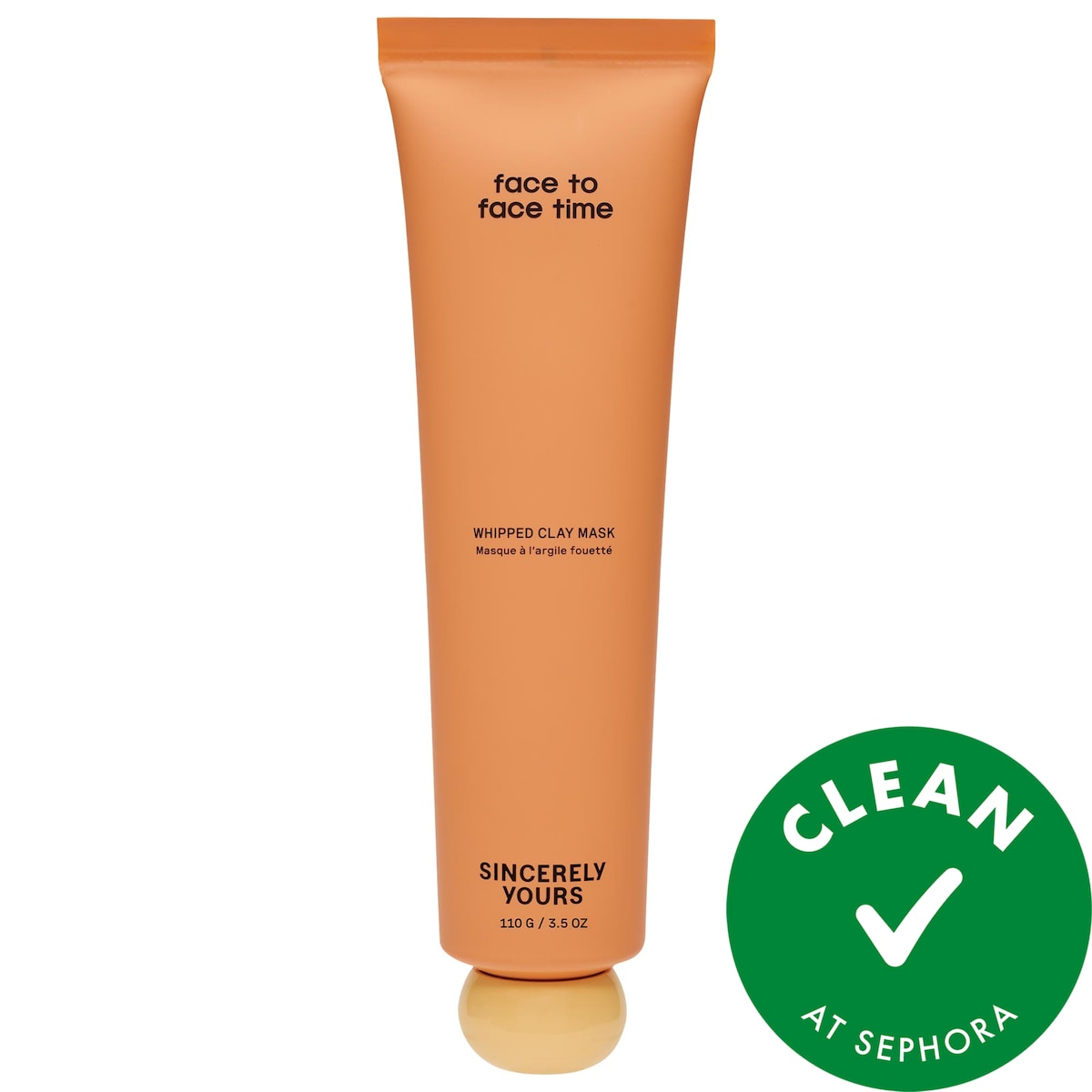
Clay masks have a bad reputation for a reason.
A lot of them make oily skin look calmer for one night, then leave the face tight enough that the next morning routine feels like damage control. That is the tension I would keep in mind with Sincerely Yours Face To Face Time Gentle Pore-Purifying Whipped Clay Mask. It is clearly built for pores, oil, and texture, but the ingredient story is trying hard not to behave like an old-school drying mask.
As of May 2026, I would treat this as a new, low-risk weekly reset candidate rather than a dramatic acne treatment. The price is approachable at $24, the size is 3.4 oz / 100 mL, and the Glass product record puts it around a 4.7-star average with a still-growing review base. That is useful, but not enough by itself. The real question is whether the formula solves a specific routine problem.
My short answer: I would look at this mask if my skin gets shiny, congested, or dull but still gets annoyed by harsh clay products. I would skip it if my main issue is deep acne, severe blackheads, active irritation, or dry skin that wants a cushiony recovery mask instead of oil absorption.
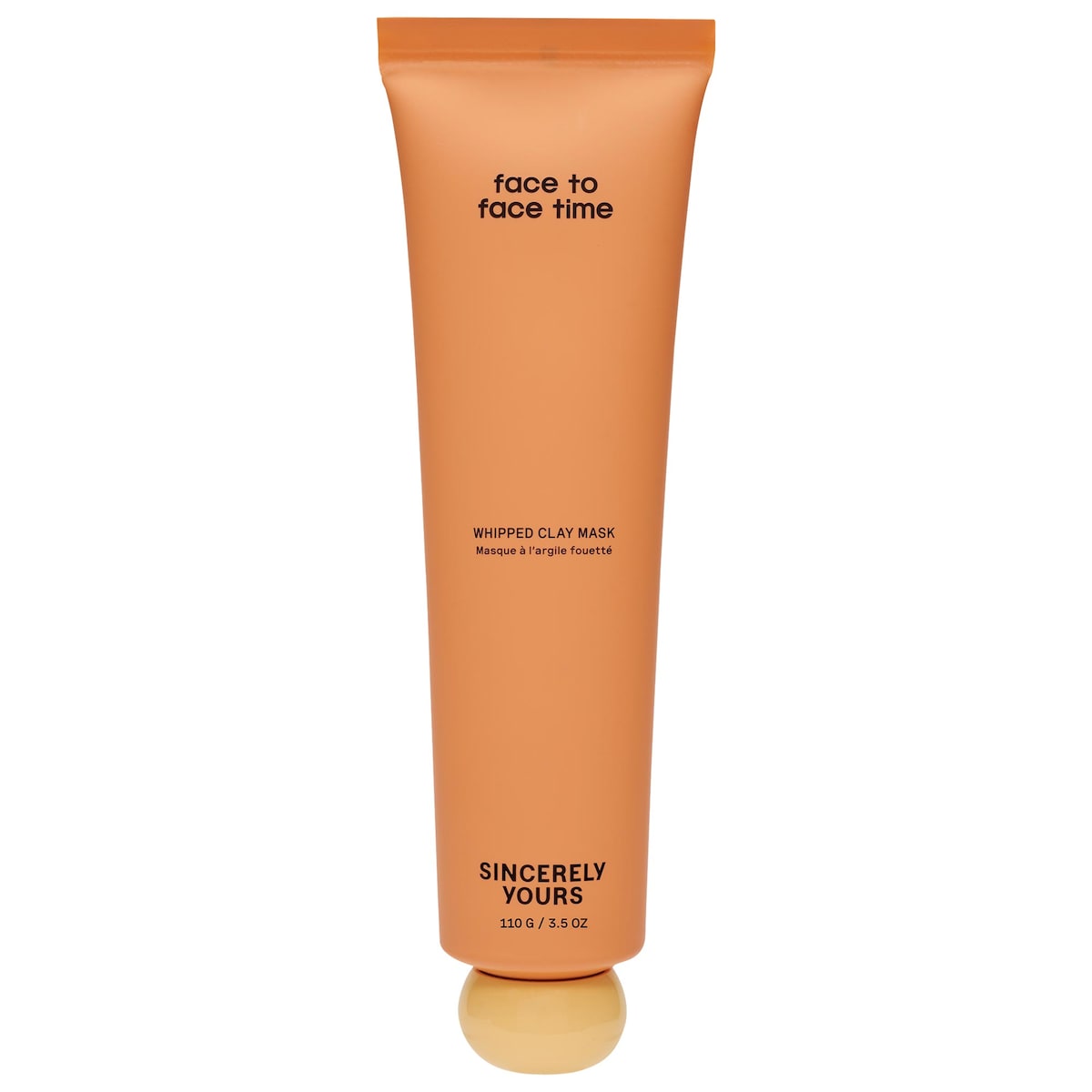
The quick read
| Detail | My read |
|---|---|
| Product | Sincerely Yours Face To Face Time Gentle Pore-Purifying Whipped Clay Mask |
| Price in May 2026 | $24 |
| Size | 3.4 oz / 100 mL |
| Texture lane | Whipped clay mask |
| Best fit | Normal, combination, and oily skin that wants a gentle pore reset |
| Key ingredients I notice | Kaolin, bentonite, pineapple enzymes, glycerin, sodium hyaluronate, niacinamide, ceramide NP, lactobacillus ferment |
| Suggested timing | 10 minutes, morning or night, one to three times per week |
| What it is not | A prescription acne treatment, peel, blackhead extractor, or dry-skin recovery mask |
That mix is why this mask is more interesting than a plain clay-and-charcoal jar. It is still a rinse-off clay mask, so I would not pretend it is barrier repair in a bowl. But it does include hydration and barrier-support ingredients that make the product feel more forgiving on paper.
Why this mask caught my attention
Most pore masks make the same promise: clearer-looking pores, less shine, smoother texture. The problem is that oily, congested skin is often also dehydrated or overworked.
That is the routine trap. Someone has a shiny T-zone, so they buy a drying cleanser. Then they add a clay mask. Then they skip moisturizer because the face feels oily. A few days later the skin feels tight, looks dull, and still has visible pores. The routine has become stricter without becoming smarter.
Face To Face Time is interesting because it is not only leaning on clay. The formula includes kaolin and bentonite to absorb oil, but it also includes glycerin, sodium hyaluronate, niacinamide, ceramide NP, and a postbiotic ferment. I would read that as a mask trying to clean up excess oil without making the rest of the routine pay for it.
That does not mean everyone should use it three times a week. It means the product belongs in the "reset without punishment" lane.
What the formula is trying to do
The clay side is straightforward. Kaolin and bentonite are there to absorb oil and help the skin feel cleaner. If your forehead, nose, and chin get shiny fast, that is the part of the product doing the obvious work.
The enzyme side matters because the mask also includes pineapple fruit extract and malic acid. I would think of those as gentle texture support, not as a reason to stack the mask with every other exfoliant you own. If your routine already includes retinoids, salicylic acid, glycolic acid, or peel pads, this mask should be placed carefully.
The comfort side is what separates it from a more aggressive clay mask. Glycerin and sodium hyaluronate pull in water. Niacinamide can support a more balanced-looking routine. Ceramide NP points toward barrier support. Lactobacillus ferment gives the formula a calming, balance-focused angle.
That ingredient mix makes the product sound useful for the person who wants a clearer feel without the tight mask-face aftermath.
Who I think it fits best
I would put this in front of someone who says:
- my skin gets oily, but strong masks make it tight
- my pores look more obvious when my routine gets lazy
- I want a weekly reset before I add stronger actives
- I like the idea of a clay mask, but I do not want my face to feel stripped
- I need something easy to rinse off after 10 minutes
- my skin is normal, combination, or oily rather than deeply dry
- I want a $24 product, not a luxury mask that has to justify itself every use
That person has a clear use case.
The best fit is probably combination skin with a shiny T-zone and normal-to-slightly-dry cheeks. I would use the mask where the face actually needs it instead of applying a thick layer everywhere. The nose and chin may want the reset. The outer cheeks may not.
Who should skip it
I would skip this mask if your skin is currently burning, peeling, swollen, rashy, or reacting to everything. Even a gentle clay mask is still a variable. When skin is actively angry, I would rather see the routine get boring: gentle cleanse, moisturizer, sunscreen, and no experiments until the face calms down.
I would also skip it if your main issue is deep cystic acne or painful inflamed breakouts. A rinse-off clay mask can help some people feel cleaner, but it is not acne care on its own. If breakouts are persistent, painful, scarring, or spreading, the smarter move is clinician-guided acne care.
Dry skin should be careful too. If the face already feels tight after washing, a clay mask may not be the missing step. You might be better served by a recovery routine, like the logic in I repaired my skin barrier routine in May 2026, before adding a pore reset.
The review signal I would trust
I would not buy this from the star rating alone. A 4.7-ish average is encouraging, but skincare reviews can hide the details that actually matter.
For this mask, I would care about different questions:
- Do people say skin feels softer rather than squeaky?
- Do oily-skin users feel cleaner without feeling punished?
- Do sensitive users mention burning or stinging?
- Does it rinse cleanly, or does it leave a residue?
- Do people use it weekly, or does it become a drawer product?
- Does the product help the routine feel calmer, not just more elaborate?
The early signals around softness, hydration, and satisfaction are the right kind of signals for this formula. I would rather hear "my skin felt fresh and soft" than "this made my skin feel extremely tight." Tightness can feel like effectiveness for ten minutes, but it is not a goal.
Texture expectations
The word "whipped" matters. A whipped clay mask usually sounds less dense and less crackly than a heavy paste. That can make application easier, especially if you are using it as a quick reset after a long day, after a sweaty workout, or before a simple night routine.
Still, I would apply it thinly the first time. More product does not mean deeper pore results. It usually means more drying time, more rinsing, and more chances to annoy the skin.
If I were testing it, I would start with the T-zone. Nose, chin, and center forehead first. If that goes well, I would decide whether the cheeks need it. A lot of people over-mask the cheeks because full-face application feels more complete. The cheeks often do not need the same oil control.
How I would test it for two weeks
I would test this mask once in week one, then maybe twice in week two if the first use went well.
That is slower than the one-to-three-times-per-week label allows, but it gives the skin room to answer. A product can be suitable for repeat use and still be too much for your specific routine if you already use exfoliating actives.
| Day | What I would watch |
|---|---|
| First use | Stinging, tightness, redness, how clean skin feels after rinsing |
| Next morning | Dry patches, new sensitivity, whether moisturizer feels normal |
| Second use | Whether the T-zone looks calmer without cheek dryness |
| End of week two | Whether it earned a weekly slot or just felt fun once |
I would not add a new cleanser, toner, retinoid, peel pad, acne treatment, or moisturizer in the same test window. If everything changes at once, you learn nothing.
How I would place it in a routine
Use it after cleansing on clean, dry skin. Leave it on for 10 minutes, rinse thoroughly with warm water, then follow with a simple hydrating layer and moisturizer.
My preferred night structure would be:
- Gentle cleanser.
- Sincerely Yours Face To Face Time on the oily or congested zones.
- Rinse after 10 minutes.
- Hydrating serum only if your skin already tolerates it.
- Moisturizer.
I would not use it on the same night as a strong exfoliating acid, a first-time retinoid, a peel, or a drying acne mask. The point is to make the routine clearer, not to turn one night into a product pileup.
If you use Glass to track routines, I would log the mask as its own occasional step. That makes it easier to notice whether the next-day skin looks calmer, drier, or unchanged.
Oily skin fit
For oily skin, this is probably the most obvious fit.
The key is not to turn it into a punishment ritual. I would use it when the skin feels greasy, dull, or congested, not every time I see shine. Oil is not automatically a problem. The goal is controlled comfort, not a face that feels scrubbed down.
If your skin gets oily by lunch, I would still keep moisturizer and sunscreen in the routine. Clay masks can help with a weekly reset, but daily skin balance usually comes from the boring basics: gentle cleansing, light moisture, non-comedogenic sunscreen, and not overdoing actives.
Combination skin fit
Combination skin should use this mask selectively.
I would put it on the T-zone first, then maybe a thinner layer on the inner cheeks if those areas get congested. I would avoid the driest parts of the face unless they genuinely need it.
This is where a lot of mask routines go wrong. The forehead needs oil control, the cheeks need comfort, and the person treats the whole face like one surface. A smarter routine lets different zones have different needs.
If your cheeks feel tight after a full-face clay mask, that is not proof the mask is bad. It may be proof your application map is too broad.
Sensitive-skin caveats
The product is positioned as gentle and sensitive-skin-friendly, but I would still patch test if my skin reacts easily.
"Gentle" does not mean "impossible to irritate." Clay, pineapple enzymes, malic acid, niacinamide, and preservatives can all be fine for many people and still bother a specific person. Sensitive skin is not irrational. It just gives feedback quickly.
For a reactive routine, I would use a thin layer for less than the full 10 minutes the first time. Then I would moisturize and wait. If the skin feels calm the next day, I would decide whether to use the full time later.
Price and value
At $24, this is easier to justify than many mask jars.
The value case is strongest if it replaces the urge to buy three stronger pore products. If one gentle weekly mask keeps you from overusing scrubs, acids, and stripping cleansers, that is a good buy.
The value case is weaker if you already have a clay mask that works without tightness. In that case, you do not need a new jar just because this one sounds friendlier.
I would buy it for a specific job: a 10-minute reset for oil, pores, and texture when the rest of the routine is already stable.
Mistakes I would avoid
I would not use it after scrubbing. I would not leave it on longer because "more must be better." I would not apply it over irritated skin. I would not pair it with a peel pad on the same night. I would not use it as a spot treatment for deep painful pimples.
I would also avoid using it as emotional skincare.
That sounds dramatic, but it happens. The face looks shiny or bumpy, so the routine becomes harsher. A mask can be useful, but it should not become the thing you reach for every time you feel impatient.
If you need a simpler base first, start with how to build a skincare routine you will actually follow.
What I would compare it with
If I wanted a more established pore mask, I would compare it with Benefit Cosmetics The POREfessional Deep Retreat Pore-Clearing Kaolin Clay Mask, which has a bigger review base and a more classic pore-clearing identity.
If I wanted a broader shortlist, I would open best clay masks at Sephora and best face masks at Sephora for oily skin. Roundups are useful when you are not sure whether you want gentle, stronger, cheaper, more hydrating, or more acne-focused.
And if ingredient overlap is the problem, I would check the rest of the routine with the Glass Ingredient Checker before adding another exfoliating or oil-control step.
Bottom line
Sincerely Yours Face To Face Time Gentle Pore-Purifying Whipped Clay Mask makes the most sense as a gentle weekly pore reset for normal, combination, and oily skin. I would not treat it like an acne cure or a pore eraser. I would treat it like a controlled 10-minute step that can make skin feel cleaner without forcing the rest of the routine into recovery mode.
The best buyer is someone who wants clay benefits but has learned that stripped skin is not the same thing as clear skin.
FAQ
Is Sincerely Yours Face To Face Time good for oily skin?
I would consider it for oily skin if you want a gentle clay mask that absorbs oil without leaning only on dryness. Keep moisturizer and sunscreen in the routine.
Can sensitive skin use it?
Maybe, but I would patch test and start slowly. The formula is positioned as gentle, but reactive skin can still dislike clay, enzymes, acids, or niacinamide.
How often would I use it?
I would start once weekly. If the skin stays comfortable, I might move to twice weekly. I would only use it three times weekly if the rest of the routine is very gentle.
Should I use it before or after cleanser?
Use it after cleansing on clean, dry skin. Rinse after the suggested time, then moisturize.